

An electric range is one of the hungriest single appliances in the house. All those elements and the oven together pull a lot of power, so a range gets its own heavy, dedicated 240-volt circuit, never a shared one. Here is the standard sizing, plus the modern wiring rule that trips up anyone working in an older home.
The standard freestanding range
For a normal freestanding electric range, the common setup is a 50-amp double-pole breaker on 6-gauge copper wire, feeding a dedicated NEMA 14-50 outlet that the range plugs into. The breaker is double-pole because the range runs on 240 volts, using both legs of the supply.
Some smaller or older ranges are happy on a 40-amp breaker with 8-gauge copper. As with every appliance we cover, the unit’s own nameplate is what decides, so check the rating before buying wire. But if you want the typical answer, it is 50 amps and 6-gauge copper for a full-size range.
The four-wire rule that catches people
This is the one to watch in older Jamaican homes. A modern range circuit uses four wires: two hots, a neutral, and a separate ground, landing on that NEMA 14-50 outlet. Older installations often used a three-wire setup, with no separate ground, on the older style of outlet.
On any new work, you bring it up to the four-wire arrangement, because keeping the neutral and the ground separate is a real safety improvement. So if you are replacing an old range and find a three-prong outlet behind it, the right move is not to hunt down a matching old cord; it is to update the circuit and outlet properly. That is an electrician job, not an adapter from the hardware store.
Separate cooktop and wall oven
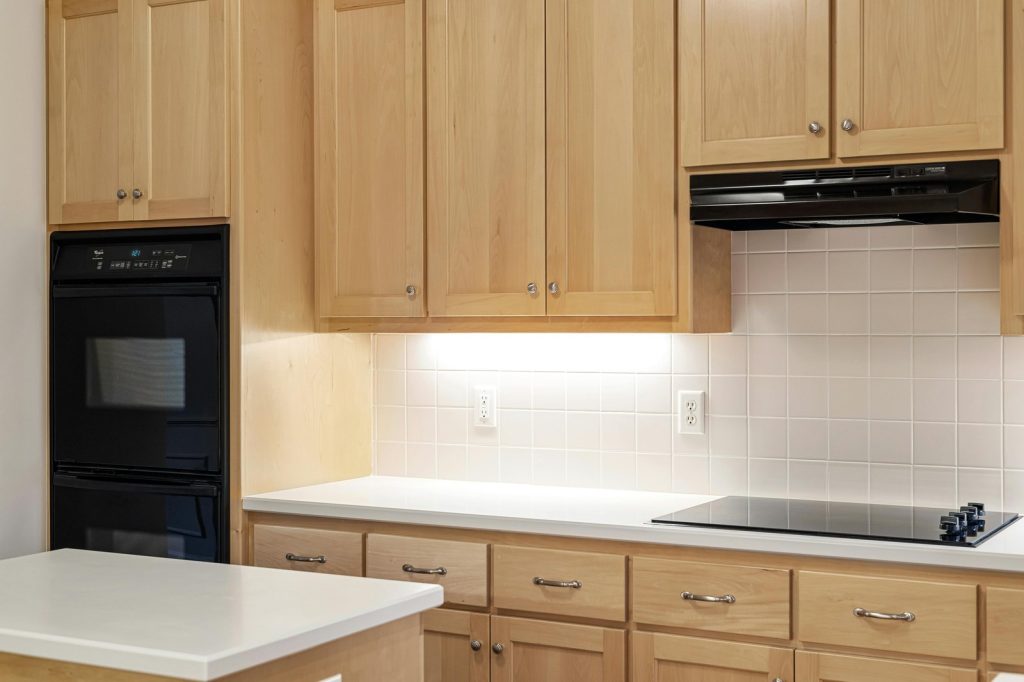
If your kitchen has a built-in cooktop and a separate wall oven rather than one freestanding range, the rules change a little. Those usually get their own dedicated circuits. A single wall oven commonly wants a 30-amp breaker on 10-gauge copper, and a cooktop often a 40-amp circuit on 8-gauge, though a powerful induction cooktop can push that to 50. Again, each unit’s label is the deciding voice.
The demand-factor trap
Here is a piece of confusion worth clearing up, because it leads people to under-wire ranges. You may read that a range “only draws so many amps” thanks to something called a demand factor, the idea being that you never run every element and the oven flat out at the same moment.
That is true, but it applies to sizing the whole house’s service and feeder, not the range’s own circuit. The branch circuit feeding the range is still sized the full way, around 50 amps for a typical range, regardless of the demand-factor math used elsewhere. Do not let a service-load calculation talk you into a smaller range circuit than the appliance needs. The NEMA 14-50 outlet and a 50-amp circuit are the standard for a reason.
Leave the 240-volt work to an electrician
A range circuit is a heavy 240-volt run with a four-wire connection and a specific outlet, all of which has to be done correctly and to code, and in Jamaica it should be inspected. This is not a job for guesswork or an old three-prong adapter. We run dedicated range and kitchen circuits as part of wiring and installations.
Related reading
- What size wire and breaker does a water heater need? for another heavy 240-volt kitchen-and-utility load.
- What size wire and breaker does an air conditioner need? for how a different big appliance is sized.
- Wiring and installations for running a dedicated, four-wire range circuit to code.
What size breaker and wire does an electric range need?
For a typical freestanding electric range, the standard is a 50-amp double-pole breaker on 6-gauge copper wire, feeding a dedicated NEMA 14-50 outlet. Some smaller ranges run on a 40-amp breaker with 8-gauge copper. The unit’s nameplate is what decides, so check it before buying wire.
Why does an electric range need a four-wire circuit?
A modern range circuit uses two hots, a neutral and a separate ground, landing on a NEMA 14-50 outlet. Older homes often had a three-wire setup with no separate ground. Keeping the neutral and ground separate is a safety improvement, so new range installations are done as four-wire.
Can I use an old three-prong range outlet for a new range?
You should not just adapt it. If you find an old three-prong outlet behind a range, the correct fix is to update the circuit and outlet to the modern four-wire arrangement, not to source a matching old cord. That is electrician work, because it involves the 240-volt circuit and proper grounding.
Do a cooktop and wall oven need separate circuits?
Usually, yes. When they are separate units rather than one freestanding range, each typically gets its own dedicated circuit. A single wall oven commonly needs a 30-amp breaker on 10-gauge copper, and a cooktop a 40-amp circuit on 8-gauge, with powerful induction cooktops sometimes needing 50 amps. Check each unit’s label.
I read a range only draws 30-something amps. Can I use a smaller circuit?
No. That lower figure comes from the demand factor, which is used to size the whole house’s service and feeder, not the range’s own circuit. The branch circuit feeding the range is still sized the full way, around 50 amps for a typical range. Do not under-wire it based on a service-load calculation.
Can I wire an electric range myself?
It is not advisable. A range circuit is a heavy 240-volt, four-wire run with a specific outlet, all of which has to be done to code and, in Jamaica, inspected. Mistakes on a load this size are a shock and fire risk, so it is electrician work.
The next step
Fitting a new electric range, or found an old three-prong outlet behind your current one? It is worth getting the circuit checked and brought up to standard. Get a free quote or message us, and we will run or update a proper dedicated four-wire range circuit, sized to your appliance and done to code.