

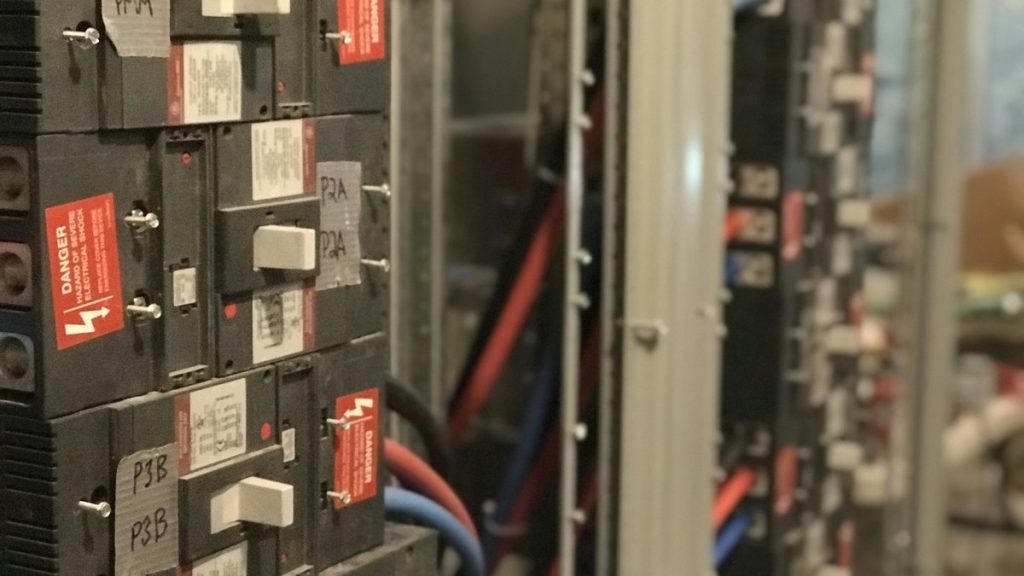
We have all done it. A breaker trips, the room goes dark, you walk to the panel, flip it back, and get on with your evening. If it holds, no harm done. The trouble starts with the breaker that trips straight back the moment you reset it, and the very human urge to keep flipping it until it finally stays. That habit is one of the more dangerous things you can do with your electrics. Here is what the trip is actually telling you, and what to do instead.
A trip is the breaker doing its job
Start with what a breaker is for. It watches the current on its circuit and cuts the power the instant that current climbs past what the wiring can safely carry. That is the entire purpose of it. So when it trips, it has not failed. It has worked, stopping the circuit before it could overheat. Which means a breaker that keeps tripping is not a stubborn breaker to be muscled past. It is a breaker telling you, plainly and over and over, that something on that circuit is wrong.
Read the trip as a message, not an obstacle.
What keeps making it trip
A breaker trips for one of a few reasons, and not one of them goes away when you reset it. The circuit might be overloaded, with more appliances pulling current than the wiring is rated for. There might be a short circuit, a hot wire touching a neutral or ground, sending current racing down a path it should never take. Or there might be a ground fault, current leaking out of the circuit altogether, which is often the most dangerous of the three. A short circuit especially can throw an enormous surge of current in an instant, which is why it counts as a serious fault and not a nuisance.
Whichever one it is, the fault is still sitting there after you reset. The breaker just catches it again.

Why forcing it back on is dangerous
This is the part that matters. Every time a faulted circuit carries current, even for the half-second before the breaker catches it, it puts heat into the wiring. Keep forcing the breaker back on and you keep feeding heat into that wire. Cycle after cycle, the insulation around it hardens, cracks, and can melt away, leaving bare copper inside your wall. That is a fire waiting for a spark.
The second danger is faster and uglier. Closing a breaker onto a hard short can set off an arc flash, a sudden burst of intense heat and light right at the panel, and it can burn or seriously injure whoever happens to be standing there. The Wikipedia arc flash page shows what that is. With a ground fault, meanwhile, the leaking current has to go somewhere. If that somewhere is a metal appliance or a damp surface, the next person to touch it becomes the path to ground and takes the shock. Another reset does not ease any of this. It makes it worse.
The one safe reset, and the line you do not cross
So what should you actually do? Reset the breaker once. If it holds, the trip was probably a one-off, maybe a momentary overload from too many things switching on at once, and you can carry on while keeping half an eye on it. If it trips again, stop there. Leave it off. That second trip is the circuit confirming there is a real fault, and the safe move is to stop using it until someone works out why.
There is a bit of safe detective work you can do before you call anyone. Unplug things from the affected circuit and note what was running when it went, because a single faulty appliance is a common culprit. Look and sniff around the outlets and the panel for scorch marks or a hot-plastic smell. What you must not do is keep cycling the breaker, tape or wedge it on, or drop in a bigger breaker to make the tripping stop. A larger breaker fixes nothing. It just strips out the protection and lets the wire overheat freely. Finding and fixing the actual cause is panel and breaker work for an electrician.
The takeaway
A breaker that keeps tripping is not the problem. It is the warning. Each trip is your panel stopping a circuit before it can overheat, and resetting it again and again overrides that protection and pushes heat into the wiring, with fire, arc flash, and shock all in play. So reset it once. If it trips again, leave it off, unplug what you can, and get an electrician to find the fault. The breaker has already done the hard part by catching the danger. The mistake is talking it back out of the catch.
Related reading
- Signs of overloaded circuits in your home for the most common reason a breaker trips.
- What is an arc fault and why it matters for a hidden fault a breaker may not catch.
- Signs your breaker panel needs upgrading for when the panel itself is the issue.
- Panel and breaker work to find and fix the fault behind a tripping breaker.
Why does my breaker keep tripping after I reset it?
Because the fault that caused the trip is still there. A breaker trips when current on the circuit climbs past what the wiring can safely carry, due to an overload, a short circuit, or a ground fault. Resetting it does nothing about the underlying problem, so the breaker simply detects the same fault again and trips.
Is it dangerous to keep resetting a tripping breaker?
Yes. Every time a faulted circuit carries current it makes heat in the wiring, and repeated resets feed more heat in until insulation can crack and melt, creating a fire risk inside the wall. Closing a breaker onto a short can also cause an arc flash, and a ground fault raises the risk of a serious shock.
How many times is it safe to reset a breaker?
Once. If the breaker holds after a single reset, the trip was likely a momentary overload and you can carry on while watching it. If it trips again, leave it off. That second trip confirms a real fault, and the circuit should not be used until an electrician finds the cause.
Can I fit a bigger breaker to stop the tripping?
No, and this is dangerous. The breaker is sized to protect the wiring behind it. A larger breaker lets the circuit draw more current than the wire can safely carry, so it removes the protection and allows the wire to overheat without tripping. The fault must be found and fixed instead.
What can I safely check before calling an electrician?
Unplug appliances from the affected circuit and note what was running when it tripped, since one faulty device is a common cause. Look and smell around the outlets and panel for scorch marks or a hot-plastic odour. Do not keep cycling, taping, or wedging the breaker on. If it still trips, call an electrician.
What is the difference between an overload and a short circuit?
An overload is simply too many appliances drawing more current than the circuit is rated for. A short circuit is a hot wire touching a neutral or ground, sending a huge surge of current through a path it should never take. A short is the more serious fault, with a higher risk of fire and shock, and needs prompt attention.
The next step
If a breaker in your home trips and will not stay reset, do not fight it. Leave it off and let us find out why. Get a free quote or message us, and we will track down the fault on that circuit and put it right, so the breaker only trips when it truly needs to.