

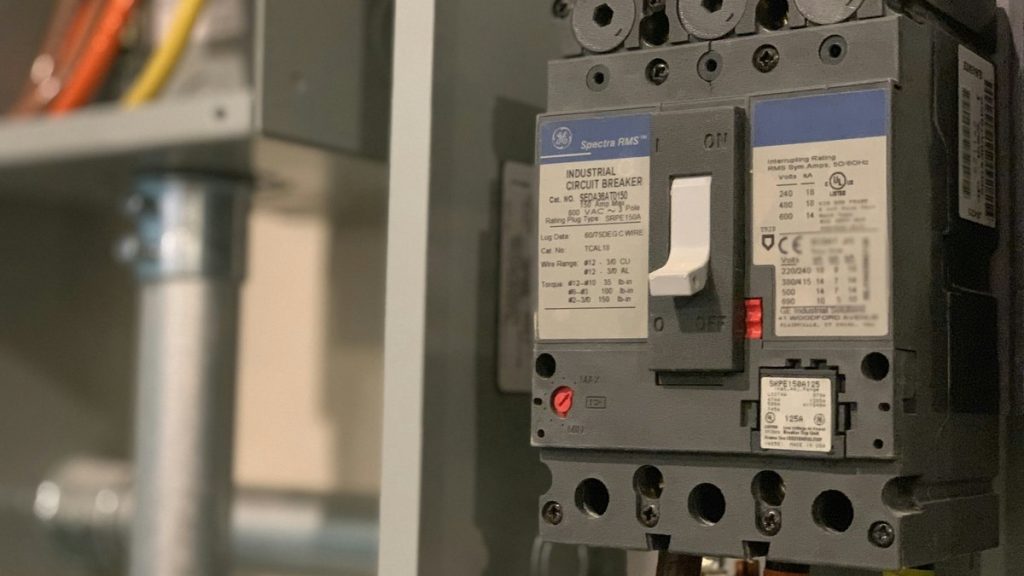
Stand close to your breaker panel on a quiet night and you might catch a faint hum. By itself, that is usually nothing. What deserves your attention is a panel that buzzes loudly, crackles, or gets louder when the power comes under load. That sound is not normal, and left alone it can point to a fault that turns into a fire risk. So here is how to tell an everyday hum from a warning, what sits behind the noise, and the firm line about opening the panel yourself.
A faint hum can be normal
Electricity running through wires and devices makes a small amount of vibration, and that can come out as a soft, steady hum you only notice up close in a silent room. It is the same gentle background buzz you sometimes hear off a transformer or a fluorescent tube, and the Wikipedia mains hum page covers where it comes from. A quiet, even hum that never changes is generally nothing to lose sleep over.
The trouble starts when the sound stops being quiet and even.
The buzz that is a warning
A handful of sounds from the panel should put you on alert. A loud buzz you can hear from across the room. A sharp or erratic noise instead of a smooth hum. A crackle or a sizzle, which means arcing. A buzz that swells when a big appliance kicks on or the panel comes under load. And worst of all, any buzzing that comes with heat off the panel, a scorch mark, or the smell of hot plastic.
A steady hum is the panel doing its work. A loud, sharp, shifting buzz is the panel telling you a connection or a component is failing.

What causes the dangerous kind
A few culprits show up again and again behind a panel that buzzes the wrong way, and they share a theme: electricity meeting resistance where it should flow cleanly.
One is a failing breaker. Breakers wear out, and a damaged one buzzes or hums, often louder when it is carrying load, because its internal parts no longer make solid contact. Another, and a more serious one, is a loose or damaged connection inside the panel. Current jumping a loose joint arcs, buzzes, and throws off heat, which is exactly the recipe for a fire. An overloaded circuit can hum too, as a breaker strains to carry more current than it was built for. And in our climate, damp and salt air speed up corrosion on the connections inside a panel, slowly turning a tight joint into a loose, buzzing one.
Whatever the cause, the noise is energy turning into heat and vibration somewhere it should not. That is why we treat a buzzing panel as a hazard and not a quirk.
Why you must not open the panel
Here is the firm rule. The inside of a breaker panel is one of the most dangerous places in your home for anyone untrained. Even with the main breaker off, parts of it can stay live, carrying enough current to kill. Opening the cover to poke around a buzzing panel is not troubleshooting. It is a real chance of a shock or an arc flash.
So what should you do instead? If the hum is faint, steady, and unchanging, note it and mention it next time an electrician is by. If the buzz is loud, sharp, crackling, getting worse, or comes with any heat or burning smell, treat it as urgent. Drop the load by switching off and unplugging what you can, and if you can do it safely, turn off the main breaker. Then call an electrician rather than living with it. Finding and fixing the fault inside the panel is panel and breaker work, and it is squarely a job for a professional.
The takeaway
A breaker panel giving off a faint, steady hum is usually just the quiet sound of electricity at work. A panel that buzzes loudly, crackles, shifts with load, or runs warm is another matter, and it points to a failing breaker, a loose connection, or an overloaded circuit, any of which can end in a fire. The safe response is never to open the panel yourself. Cut the load, kill the main breaker if you safely can, and get an electrician to look. The noise is information. The panel interior is not yours to open.
Related reading
- Why you should never keep resetting a tripping breaker for another sign a circuit needs attention.
- What is an arc fault and why it matters for the arcing that often lies behind a buzz.
- Signs your breaker panel needs upgrading for when the panel itself is past its best.
- Panel and breaker work to find and fix the fault behind a buzzing panel.
Is it normal for a breaker panel to hum?
A faint, steady hum that you only notice up close in a quiet room is usually normal. Electricity moving through wires and components makes a small vibration, the same soft buzz you hear from a transformer. A quiet, even hum that never changes is generally not a cause for concern.
When is a buzzing breaker panel dangerous?
When the sound is loud, sharp, erratic, crackling, or grows louder under load, and especially if the panel is warm, discoloured, or smells of hot plastic. Those signs point to a failing breaker, a loose connection, or an overloaded circuit, any of which can lead to an electrical fire and need prompt attention.
What causes a breaker panel to buzz loudly?
Common causes are a failing breaker whose internal parts no longer make solid contact, a loose or damaged connection inside the panel where current arcs across the gap, or an overloaded circuit straining the breaker. Damp and salt air speed up corrosion inside a panel, turning tight connections into loose, buzzing ones over time.
Can I open the panel to find the buzzing?
No. The inside of a breaker panel is extremely dangerous for an untrained person, and parts of it can stay live even with the main breaker off, carrying enough current to kill. Opening the cover risks serious shock and arc flash. Diagnosing a buzzing panel is strictly a job for a qualified electrician.
What should I do if my panel buzzes loudly?
Treat it as urgent. Reduce the load by switching off and unplugging what you can, and if you can do it safely, turn off the main breaker. Do not open the panel. Then call an electrician to find and fix the fault, rather than living with the noise and risking a fire.
Could a buzzing panel just be one bad breaker?
It can be, since a worn breaker often buzzes louder under load as its contacts fail. But the same sound can come from a loose connection or an overload, and you cannot safely tell which from outside the panel. An electrician can test the breakers and connections and replace whatever is at fault.
The next step
If your breaker panel has started buzzing loudly, crackling, or running warm, do not open it and do not wait. Get a free quote or message us, and we will safely find what is making the noise and put it right before it becomes a bigger problem.