

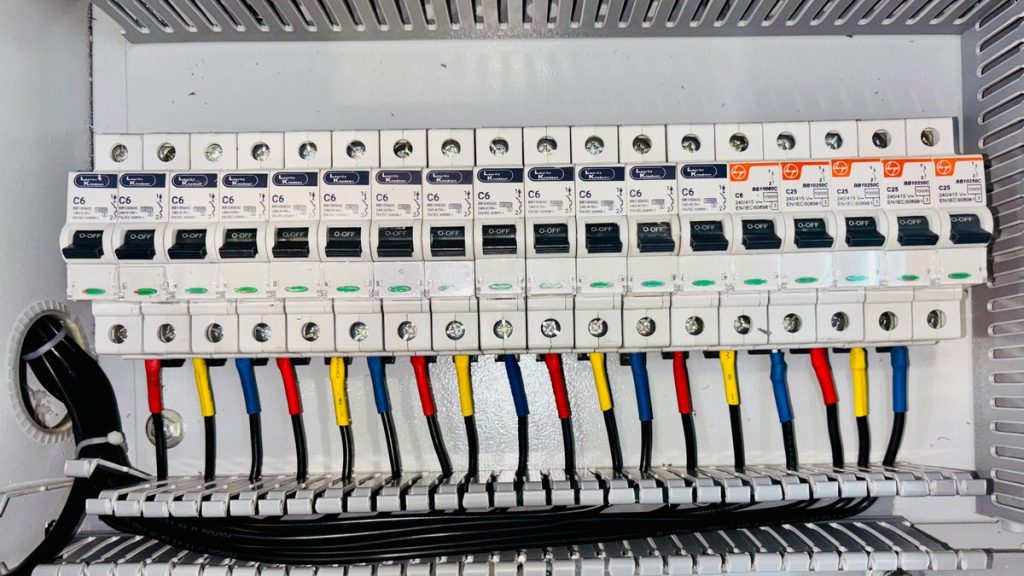
Every circuit in your home is built to carry a set amount of electricity and no more. Run too many things at once on the same wiring, and it starts to strain. The saving grace is that an overloaded circuit usually warns you first. The trouble is that the warnings are easy to ignore or work around, and that is exactly how an overload becomes an overheated wire and, at the far end of it, a fire. So here are the signs worth knowing, what sits behind each one, and the point where you should bring in an electrician.
A breaker that keeps tripping
This is the clearest sign of the lot, and it is your protection doing its job. A breaker trips when the circuit behind it is pulling more current than it is rated for. Reset it once and it holds? Probably a one-off. Reset it and it trips again within minutes, especially when the same appliance kicks on, and that circuit is overloaded. What you should not do is keep resetting it, or worse, drop in a bigger breaker. That breaker is the one thing standing between an overloaded wire and the heat it would otherwise build. The Wikipedia circuit breaker page explains how that protection works if you want the detail.
Lights that dim or flicker when something switches on
Watch what your lights do when a big appliance starts up. If they dip the moment the air conditioner, microwave, or water pump comes on, that circuit is being pulled close to its limit. The appliance’s heavy starting draw leaves less for everything else for a split second, and the lights show it. An occasional flicker on a very large load can be normal. Lights that dim every single time, or on circuits feeding ordinary rooms, mean too much is sharing one line. We get into this in why do my lights flicker when the AC turns on.
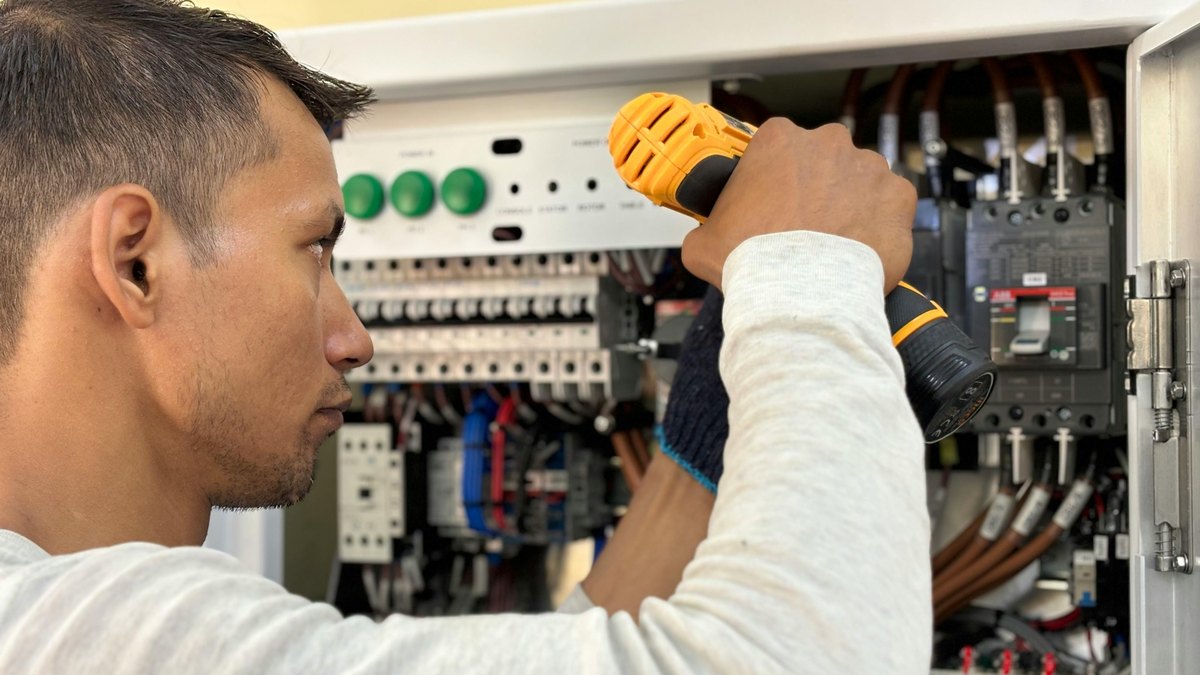
Warm outlets, switches, or wall plates
Electricity moving through a circuit makes a little heat, and a healthy circuit shrugs it off. An outlet, switch, or wall plate that feels warm to the touch is telling you something is off, usually that the circuit is carrying more than it should, or that a connection behind it has gone loose. Warm is a warning. Hot, discoloured, or buzzing is a stop sign: unplug what is on it and leave it alone until someone checks it. We cover that exact symptom in why is my outlet warm to the touch.
A burning smell
Take any burning or hot-plastic smell near an outlet, switch, or the panel seriously. When wiring carries more current than it is meant to, it overheats, and that heat starts to cook the plastic insulation and the outlet itself. That is what your nose is picking up. Stop using the circuit right away. If you can find the breaker for it, switch it off, and have an electrician look before you use it again. A melting-plastic smell is not something to live with. It is the last warning before real damage.
Leaning on power strips and extension cords
This sign is less about symptoms and more about habits. If a room runs off a tangle of power strips, adapters, and extension cords, the real problem is usually too few circuits, or too few outlets, for how the space actually gets used. A power strip does not add capacity. It just splits one circuit among more devices, which is the very thing that overloads it. Daisy-chaining one strip into the next, or running a heater off a thin extension cord, is a classic way homes tip into overload. The fix is more outlets, and where it comes to it, more circuits. Not more strips.
What causes it, and why our homes are prone to it
At heart an overload is simple: the demand on one circuit is more than the wiring and breaker were sized for. It happens when high-draw appliances share a line never meant for them, when an older home has too few circuits for a household full of electronics and air conditioning, or when a single outlet quietly feeds half a room through extension cords. A lot of older Jamaican homes were wired for a far lighter load than families put on them now, so adding window units, water heaters, and a kitchen full of appliances can push the original circuits past what they were ever built for.
What you can safely do, and when to call
There is plenty you can do yourself, none of it risky. Spread high-draw appliances across different circuits and outlets instead of bunching them on one. Keep heaters, irons, and kettles off extension cords. Throw out cords that are damaged or warm. And treat a tripping breaker as information rather than an annoyance: notice what was running when it went.
Where it stops being a do-it-yourself job is the wiring and the panel. Never swap in a larger breaker to stop the tripping. That strips out the protection and leaves the wire to overheat. If a circuit trips again and again, an outlet runs warm, or you smell burning, that is the point to call an electrician. Adding circuits and outlets and sorting an overloaded panel is panel and breaker work, and it is the real fix, not a workaround.
The takeaway
An overloaded circuit nearly always announces itself: a breaker that keeps tripping, lights that dim when an appliance starts, outlets that run warm, a burning smell, a room limping along on power strips. The tripping breaker is protection working. The heat and the smell are that protection running out of road. You can ease the load by spreading appliances out and ditching the extension cords, but the lasting fix, more circuits and a panel that matches how you actually live, is an electrician’s job. In a home asked to do more electrical work than it was first wired for, those signs are worth catching early.
Related reading
- Why do my lights flicker when the AC turns on? for the dimming-on-startup sign explained.
- Why is my outlet warm to the touch? for the warm-outlet warning in detail.
- Signs your breaker panel needs upgrading for when too few circuits is the root cause.
- Panel and breaker work to add circuits and outlets and fix an overloaded panel safely.
What is the most common sign of an overloaded circuit?
A breaker that keeps tripping. The breaker trips when the circuit is carrying more current than it is rated for, so if one resets and then trips again within minutes, especially when a particular appliance switches on, that circuit is overloaded. The trip is your protection working, not a fault to bypass.
Why do my lights dim when an appliance turns on?
Because the heavy starting draw of a big appliance, like an air conditioner, microwave or water pump, briefly pulls the circuit close to its limit and leaves less for the lights. An occasional dip on a very large load can be normal, but lights that dim every time, or on ordinary room circuits, point to too much sharing one line.
Is a warm outlet a sign of overload?
It can be. A circuit carrying more than it should, or a loose connection behind the outlet, both produce heat. Warm is a warning to reduce what is plugged in and have it checked. Hot, discoloured, buzzing, or a burning smell means stop using it immediately and call an electrician.
Can I just fit a bigger breaker to stop the tripping?
No, and this is dangerous. The breaker is sized to protect the wiring behind it. Fitting a larger one lets the circuit draw more current than the wire can safely carry, removing the protection and allowing the wire to overheat. The right fix is to reduce the load or add a properly sized circuit.
Why do older homes overload more easily?
Many older homes were wired for a far lighter load than families use today. Window air conditioners, water heaters, and a kitchen full of appliances draw far more than the original circuits were built for, so the wiring is asked to carry more than it was ever sized to handle, and circuits trip or run warm.
When should I call an electrician about an overloaded circuit?
When a breaker trips repeatedly, an outlet or switch runs warm, you smell burning, or a room only works through power strips and extension cords. Easing the load yourself helps, but adding circuits and outlets and correcting an overloaded panel is work for a qualified electrician, not a do-it-yourself task.
The next step
If a breaker in your home keeps tripping, an outlet runs warm, or a room only works through a maze of extension cords, your circuits are telling you they are stretched. Get a free quote or message us, and we will add the circuits and outlets your home actually needs so nothing has to carry more than it safely can.