


A water heater circuit is one of those jobs where the price has very little to do with the heater and everything to do with the wiring that feeds it. Three things set the cost: whether a suitable circuit is already there, how far the heater sits from the panel, and the one that changes the whole picture, whether you are fitting a tank or a tankless. Here is how each of those moves the number, so you know what you are looking at before anyone quotes you.
What the circuit actually is
A standard electric tank water heater runs on a dedicated 240-volt circuit, the same higher voltage as a range, not an ordinary outlet. For most home tanks that means a 30-amp double-pole breaker feeding 10-gauge cable, and that circuit serves the heater and nothing else. “Installing the circuit” means fitting that breaker in the panel, running the right cable to the heater, and landing it safely, all sized to the unit’s nameplate rather than guessed. The plumbing and the tank itself are a separate job; this is the electrical half.
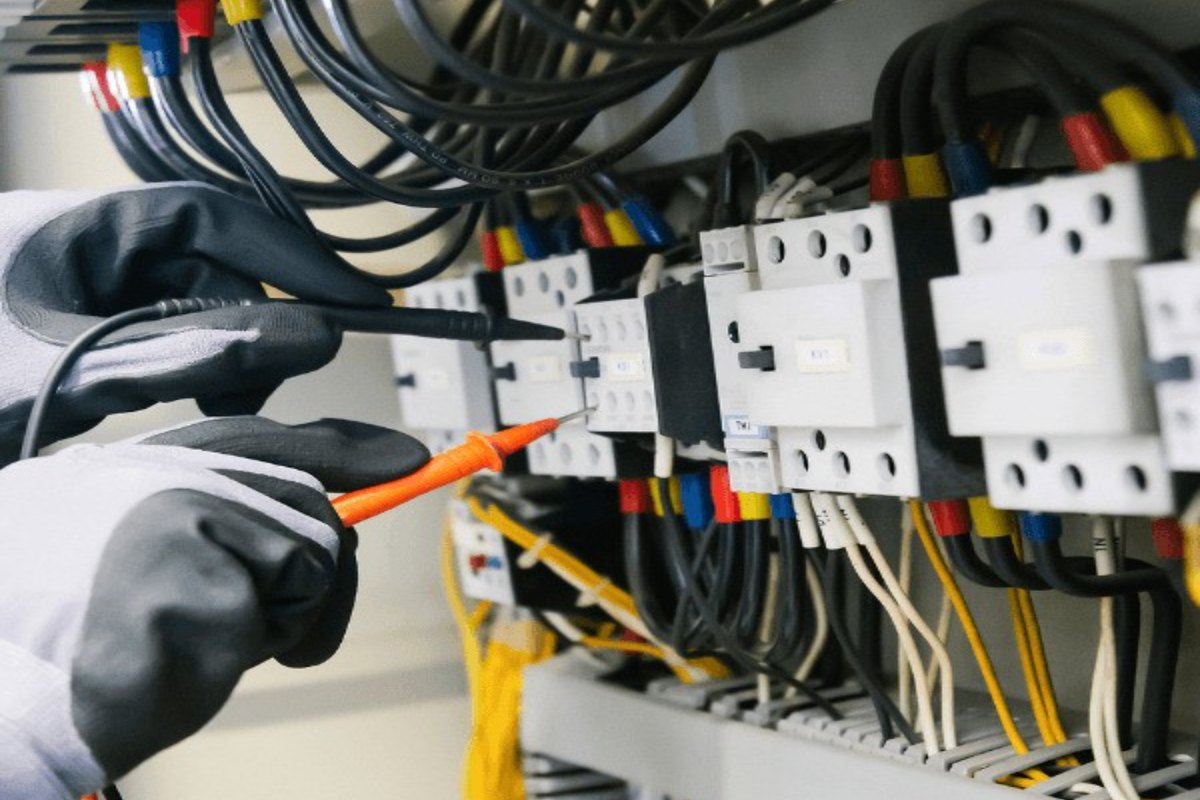
Replacing versus running a new circuit
The cheapest version is a like-for-like swap. If you already have a tank heater on a sound 240-volt, 30-amp circuit and you are simply replacing the unit, the circuit is already there and the electrical side is quick. The cost climbs when there is no circuit yet, because then it is a fresh run: a new double-pole breaker, new cable all the way to the heater, and the labour to get it there. A heater going somewhere that never had one is always more than swapping one that did.
How far the heater sits from the panel
After that, distance is the main variable. Water heaters tend to live in awkward places, high on a wall, in a roof space, out at the back of the house, and the further the heater is from the panel, the more cable has to run and the harder it is to route. As with any Jamaican job, solid block and concrete mean that run is either in surface conduit or chased into the wall and made good, which adds labour. The breaker is cheap; the run is what you pay for.
The big fork: tank or tankless
This is where the cost can jump, and it is worth understanding before you fall in love with a tankless heater. A standard tank sips power steadily and is happy on that 30-amp circuit. A tankless, or instant, electric heater does the opposite: it heats water on demand, which means a very large draw in short bursts. A whole-house electric tankless can need a 40-amp circuit, sometimes two of them, on much heavier 8 or 6-gauge cable, and that is a serious load to add. We go into the detail in what size wire and breaker does a tankless water heater need? The short version: the tankless unit may be the same money to buy, but the circuit to feed it can cost several times what a tank’s does.
Can the panel take it?
Either way, the panel has to have room. A 240-volt circuit needs two free slots, and a tankless may need four or a much bigger allowance. If your panel is full, or close to its limit, the job grows to include a subpanel or a panel and service upgrade to carry the new load, which can become the largest part of the cost. This is exactly why we check the panel first, the same capacity question behind what size wire and breaker does a water heater need?
Inspection, and who does what
A new water heater circuit should be done to standard and pass a Government Electrical Inspectorate inspection before the supply is connected. The breaker, the cable and the panel work are electrician work, both because it is 240 volts near water and because it has to be inspected. The tank and plumbing are a plumber’s side; we handle the circuit. The honest way to price it is to see where the heater goes, what type it is, and whether the panel can feed it, which we do as part of panel and breaker work. You can read how these heaters work under water heating.
Related reading
- What size wire and breaker does a water heater need? for the circuit a tank heater should be on.
- What size wire and breaker does a tankless water heater need? for why a tankless costs more to feed.
- Why does my water heater keep tripping the breaker? for faults on an existing heater circuit.
- Panel and breaker work for fitting a water heater circuit to standard.
What circuit does an electric water heater need?
A standard electric tank heater runs on a dedicated 240-volt circuit, usually a 30-amp double-pole breaker feeding 10-gauge cable, serving the heater and nothing else. It is the same higher voltage as a range, not an ordinary outlet, and the breaker and wire should be sized to the unit’s nameplate rather than guessed.
Is it cheaper to replace a water heater than to add a new circuit?
Yes, much. If you already have a tank on a sound 240-volt, 30-amp circuit and you are just replacing the unit, the circuit is there and the electrical work is quick. Putting a heater somewhere that never had one means a fresh run: a new breaker, new cable all the way to the heater, and the labour to route it, which costs more.
Why does a tankless water heater cost more to wire?
Because it heats water on demand, which means a very large electrical draw in short bursts. A whole-house electric tankless can need a 40-amp circuit, sometimes two, on much heavier 8 or 6-gauge cable, and that is a serious load. The unit may cost the same to buy as a tank, but the circuit to feed it can cost several times more.
Does the distance from the panel affect the cost?
Yes. Water heaters often sit in awkward places, high on a wall, in a roof space or at the back of the house, and the further the heater is from the panel, the more cable has to run and the harder it is to route. In block or concrete that run goes in surface conduit or is chased in, which adds labour. The cable run is usually the real cost.
Will my panel need upgrading for a water heater circuit?
It might. A 240-volt circuit needs two free slots in the panel, and a tankless may need far more allowance. If the panel is full or near its limit, the job grows to include a subpanel or a panel and service upgrade to carry the new load, which can become the biggest part of the cost. That is why the panel is checked first.
Who installs a water heater circuit, an electrician or a plumber?
Both trades are involved. The breaker, cable and panel work are electrician work, because it is a 240-volt circuit near water and it has to pass inspection. The tank and the plumbing are a plumber’s side. We handle the electrical circuit and the panel, sized and inspected to standard.
The next step
Whether a water heater circuit is a quick swap or a bigger job comes down to your panel, the run, and tank versus tankless. Get a free quote or message us, tell us the heater you have in mind and where it goes, and we will check the panel and the run and give you a real number.