

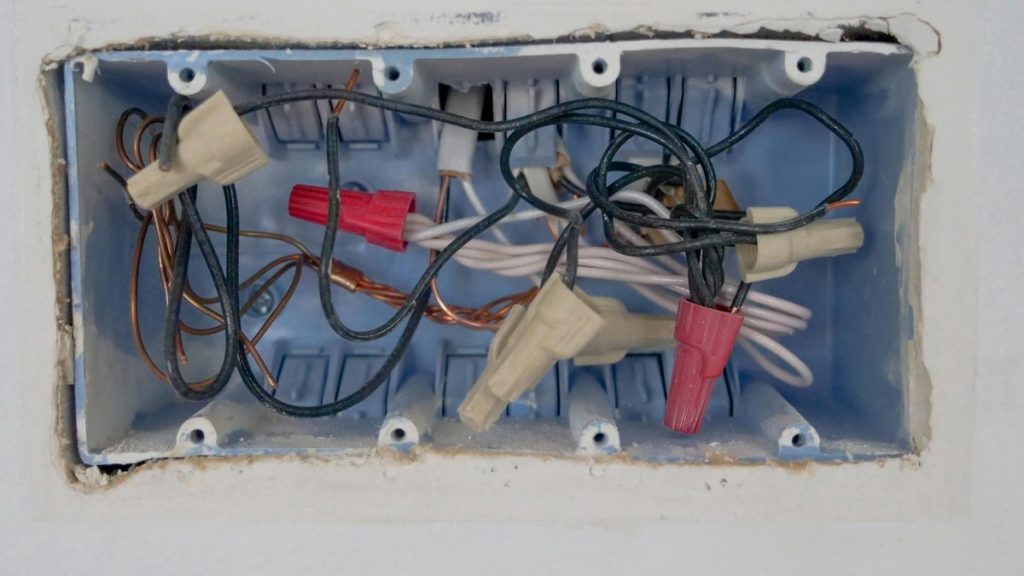
A loose connection is one of the most common faults in a home’s electrics, and one of the most dangerous, because it can quietly heat up and start a fire even when nothing is switched on. It is also the hidden cause behind a lot of problems that look unrelated: the flickering light, the warm outlet, the buzzing panel. Learn to spot the signs and you catch a real hazard early. Here is what to look, listen, and feel for, and what to do when you find it.
Why a loose connection is dangerous
Electricity is meant to flow through firm, tight joints, wire to wire or wire to a screw terminal. When a joint loosens, the contact area shrinks and resistance climbs, and current squeezing through that high-resistance point makes heat. The looser it gets, the more it arcs, tiny sparks jumping the gap, which makes still more heat. And that heat builds right at the connection, often hidden inside a wall box or behind a fixture, next to things that burn. The Wikipedia electrical connector page covers the connections themselves. This is why we treat a loose connection as a real fire risk and not a minor annoyance.
What to look for
Your eyes catch several of the signs. Lights that flicker or dim for no clear reason, especially across more than one fixture, often trace back to a loose or corroded connection. Outlets or switch plates that have turned brown or show scorch marks are telling you something behind them has been overheating. An outlet that wobbles, or whose insides shift when you push a plug in, is loose in its box, and a loose device works its wires free over time. Take any of these seriously.
What to listen and feel for
Some signs you hear or feel rather than see. A buzzing, humming, or faint zapping from an outlet, a switch, or the panel is the sound of arcing at a loose joint, and it should never be ignored. An outlet or switch plate that is warm or hot to the touch is telling you a connection behind it is heating up. And the one that should stop you cold: any burning or hot-plastic smell near an outlet, switch, or the panel means wiring is hot enough to melt its own insulation. That is an immediate fire risk.
The signs that show up elsewhere
A loose connection does not always announce itself where it actually lives. A breaker that trips for no obvious reason can come from an unstable connection upsetting the circuit. A device or outlet whose power comes and goes, fine one minute and dead the next, often has a joint making and breaking contact. And a mild shock or tingle off a metal appliance or fixture can point to a loose neutral or ground, which is both a clue and a hazard in itself. These are easy to pin on the appliance when the real fault is a loose wire upstream.
What to do about it
If you spot any of these signs, treat that outlet, switch, or circuit as unsafe to use. Stop using it, and if an outlet is warm, buzzing, or scorched, unplug whatever is on it. You can switch off the breaker for that circuit to make it safe. What you should not do is open the outlet, switch, or panel to go hunting for the loose wire yourself. The connection is usually live, often tucked inside a box, and tightening or remaking it properly takes the right approach so it does not just work loose again. Finding and repairing a loose connection is routine wiring installation work for an electrician, and far cheaper than the fire it heads off.
One thing worth knowing about our conditions: vibration, the daily heating and cooling of wires, and damp salt air gnawing at contacts all work connections loose over time. That is why a joint that held for years can suddenly start causing trouble, and why these signs are worth acting on rather than waiting out.
The takeaway
A loose connection hides behind a lot of everyday electrical complaints: flickering lights, warm or browned outlets, buzzing at the panel, a wobbly socket, unexplained breaker trips, intermittent power, and mild shocks. It matters because a loose joint makes heat and arcing right where you cannot see it, and that is how fires start. If you notice any of these, stop using the spot, kill its breaker if you can, and call an electrician to find and remake the connection. Catching it early is the easy version of this problem.
Related reading
- Why is my outlet warm to the touch? for one of the clearest signs of a loose connection.
- What a buzzing breaker panel means for the arcing sound at the panel.
- What is an arc fault and why it matters for the fire risk a loose joint creates.
- Wiring installations to find and properly remake a loose connection.
What are the signs of a loose electrical connection?
Common signs include flickering or dimming lights, a buzzing or zapping sound from an outlet, switch or panel, a warm or hot outlet or switch plate, brown or scorched marks around a device, a wobbly outlet, unexplained breaker trips, power that comes and goes, and mild shocks off metal appliances. Any burning smell is an urgent warning.
Why is a loose connection dangerous?
When a joint loosens, the contact area shrinks and resistance rises, so current squeezing through makes heat, and the gap can arc, making more heat. That heat builds right at the connection, often hidden in a wall box next to flammable materials, so a loose connection can start a fire even when nothing is switched on.
Can a loose connection cause a fire even if nothing is plugged in?
Yes. As long as the connection is live, current flowing through a loose, high-resistance joint generates heat and can arc, regardless of whether anything is plugged into that particular outlet. That hidden heat is exactly why loose connections are treated as a fire hazard and not a minor issue.
Why do my lights flicker if the wiring is fine?
Flickering, especially across more than one fixture, is often a sign of a loose or corroded connection somewhere in the circuit rather than a problem with the bulbs. The unstable joint interrupts the current slightly, which shows up as flicker. It is worth having checked, since the same fault can lead to overheating.
What should I do if I find signs of a loose connection?
Stop using the affected outlet, switch or circuit, and unplug anything on a warm, buzzing or scorched outlet. Switch off the breaker for that circuit to make it safe. Do not open the outlet, switch or panel yourself, since the connection is usually live. Call an electrician to find and remake it properly.
What causes connections to come loose over time?
Vibration, the daily heating and cooling of wires that makes them expand and contract, and damp salt air that corrodes contacts all work connections loose over time. That is why a connection that was fine for years can start causing flickering, heat or buzzing, and why the signs are worth acting on rather than ignoring.
The next step
If your lights flicker, an outlet runs warm, or something buzzes that should be silent, there may be a loose connection quietly heating up behind your wall. Get a free quote or message us, and we will track it down and remake it properly before it becomes a fire.