

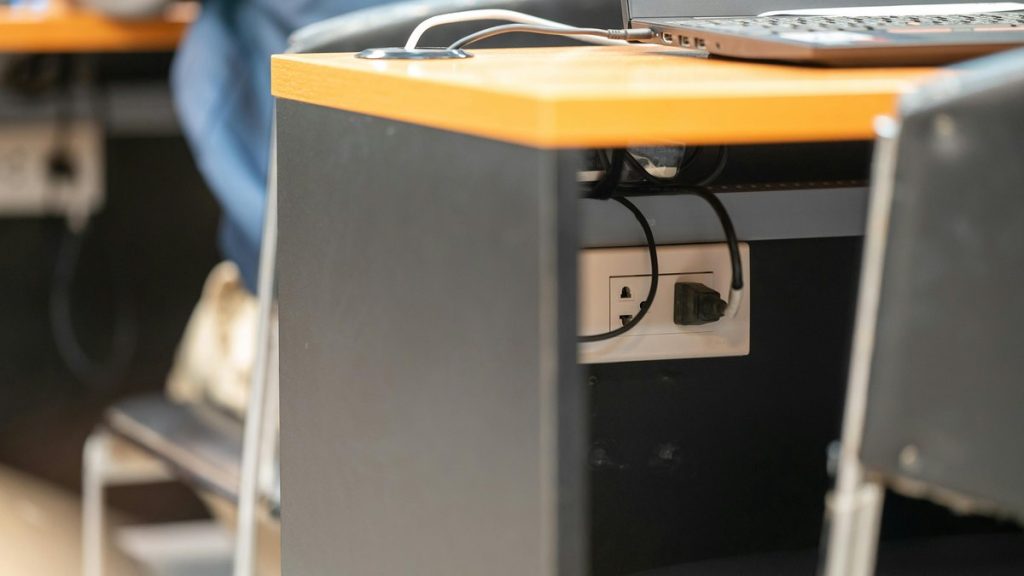
Almost every home has them, and almost every home leans on them harder than it should. An extension cord is handy, but it was built to be a temporary helper, not a permanent part of your wiring. Use it the wrong way and it turns into a real fire risk. The numbers bear that out: in the United States, the Consumer Product Safety Commission puts extension cords behind roughly 3,300 home fires a year. So here is what actually makes a cord catch fire, the habits that cause it, and what to do instead.
How an extension cord overheats
It comes down to heat. Every cord is rated to carry a certain amount of current, and that rating depends on how thick the wire inside is, its gauge. Push more current through it than it was built for and the cord gets hot. The wire has resistance, current forced through resistance makes heat, and the more you overload it against its rating, the hotter it runs. That heat goes straight into the plastic insulation around the wire and slowly cooks it. Over time the insulation hardens, cracks, and breaks down, and a cord in that state can fail and set alight whatever it is touching. The Wikipedia extension cord page covers the basics.
So the danger is not that the cord exists. It is the cord carrying more than it can handle, quietly turning electricity into heat inside a thin plastic-wrapped wire.
The undersized cord trap
This is the part people miss. A thin, cheap cord plugged into a heavy appliance is a classic way to start a fire, and your breaker may not save you. The breaker in your panel is sized to protect your house wiring, which is thicker than most extension cords. A skinny cord can be cooking itself while still drawing less current than it takes to trip that breaker. Put another way, the cord can reach a fire-starting temperature long before the panel notices a thing. The protection you count on for the walls does not reach the undersized cord plugged into them.
That is why matching the cord to the job matters, and why a light-duty cord should never feed something hungry.
Daisy-chaining makes it worse
Plugging one extension cord into another, or running a power strip off a cord off another strip, is one of the most common and most dangerous habits going. Every length of cord you add brings its own resistance, and stringing them together piles that resistance up, which means more heat. It also makes it far too easy to load the whole chain past what any single cord is rated for. That is exactly why electrical codes say no to daisy-chained cords and strips. A chain of cords feels convenient, but you are stacking up heat and overload in the same move.
The hidden heat problem
Even a correctly sized cord can turn into a hazard depending on where you put it. Run one under a rug or carpet and the heat it would normally shed into the air has nowhere to go, so it builds, and you cannot spot the warning signs because the cord is out of sight. Tuck one under furniture or a mattress and you get the same trapped heat right beside something that burns well. Pinch a cord in a doorway, a window, or under a heavy table leg and you crush the insulation, leaving a weak spot that overheats. Old, cracked, or repaired cords carry the same risk. A cord needs to breathe and be seen, not buried.
The appliances that should never be on a cord
Some things draw too much to belong on an extension cord at all, even for a minute. Heaters, irons, electric kettles, microwaves, air conditioners, refrigerators: they all pull heavy current, and feeding them through an extension cord is asking for an overheated cord. They belong plugged straight into a wall outlet. If there is no outlet where you need one, that is a sign to add an outlet, not to reach for a cord.
The real fix
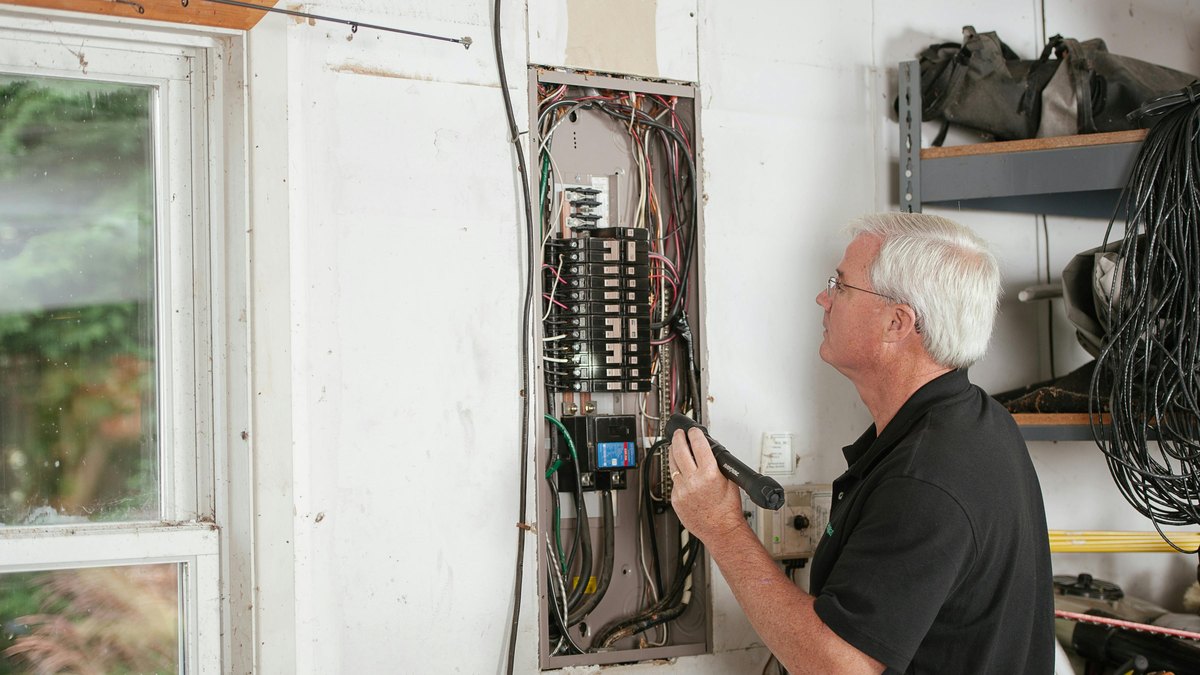
Here is the honest version. Extension cords are for temporary, occasional use, full stop. If a cord has become a permanent fixture, snaking across a room or living behind your furniture for months, the cord is not the thing to fix. The real problem is that the room has no outlet where you need one. The safe, lasting answer is to add properly wired outlets, which is straightforward wiring installation work for an electrician. It costs less than a fire, and it ends the daily gamble.
When you do use a cord, keep it simple. Pick one rated for the load, plug a single appliance into it, keep it out in the open where it can shed heat and you can keep an eye on it, never run it under rugs or through doorways, and bin any cord that is warm, cracked, or damaged.
The takeaway
Extension cords cause fires when they carry more current than their gauge can handle, when a thin cord feeds a hungry appliance and overheats before the breaker ever reacts, when cords are daisy-chained, and when they are buried where the heat cannot escape. None of that makes cords evil. It makes them temporary tools with limits. Match the cord to the job, keep it visible and undamaged, keep heavy appliances off it entirely, and if you find yourself depending on one, add a real outlet instead. The cord was never meant to do the wiring’s job.
Related reading
- Signs of overloaded circuits in your home for what too much demand on one circuit looks like.
- Why is my outlet warm to the touch? for another overheating warning sign.
- What is an arc fault and why it matters for how a damaged cord can arc.
- Wiring installations to add the outlets that make extension cords unnecessary.
Why do extension cords catch fire?
Because they overheat. Each cord is rated to carry a set amount of current based on its wire gauge, and pushing more through it than it is built for makes heat. That heat cooks the plastic insulation until it breaks down, and a cord in that state can fail and ignite whatever is touching it. Overloading and undersizing are the usual causes.
Won’t my breaker trip before an extension cord overheats?
Not necessarily. The breaker protects your house wiring, which is thicker than most extension cords. A thin cord can overheat to a dangerous temperature while still drawing less current than it takes to trip the breaker, so it can reach fire-starting heat before the panel notices anything wrong. That is why a cord must be sized for its load.
Is it safe to plug one extension cord into another?
No. Daisy-chaining cords, or running power strips and cords together, adds resistance and heat with every length, and makes it easy to overload the chain past what any single cord is rated for. Electrical codes treat daisy-chained cords and strips as unsafe. Use a single cord of the right length and rating instead.
Why should I never run a cord under a rug?
Because a cord normally sheds its heat into the air, and a rug or carpet traps that heat so it builds up, right next to something flammable, where you cannot see the warning signs. The same goes for running cords under furniture or mattresses. Cords need to be out in the open to stay cool and visible.
What should never be plugged into an extension cord?
High-draw appliances: space heaters, irons, electric kettles, microwaves, air conditioners and refrigerators. They pull heavy current that easily overheats a cord. These should plug straight into a wall outlet. If there is no outlet where you need one, the answer is to add an outlet, not to use a cord.
What is the safe alternative to relying on extension cords?
Adding properly wired outlets where you actually need them. Extension cords are meant for temporary use, so a cord that has become permanent is really a sign of too few outlets. Having an electrician add outlets is straightforward, ends the daily fire risk, and costs far less than a fire.
The next step
If your home runs on extension cords because the outlets are never where you need them, that is a fire risk you can retire for good. Get a free quote or message us, and we will add properly wired outlets where you actually use power, so the cords can go back in the drawer.