

When the electrics go wrong, the clock matters. Sparks at an outlet, a burning smell, water creeping toward a socket, someone caught in a shock: these are all moments where cutting the power fast can stop a fire or save a life. The reassuring part is that the single most useful skill here is simple. Find the main breaker and switch it off. The catch is knowing when it is safe to go near the panel at all. So here is how to do it right, and the lines you must not cross.
Before anything goes wrong
The time to learn where your breaker panel is is now, not in the dark in the middle of an emergency. Walk to it, open it, and make sure everyone in the house old enough to act knows where it is and how it opens. If the breakers are not labelled, label them, and at the very least know which switch is the main. Keep the floor in front of it clear so nobody has to shove furniture aside to reach it, and keep a working flashlight close by. Thirty seconds of this on a calm day beats any instruction you try to read while panicking.
How to cut the power
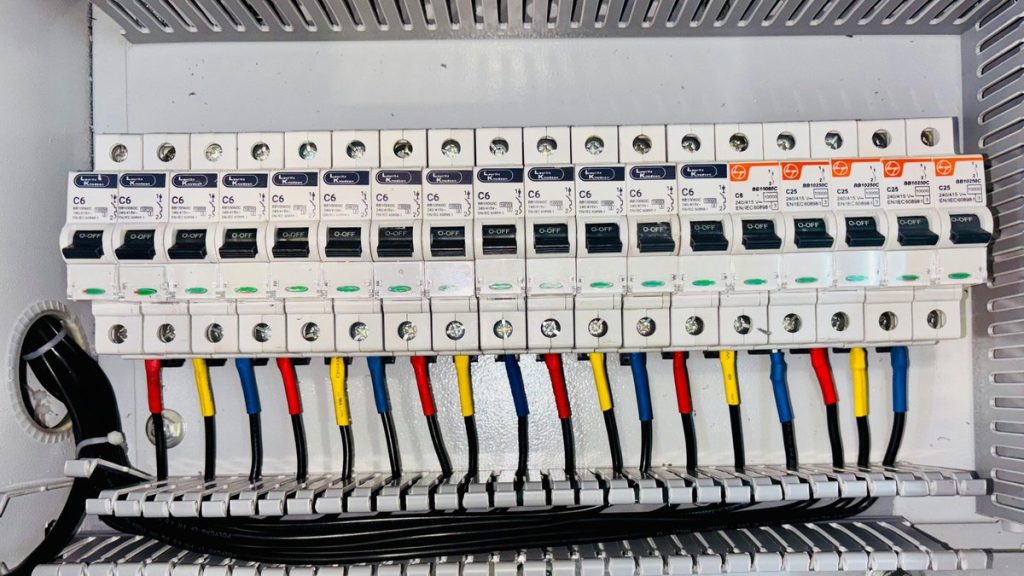
The main breaker is the big one. Usually a single large switch at the very top or bottom of the panel, often marked MAIN or showing an amperage like 100 or 200. Flip it firmly to OFF and it cuts power to every circuit in the house at once. That is the move in a real emergency: one switch, everything off.
If the trouble is clearly in one spot, say a single outlet sparking, and you can pick out its circuit, you can switch off just that breaker instead. But when you are not sure, or the situation is serious, the main breaker is the sure and total cut. The Wikipedia distribution board page shows how a panel is laid out.
Doing it without getting hurt
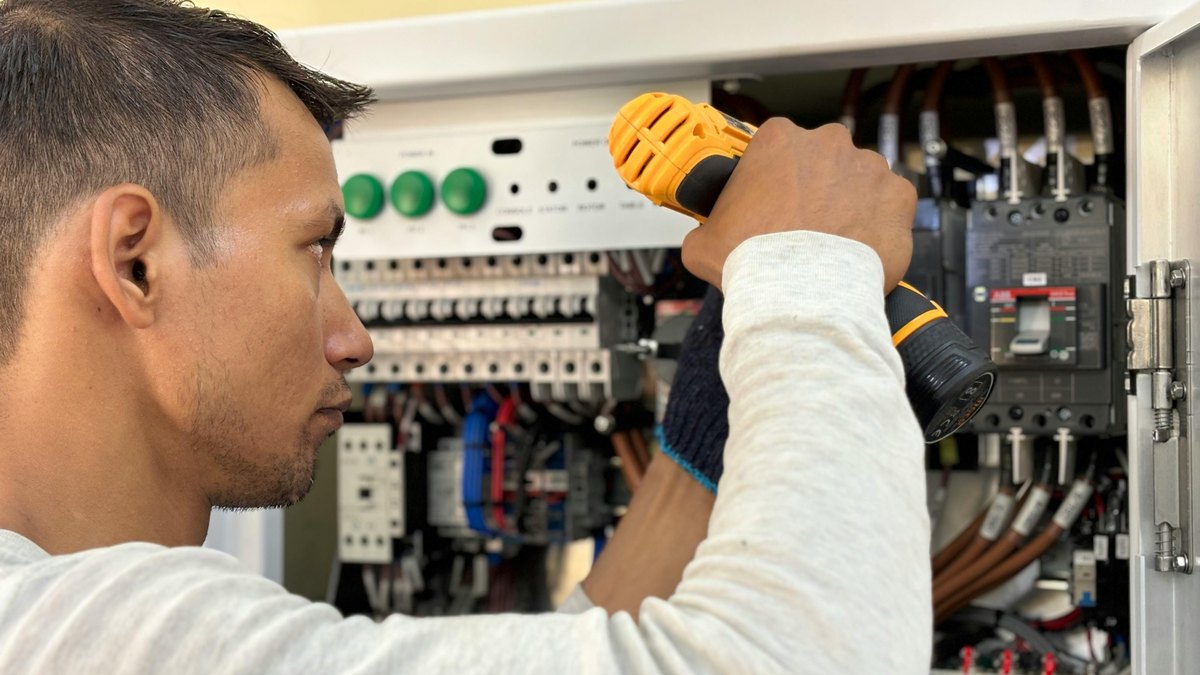
Reaching for a panel is no time to be careless. Make sure your hands are dry and you are standing on a dry surface, not wet tile or damp ground. Dry, rubber-soled shoes help. Flip the switch with one hand and keep the other off the panel and away from anything metal, so your body never becomes a path for current. Use a flashlight to see, not a phone you are juggling. Flip the breaker decisively. Small habits, but they keep a routine action from turning into a shock.
The limits you must not cross
This is the part that matters most, because the panel is not always safe to touch.
If the panel is wet, or you would have to stand in water to reach it, do not touch it. Water and a live panel together can kill, and nothing in the house is worth that risk. Step back and call JPS to cut the power at the source.
It also helps to know what the main breaker does not do. It cuts power to your house, but it does not stop the utility service lines feeding the panel. Those lines, and the meter and service entrance they connect to, stay live until JPS shuts them off, and they carry enough current to kill. Never open the meter or the service entrance, and never try to cut power there yourself.
And even with the main breaker off, treat the inside of the panel as live. Parts of it can still carry current, so flipping the main is as far as you go. Do not remove the cover or touch anything inside.
In specific emergencies
With an electrical fire, never throw water on it. Water conducts, and it can spread both the shock and the fire. If the fire is small and you can safely reach the panel, cut the main breaker and use a dry-powder or carbon dioxide extinguisher rated for electrical fires. If it is not small, or not safe, get everyone out and call the fire service. Killing the main takes the power away from the fire, which helps, but only if you can do it without putting yourself in danger.
If someone is being shocked, do not touch them while they are still in contact with the current, or it flows through you too. Cut the power at the main breaker first. If you cannot reach the panel fast enough, use something dry and non-conductive, a wooden broom handle works, to push them clear of the source, then get medical help right away.
In a flood or a storm, if water is rising toward your outlets or panel, switching off the main early can save you a lot of damage, but only while everything is still dry and you can reach it safely. Once water has reached the panel, stay away and call JPS. We go into storm preparation more fully in protecting your electrics through hurricane season.
After the power is off
Once you have cut the power in an emergency, leave it off until the cause is found and fixed. That goes double after water has touched wiring or after a fire, even a small one, because the damage you cannot see is the part that bites you later. Have an electrician check the system before you switch anything back on. Restore power to a fault you have not fixed and you just restart the emergency.
The takeaway
Shutting off power in an emergency comes down to one reliable action: find the main breaker and flip it firmly to off, with dry hands, on a dry surface, one hand on the switch. Learn where your panel is before you ever need it. Respect the hard limits: never touch a wet panel, never go near the meter or service lines, and never open the panel cover, because the main breaker does not make those parts safe. With fire, get out if it is not small. With a shock, cut the power before you touch anyone. And once the power is off, leave it off until an electrician has made it safe.
Related reading
- What a buzzing breaker panel means for a warning sign at the panel itself.
- What to do when half the house loses power for safe checks short of an emergency.
- Protecting your electrics through hurricane season for storm and flood preparation.
- Power outage troubleshooting to safely diagnose and fix a fault after an emergency.
How do I shut off all the power to my house?
Find the main breaker, which is the large single switch usually at the top or bottom of your panel, often marked MAIN or with an amperage like 100 or 200. Flip it firmly to the OFF position and it cuts power to every circuit at once. Do this with dry hands, on a dry surface, using one hand.
Does turning off the main breaker make the panel safe to touch inside?
No. Even with the main breaker off, parts of the panel can still carry current, and the utility service lines feeding it stay live until JPS shuts them off. Flipping the main is as far as you should go. Never remove the panel cover or touch anything inside it.
What if the panel is wet or I have to stand in water to reach it?
Do not touch it. Water and a live panel together can be deadly, and no situation in the home is worth that risk. Step back, keep everyone away, and call JPS to cut the power at the source instead. Only approach a panel when you and the area around it are dry.
Should I use water on an electrical fire after cutting power?
Never use water on an electrical fire, since water conducts electricity and can spread both the shock and the fire. If the fire is small and you can safely reach the panel, cut the main breaker and use a dry-powder or carbon dioxide extinguisher rated for electrical fires. If not, get everyone out and call the fire service.
What do I do if someone is being electrocuted?
Do not touch them while they are still in contact with the current, or it will pass through you too. Cut the power at the main breaker first. If you cannot reach it quickly, use something dry and non-conductive like a wooden broom handle to push them clear of the source, then get medical help immediately.
Can I turn the power back on myself after the emergency?
Only once the cause has been found and fixed. After water has reached wiring or after any fire, have an electrician check the system before restoring power. Switching power back on to a fault you have not fixed simply restarts the emergency, so when in doubt, leave it off and get it checked.
The next step
Knowing how to cut the power is half of it; having a panel that is labelled, accessible, and sound is the other half. Get a free quote or message us, and we will make sure your main breaker is easy to reach and clearly marked, and check that your panel is safe for the day you need it most.