

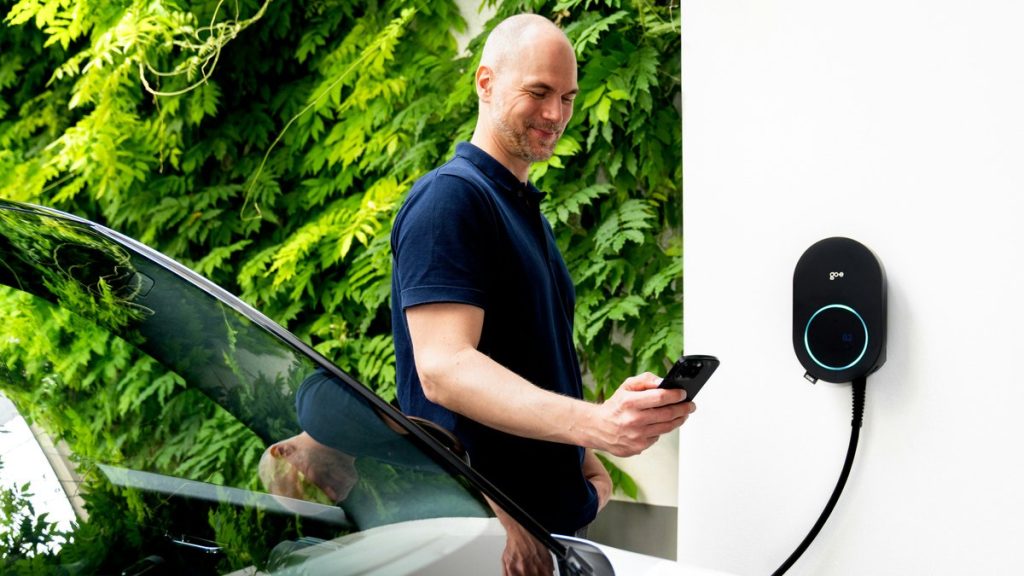
If you already have solar, or are planning it, and an electric car is on the horizon, the two go together beautifully. Charge the car off your own midday sun and your fuel cost drops close to zero. But people often overthink the solar side and underthink the electrical side. Here is what adding a home charger really involves.
You do not need to match your solar to the charger
This is the misconception worth clearing up first. A Level 2 home charger draws a lot of power while it runs, often 7 to 11 kilowatts, and people assume they need an equally large solar system to feed it. You do not. The charger pulls that power for only an hour or three, while your panels make their energy spread across five or six hours of daylight. What matters is not matching the instantaneous power, it is whether your panels make enough total units across the day to cover the units the car needs.
In practice a car’s daily driving usually adds a fairly modest amount to your energy use, often what another handful of panels would cover. A home that charges an EV regularly might want roughly half again as much solar as it would otherwise, not double or triple. The right figure comes from your real mileage, which folds into how to size a solar system for your electricity bill.
Daytime charging is the whole point
Here is where solar and an EV really click. Charge the car in the middle of the day, while the sun is high, and you are pouring your own solar straight into the battery. That is the most valuable thing you can do with daytime production, because under JPS net billing the surplus you would otherwise export earns only the lower avoided-cost rate, as we explain in solar for a home that is empty during the day.

Most Level 2 chargers let you schedule charging for the sunny hours, so even if you are out, the car fills on solar rather than on grid power at night. A few hours of midday charging adds plenty of range for typical daily driving. If your routine means the car is away all day, charging it overnight still works; you just lean more on the grid and less on your own sun.
What your electrical panel needs
The part that does need real attention is the wiring. A Level 2 charger runs on 240 volts and needs its own dedicated circuit, typically a 40 to 60 amp breaker depending on the charger. That is a heavy load to add, so your panel has to have the spare capacity and a free slot for it. Many panels can take a charger comfortably, especially a smaller one or with a load-management device that prevents the car and other big loads drawing at once. An older or already-full panel, though, may need attention first, which we cover in connecting solar to an older electrical panel. You can read about charger types on the Wikipedia charging station page.
This is not a job to improvise. The charger circuit must be installed properly by a qualified electrician, both for safety and to handle that sustained high current without trouble.
The takeaway
Adding an EV charger to a solar home is mostly about two things, and neither is matching panel for kilowatt. First, make sure your solar makes enough total daily units to cover your driving, which is usually a modest top-up rather than a doubling. Second, make sure your panel and wiring can safely carry a dedicated charger circuit. Get both right and charge on the midday sun, and your car runs on close to free fuel while your solar finally has somewhere valuable to send its surplus.
Related reading
- Solar for a home that is empty during the day for why daytime charging beats exporting.
- How to size a solar system for your electricity bill for adding the car’s use to the sums.
- Connecting solar to an older electrical panel for whether your panel can take the charger.
- Solar system planning to size solar and the charger circuit together.
Do I need a bigger solar system to charge an EV?
Usually a modest top-up, not a doubling. You do not need to match your solar to the charger’s power. The charger draws its load over an hour or three, while your panels make energy across five or six daylight hours. What matters is whether your panels make enough total daily units to cover the units your driving needs.
How much extra solar does an EV need?
It depends on your mileage, but a car’s daily driving often adds what another handful of panels would cover. A home charging an EV regularly might want roughly half again as much solar as it otherwise would, rather than double or triple. The exact figure comes from your real driving folded into the sizing.
Why is daytime charging better for a solar home?
Because charging in the middle of the day pours your own solar straight into the car, which is the most valuable use of daytime production. Under JPS net billing the surplus you would otherwise export earns only the lower avoided-cost rate, so using it to charge the car is worth far more than selling it back.
Can I charge during the day if I am not home?
Yes. Most Level 2 chargers let you schedule charging for the sunny hours, so the car fills on solar even while you are out, rather than on grid power at night. A few hours of midday charging adds plenty of range for typical daily driving. If the car is away all day, overnight charging still works, just with more grid use.
What does my electrical panel need for an EV charger?
A Level 2 charger runs on 240 volts and needs its own dedicated circuit, typically a 40 to 60 amp breaker. Your panel needs spare capacity and a free slot. Many panels can take a charger, especially a smaller one or with load management, but an older or full panel may need attention first.
Can I install the charger myself?
No. A Level 2 charger circuit carries sustained high current at 240 volts and must be installed by a qualified electrician, both for safety and to handle the load reliably. It is a dedicated circuit, not something to improvise, and on a solar home it should be planned alongside the existing system.
The next step
Thinking about an EV, or already have one? Get a free quote or message us, and we will size your solar for your driving and fit the charger circuit safely, so you can run the car on sunshine.