

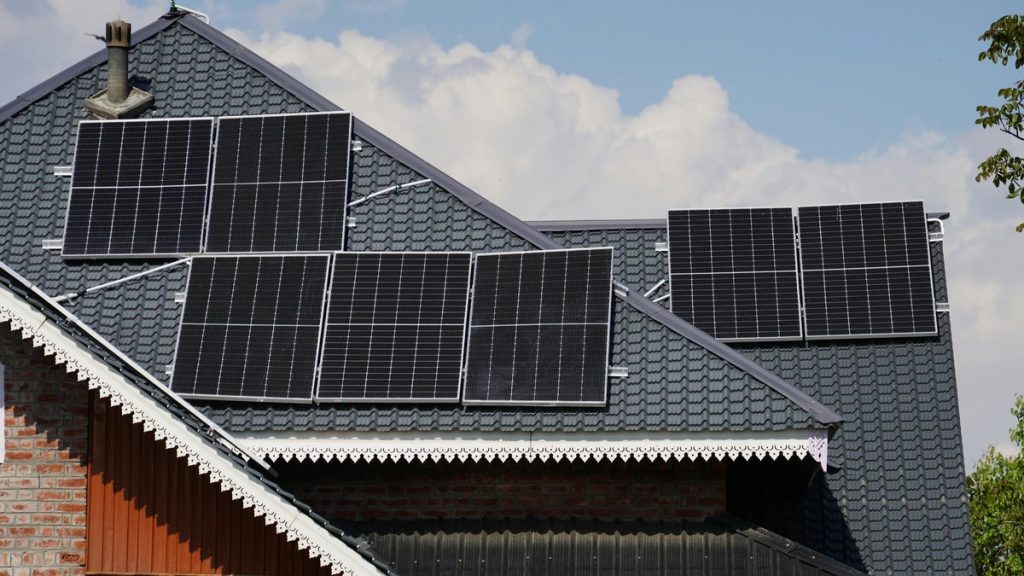
It surprises people to learn that installers often fit more panel capacity than the inverter is officially rated to handle. A 5 kilowatt inverter might sit behind 6 kilowatts of panels. That sounds like a mistake, but done in moderation it is good design. Done to excess, in our strong sun, it quietly throws away power. Here is how to think about it.
Why panels rarely hit their rated number
Here is the thing about a panel’s rating: it almost never reaches it. That figure is measured under ideal lab conditions, and real life rarely cooperates. Morning and late-afternoon sun comes in at a low angle, clouds pass over, dust builds up, and heat trims output, as we cover in what happens to solar production on a cloudy day. So an array labelled 5 kilowatts spends most of the day producing well under 5, and only brushes its peak for a short window around midday on clear days.
That is the gap oversizing fills. By putting a bit more panel behind the inverter, you give it more to work with through all those below-peak hours, so it runs closer to its full capacity for more of the day. You harvest more in the morning, the afternoon, and on grey days, which is most of the time.
The catch: clipping
There is a trade-off, and it has a name: clipping. On the brightest moments, your oversized array can briefly produce more than the inverter can pass through, and that excess is simply lost. It sounds wasteful, and it is, but the amount is usually tiny, a few percent of annual production at most with a sensible ratio, and it is far outweighed by all the extra energy gathered the rest of the time. You can read about the inverter’s role in this on the Wikipedia solar inverter page.
Why a little oversizing pays
Two more things make modest oversizing smart. One is money: panels have become cheap while inverters stay relatively expensive, so adding a few panels is usually a cheaper way to lift output than buying a bigger inverter. The other is ageing. Panels slowly lose output over the years, so an array that slightly overfeeds the inverter today will settle toward a perfect match as it degrades, keeping production up for longer. We look at inverter sizing alongside this in what size inverter do you need for your home.
The Jamaican twist
Here is where our climate changes the advice. The ideal amount of oversizing depends on how sunny you are. Cloudy countries can oversize heavily, because their inverters rarely max out anyway, so there is little to clip. Jamaica is the opposite: our sun is strong and direct, so an array that is oversized too far will hit the inverter’s ceiling often and clip away real midday production. That means a more modest oversize suits us, enough to capture the off-peak and cloudy hours and to offset future degradation, without throwing away our abundant midday sun. It is a judgement an installer makes for your specific roof and inverter, which is part of how to size a solar system for your electricity bill.
The takeaway
Should you oversize? Yes, a little. A modest oversize squeezes more out of the inverter through the long stretches when panels are below peak, costs less than a bigger inverter, and quietly compensates for the panels ageing. The goal is not maximum oversizing but the right amount, and in our strong sun that means a measured ratio rather than a greedy one, so you gain in the margins without clipping away the midday peak. Leave the exact figure to a proper design.
Related reading
- What size inverter do you need for your home? for the other half of the ratio.
- What happens to solar production on a cloudy day? for why panels run below peak so often.
- What an inverter actually does in a solar system for the clipping limit.
- Solar system planning to get the panel-to-inverter ratio right for your roof.
Should I oversize my solar array?
In moderation, yes. Fitting a bit more panel capacity than the inverter is rated for is standard, good design, because panels rarely reach their rated output. It lets the inverter run closer to full for more of the day. The key is a sensible amount, not the maximum, especially in our strong sun.
Why fit more panels than the inverter can handle?
Because a panel almost never hits its rated number. Low sun angles morning and evening, clouds, dust and heat keep output below peak most of the day. Extra panel capacity gives the inverter more to work with during those below-peak hours, so you harvest more energy when an exactly-matched array would underperform.
What is inverter clipping?
Clipping is when an oversized array briefly produces more power than the inverter can pass through, usually around midday on clear days, so the excess is lost. With a sensible oversizing ratio it is only a small fraction of annual production, and the extra energy gathered the rest of the time far outweighs it.
Why is oversizing cheaper than a bigger inverter?
Panel prices have fallen a lot while inverters remain relatively expensive. So adding a few more panels is usually a cheaper way to lift annual output than stepping up to a larger inverter. Oversizing also offsets the slow output loss as panels age, keeping production up for longer.
Does Jamaica’s strong sun change how much to oversize?
Yes. Cloudy countries can oversize heavily because their inverters rarely max out. Jamaica’s strong, direct sun is the opposite, so too much oversizing makes the inverter hit its ceiling often and clip away real midday production. A more modest oversize suits us, capturing off-peak hours without wasting the midday peak.
How much should I oversize by?
There is no single number; it depends on your roof, your inverter and how sunny your site is. In our climate a measured oversize is better than a greedy one. The right ratio balances extra off-peak harvest and future degradation against clipping losses, which is a judgement best left to a proper system design.
The next step
Wondering how many panels should sit behind your inverter? Get a free quote or message us, and we will design the panel-to-inverter ratio that captures the most energy on your roof without wasting our midday sun.