

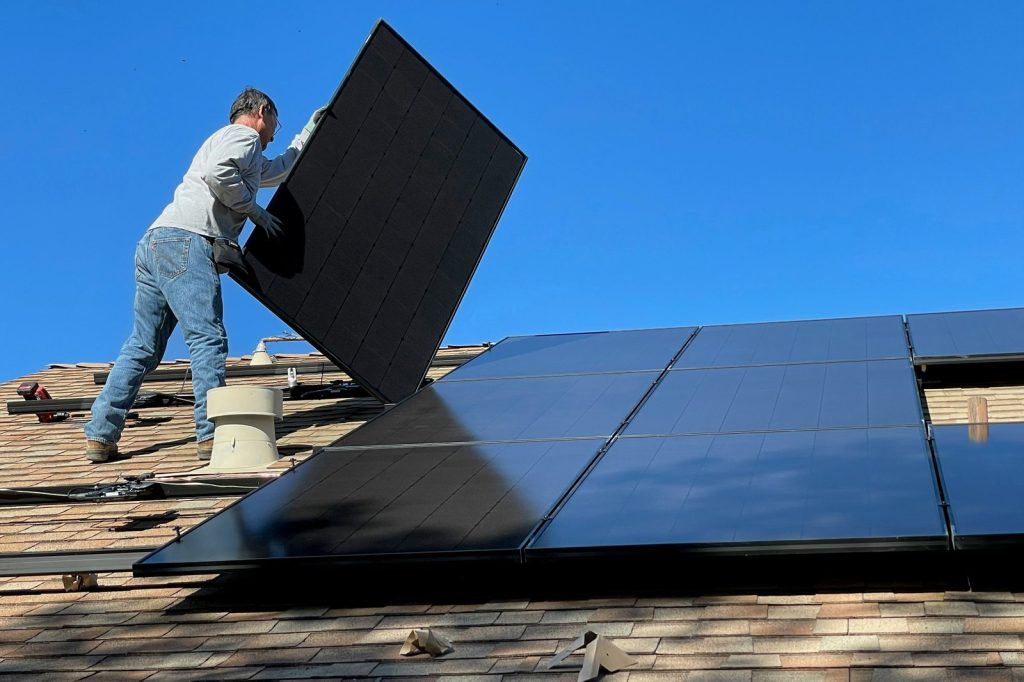
The honest answer to how many panels it takes to run a whole house is that it depends on how much electricity the house uses, not how big it is. A small home that runs three air conditioners can need more panels than a big home that runs none. So the real question is not the size of your roof, it is the size of your bill. Here is the simple sum that turns one into the other.
The calculation, in plain terms
To cover a home’s usage you take your monthly units, divide by the sun your roof gets, and divide again by the output of one panel. In practice that means a home using around 900 to 1,000 units a month, on Jamaica’s roughly five peak sun hours a day, with modern panels of about 400 watts each, lands somewhere around 16 to 20 panels. A heavier user with serious air conditioning climbs toward the mid-20s; a modest home that mostly wants the essentials covered needs fewer. The number falls out of your own consumption once you know it.
Why our sun means fewer panels
Most of the panel-count guides online are written for cooler, cloudier places, where a roof gets three or four good sun hours a day. We get closer to five, and strong ones. The same panel makes more here, so a Jamaican home needs fewer panels than an identical home in a grey climate to cover the same usage. Our sunshine is the one part of the equation working firmly in your favour, and it is why local sizing should never just copy a foreign rule of thumb.
Air conditioning is the variable
If one thing swings the panel count, it is air conditioning. A house without AC has a fairly flat, predictable load that a modest array covers easily. Add a couple of units running through the afternoon and the daily demand jumps, pulling the count up with it. This is why two homes of the same size can need very different systems: the one that cools several rooms simply uses far more power. When we size a home, how much you cool and for how long is one of the first questions we ask.
“Running the whole house” is not the same as off-grid
There is a subtlety worth being clear about. For most homes, “running the whole house on solar” means making as much over a year as you use, with the grid balancing the timing through JPS net billing, the daytime surplus credited against your evening use, which we explain in how JPS net billing actually works. That is different from going fully off-grid, where you need enough panels and a big battery bank to carry every watt yourself, day and night, with no grid at all. Off-grid takes noticeably more panels and storage. Most people want the first, not the second.
The real answer
So the panel count for a whole house is not a fixed number, it is a short sum built from your bill, your sun and whether you run AC. For a typical Jamaican home that lands in the high teens to low twenties of panels, but yours could be more or less. The only way to get it right is to start from your actual usage, the approach in how to size a solar system for your electricity bill, rather than guessing from the roof.
Related reading
- How to size a solar system for your electricity bill for working the number out from your own usage.
- Is a 5kW solar system enough for a Jamaican home? for what a common system size covers.
- How JPS net billing actually works for how the grid balances day and night.
- Solar system planning for sizing a system to your home.
How many solar panels does an average Jamaican home need?
A home using around 900 to 1,000 units a month, on Jamaica’s roughly five peak sun hours and modern 400-watt panels, needs somewhere around 16 to 20 panels to cover its usage. A heavier user with serious air conditioning climbs toward the mid-20s, while a modest home needs fewer. The number comes from your own consumption.
How do I calculate how many panels I need?
Take your monthly units, divide by the daily sun hours your roof gets, then divide by the output of one panel. It is a short sum, but it depends on your actual usage and your roof’s exposure, so the inputs matter more than the formula. Starting from a recent bill gives the real figure.
Does a bigger house need more panels?
Not necessarily. The panel count depends on how much electricity you use, not the floor area. A small home running three air conditioners can need more panels than a large home running none. Usage, especially air conditioning, drives the number far more than the size of the house.
Do I need fewer panels in Jamaica than the online guides say?
Usually yes. Most panel-count guides are written for cooler, cloudier places that get three or four sun hours a day. Jamaica gets closer to five strong ones, so the same panel produces more here and a home needs fewer panels to cover the same usage than it would in a grey climate.
How much does air conditioning change the panel count?
A lot. A home without AC has a flat load a modest array covers easily, but adding a couple of units running through the afternoon raises daily demand sharply and pulls the panel count up with it. How much you cool, and for how long, is one of the biggest factors in sizing a system.
Is running the whole house on solar the same as going off-grid?
No. For most homes it means making as much over a year as you use, with the grid balancing the timing through net billing. Going fully off-grid means carrying every watt yourself with panels and a large battery bank and no grid at all, which takes noticeably more panels and storage. Most people want the first.
The next step
How many panels your whole house needs comes down to a short sum from your bill, your sun and your air conditioning, and it usually lands in the high teens to low twenties for a typical Jamaican home. Get a free quote or message us with a recent bill, and we will work out the exact number your home needs rather than a guess.