

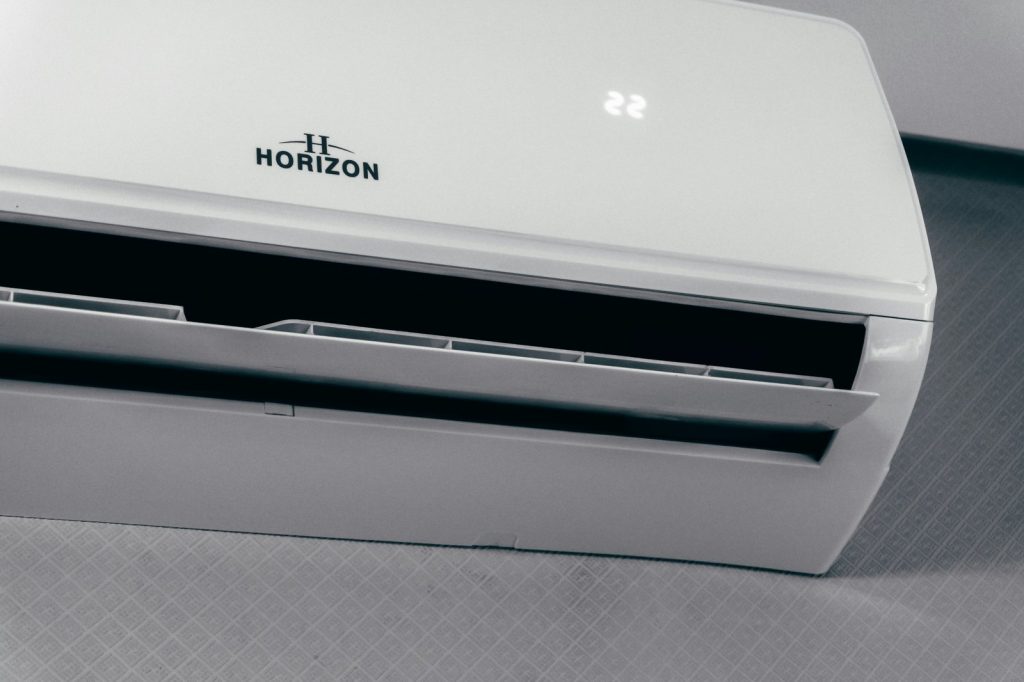
Air conditioning is the single biggest reason Jamaican power bills look the way they do, so it is usually the first thing people want solar to cover. The good news is that running AC on the sun, during the day when it is hottest and the panels are working hardest, is one of the things solar does best. The catch is what happens after dark. So the real answer to how many panels you need has two parts: the AC itself, and when you want to run it.
How much an air conditioner actually draws
The number of panels starts with how thirsty the unit is, and that comes down to its size. A 1-ton unit, around 12,000 BTU, draws roughly 1,000 to 1,500 watts while running. A 1.5-ton, about 18,000 BTU, pulls closer to 1,600 to 2,200 watts. A 2-ton, 24,000 BTU, can reach 2,000 watts or more. Those are running figures; an older unit also throws a brief surge when the compressor kicks in, which the system has to handle.
Panels to run it through the day
As a working rule, it takes roughly 1 to 1.5 kilowatts of panels to keep a one-ton air conditioner running through the daytime in our sun, which is about four to six modern panels. A 1.5-ton unit wants more, and two or three units across the house quickly add up to a meaningful share of a 5 or 6kW system. This is exactly why an AC-heavy home needs a bigger array than a home that just wants the essentials covered. The cooling is most of the load.
The inverter-AC factor
Here is the lever most people miss. A modern inverter air conditioner, the variable-speed kind, uses far less power than an old fixed-speed window unit, because it eases its compressor up and down instead of slamming on and off. It also avoids the big start-up surge. That means an inverter compressor unit needs fewer panels and a smaller inverter to run than an older AC of the same size. If you are putting in solar and still running an old window unit, upgrading the AC can shrink the solar system you need to cool the same room.
Day versus night: the real question
This is where “running AC on solar” splits in two. While the sun is up, the panels feed the AC directly, and that is cheap and easy. After dark, the panels make nothing, so cooling at night means one of two things. Either you draw from the grid and let the daytime solar surplus offset it through JPS net billing, which we explain in how JPS net billing actually works, or you store the day’s energy in batteries and run the AC from those. The first costs you little extra. The second is a real investment, because air conditioning drains a battery bank fast, far quicker than lights and a fridge do.
So what do you actually need?
For most homes, the sensible answer is to size the array to cover your total daily usage, AC included, and let net billing balance the timing, so the system you need to “run your AC” is really just part of sizing the whole system to your bill, the approach in how many solar panels do you need to run a whole house? If your goal is specifically to keep the AC running at night or through an outage, that is a battery conversation, and the storage has to be sized for the cooling you want, which we cover in battery backup sizing.
Related reading
- How many solar panels do you need to run a whole house? for sizing the full system, AC included.
- How JPS net billing actually works for how daytime solar offsets night-time cooling.
- Battery backup sizing: keeping the essentials on through an outage for running AC after dark or in a cut.
- Solar system planning for sizing a system to your home and your cooling.
How many solar panels does it take to run one air conditioner?
As a rough rule, about 1 to 1.5 kilowatts of panels, roughly four to six modern panels, will run a one-ton (12,000 BTU) unit through the daytime in our sun. A 1.5-ton unit needs more, and bigger or multiple units scale up from there. The exact number depends on the unit’s wattage and how long you run it.
How much power does an air conditioner use?
It depends on size. A 1-ton (12,000 BTU) unit draws roughly 1,000 to 1,500 watts running, a 1.5-ton (18,000 BTU) about 1,600 to 2,200 watts, and a 2-ton (24,000 BTU) 2,000 watts or more. Older units also throw a brief surge when the compressor starts, which the system must handle.
Do inverter air conditioners need fewer solar panels?
Yes. A modern inverter, variable-speed AC eases its compressor up and down instead of switching on and off, so it uses far less power and avoids the big start-up surge. It needs fewer panels and a smaller inverter than an old fixed-speed unit of the same size, so upgrading the AC can shrink the solar you need.
Can solar run my AC at night?
Not directly, because panels make nothing after dark. Night cooling means either drawing from the grid and letting your daytime solar surplus offset it through net billing, or storing the day’s energy in batteries and running the AC from those. The grid route costs little extra; batteries are a bigger investment because AC drains storage quickly.
Is it cheaper to run AC on solar during the day?
Yes, much. Daytime is when the sun is strongest and, often, when cooling is needed most, so the panels feed the AC directly at no extra cost. Running the same AC at night off batteries is far more expensive, which is why daytime cooling is one of the best uses of a solar system.
Should I size my system just for the AC?
It is better to size the whole system to your total usage, with the AC as part of it, and let net billing balance day and night. Sizing only for the AC misses the rest of the load. If you specifically want AC at night or through outages, that becomes a battery question sized to the cooling you want.
The next step
How many panels your AC needs comes down to the units you run, whether they are inverter type, and whether you want cooling by day or around the clock. Get a free quote or message us with your AC units and a recent bill, and we will work out the array, and any battery, that keeps you cool without overspending.