

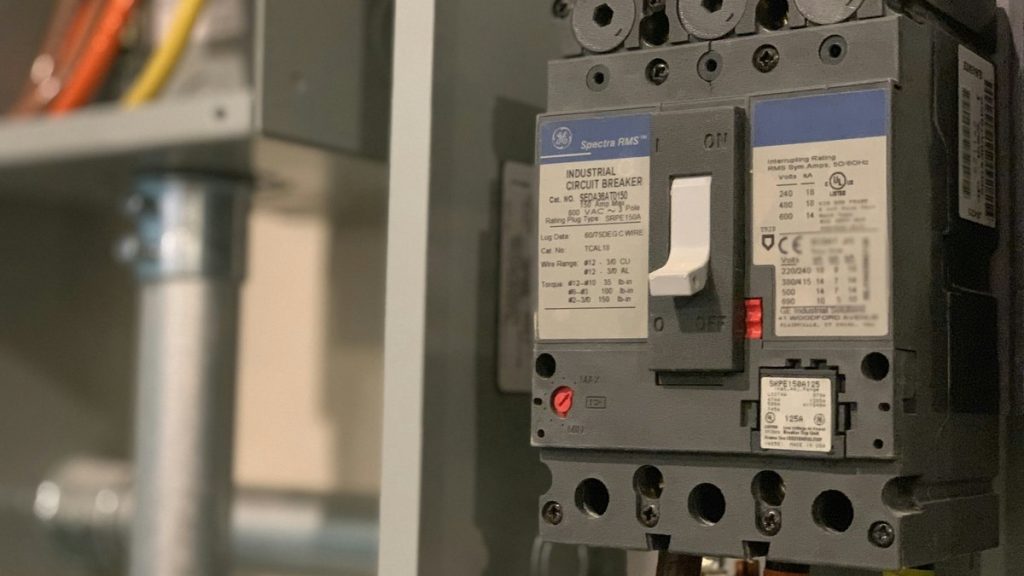
Open a breaker panel and the switches all look much the same, a row of identical little levers. They are not identical. Each one has an amp rating and a type, and between them those decide what the breaker protects and what it can safely run. You will not be choosing and fitting them yourself, that is electrician work, but knowing what the numbers and types mean takes the mystery out of the panel and makes the conversation about your home a good deal clearer.
The one idea to start with: a breaker protects the wire
Here is the thing most people get backward. A breaker is not there to protect your appliance. It is there to protect the wire in the wall behind it. Every wire can safely carry only so much current before it overheats, and the breaker’s job is to cut the power before the current climbs past what that wire can handle. You can read the basics on the Wikipedia circuit breaker page.
That single fact explains the most important rule of all: the breaker has to match the wire. A 15-amp breaker belongs on the wire sized for 15 amps, and a 20-amp breaker on the heavier wire sized for 20. It also explains the most dangerous mistake people make, which is fitting a bigger breaker to stop one that keeps tripping. That does not fix anything; it just removes the protection and lets the wire overheat instead, which is why we say plainly to never keep resetting a tripping breaker and certainly never upsize one.
What the amp number means
The amp rating is how much current the breaker will allow before it trips, and it is matched to the wire and the job:
- 15 amps is the common rating for general lighting and outlet circuits, on the thinner wire those use.
- 20 amps is for heavier general-purpose circuits, often kitchen counters, the laundry, and outdoor outlets, on a thicker wire.
- 30 amps suits larger loads like a water heater or a clothes dryer.
- 40 to 60 amps and up handle the big draws, an electric range, a large air conditioner, or the feed to a subpanel.
The wire size always drives the breaker size, not the other way around. If a circuit needs to carry more, the wire and the breaker both have to be upgraded together, by an electrician.
Single-pole versus double-pole
The next difference is how many of your supply’s two legs the breaker uses. A single-pole breaker takes one leg and feeds a 120-volt circuit, which is most of the house: lights, general outlets, and so on. A double-pole breaker is twice as wide, clips onto both legs, and feeds a 240-volt circuit for the heavy appliances that need it, the water heater, the air conditioner, the dryer, an electric range, a water pump. So if you have ever wondered why some breakers in the panel are double-width, that is the reason. They are running your 240-volt equipment.
The specialty breakers, and what they protect
Beyond the standard breakers, two types do a different and important job.
A GFCI breaker protects people, not just wires. It watches the current going out and coming back, and the instant it senses even a tiny difference leaking to ground, the kind of leak that happens when electricity finds a path through a person, it cuts the power in a fraction of a second. That is shock protection, and it belongs anywhere water and electricity meet: bathrooms, kitchens, the laundry, the garage, and outdoors. It is the same protection we cover in why your bathroom and kitchen need GFCI protection.
An AFCI breaker protects against fire. It is built to recognise the signature of an electrical arc, the small, hot sparking that a damaged or loose connection makes, and to shut the circuit down before that arcing ignites anything. Arcs are a leading cause of electrical fires, which is why this protection matters and why modern code requires it on many living-area circuits. We explain the fault itself in what is an arc fault and why it matters, and you can read more on the Wikipedia arc-fault circuit interrupter page. There are also dual-function breakers that combine GFCI and AFCI in one.
So the three jobs sort out neatly: a standard breaker protects the wire from overload, a GFCI protects people from shock, and an AFCI protects the home from an arcing fire.
They have to match the panel, too
One more thing worth knowing: breakers are not universal. Each panel is designed to take specific breakers, and a breaker has to be the correct type and listed as compatible with that panel to seat properly and trip reliably. Forcing in a breaker that almost fits, or mixing brands that were never meant to go together, makes for a poor, potentially dangerous connection. This is a big part of why choosing and fitting breakers is a job for an electrician working inside the panel, not a parts-counter guess.
What this means for a Jamaican home
Two points matter most here. First, GFCI protection is not optional in our setting. Humidity and salt air, plus all the wet areas and outdoor outlets a home has, make shock protection genuinely important, so those circuits should have it. Second, resist the temptation to “fix” a tripping breaker by fitting a bigger one. With our frequent surges and the heavy loads people add over time, breakers do trip, and the right answer is to find out why, perhaps a circuit is overloaded or a fault has developed, not to silence the warning by removing the protection. Sorting the panel out properly is panel and breaker work.
The takeaway
A breaker’s amp rating is matched to the wire it protects, so it can cut the power before that wire overheats, which is why you never fit a bigger one to stop nuisance trips. Single-pole breakers run your 120-volt lighting and outlets; double-pole breakers feed 240-volt appliances like the water heater and air conditioner. On top of those, GFCI breakers protect people from shock in wet areas and AFCI breakers guard against arcing fires. Choosing the right rating and type, and matching it to your panel, is what keeps the protection real, and it is exactly the kind of detail an electrician gets right so you do not have to.
Related reading
- What is an arc fault and why it matters for the fire risk AFCI breakers are built to stop.
- Why your bathroom and kitchen need GFCI protection for the shock protection GFCI breakers provide.
- Why you should never keep resetting a tripping breaker for why a tripping breaker is a warning, not a nuisance.
- Panel and breaker work to choose, fit, and match the right breakers to your panel safely.
What does a circuit breaker actually protect?
A standard breaker protects the wire in the wall, not the appliance. Each wire can carry only so much current before it overheats, and the breaker cuts the power before the current passes that limit. That is why the breaker’s amp rating must match the size of the wire on its circuit.
What do the amp ratings on breakers mean?
The amp rating is how much current the breaker allows before it trips, matched to the wire and the load. 15 amps is typical for lighting and general outlets, 20 amps for kitchen, laundry, and outdoor circuits, 30 amps for a water heater or dryer, and 40 to 60 amps or more for a range, large air conditioner, or subpanel feed.
What is the difference between single-pole and double-pole breakers?
A single-pole breaker uses one supply leg and feeds a 120-volt circuit, used for lighting and general outlets. A double-pole breaker is twice as wide, uses both legs, and feeds a 240-volt circuit for heavy appliances like a water heater, air conditioner, dryer, electric range, or water pump.
What is the difference between a GFCI and an AFCI breaker?
A GFCI breaker protects people from shock by cutting power the instant it senses current leaking to ground, and it belongs in wet areas like bathrooms, kitchens, and outdoors. An AFCI breaker protects against fire by detecting the arcing of a damaged or loose connection and shutting the circuit down. Dual-function breakers do both.
Can I fit a bigger breaker to stop one from tripping?
No. The breaker is sized to protect the wire, so fitting a larger one removes that protection and lets the wire overheat, which is a fire risk. A breaker that keeps tripping is warning you of an overload or a fault. The fix is to find the cause, not to upsize the breaker.
Are all breakers interchangeable between panels?
No. Each panel is designed for specific breakers, and a breaker must be the correct type and listed as compatible with that panel to seat properly and trip reliably. Forcing in a breaker that almost fits, or mixing incompatible brands, creates a poor and potentially dangerous connection, which is why this is electrician work.
The next step
Adding a circuit, fitting GFCI or AFCI protection, or just unsure what is in your panel? Get a free quote or message us, and we will choose the right breakers for your home and install them the way they should be done.