

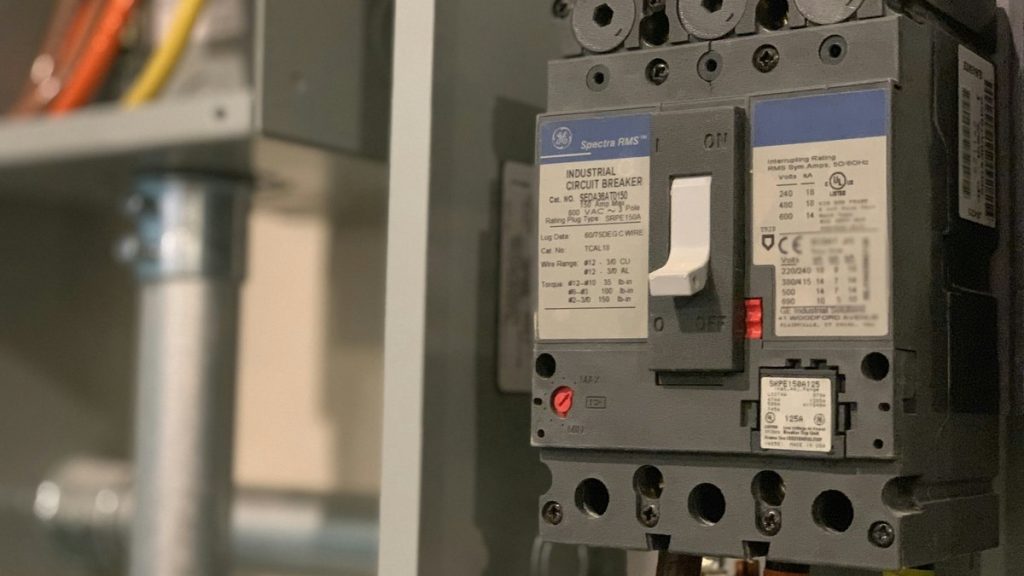
You were near the panel, your hand brushed it, and one breaker felt warm. Maybe more than warm. That tends to stop people short, and it should. A breaker’s temperature is telling you something. A little warmth on a breaker carrying a heavy load right then can be normal. Hot to the touch is a different message. And here is the part most people never hear: a hot breaker will not always trip to save you. So it pays to know what the heat means and what to do with it.
What a breaker is actually built to do
A circuit breaker has one job: to cut the power when the current on its circuit climbs too high, before that current can overheat the wiring in your walls. Draw more amps than the breaker is rated for and it trips. That is the protection you rely on, and you can read the basics of how it works on the Wikipedia circuit breaker page.
But notice what it watches: current. A breaker trips on too much current, not on its own temperature. So if something is making a breaker hot without pushing the current over its limit, the breaker can sit there cooking, getting hotter, and never trip. That is exactly why a hot breaker is a problem you have to catch with your eyes and your hand, because the breaker itself may not catch it for you.
Why a breaker gets hot
A few things drive the heat, and they are worth telling apart.
The first is an overloaded circuit. Too many things running on the one circuit pull current right up near the breaker’s limit, and current near the limit makes heat in the breaker and the wire. Sometimes it trips, sometimes it just runs hot, especially if the load sits just under the trip point. This is the same story we tell in signs of overloaded circuits in your home.
The second, and the more dangerous, is a loose connection. Where the wire screws onto the breaker, or where the breaker clips onto the busbar, the connection is supposed to be tight. When it works loose, the electricity has to jump a poor contact, and that resistance throws off heat right at the joint. Worse, it can arc, and arcing is how scorch marks, melted plastic, and fires start. A loose connection can make a breaker hot while the current stays perfectly normal, which is the trap we described above. It is closely tied to the warning signs in signs of a loose electrical connection.
The third is just an old breaker. Breakers wear out. The contacts inside degrade, resistance creeps up, and a tired breaker can run hot on a load it used to shrug off. Aluminum branch wiring makes all of this worse, because it expands and contracts with use and works its terminals loose over the years.
Warm versus dangerous
Not every degree of warmth is an emergency, so here is how to read it. A breaker that feels slightly warm while a heavy load is running on that circuit, and cools down afterward, is usually doing normal work. What is not normal is a breaker you cannot comfortably hold a finger on, one that is clearly hotter than the breakers around it, or any heat that comes with a burning or hot-plastic smell, a buzzing or sizzling sound, discoloration or scorch marks, or melted plastic on or around the breaker. Any of those means stop treating it as normal. Flickering lights or a circuit that has been acting up on top of the heat only adds to the case.
Why this bites harder here
Our conditions work against the connections inside a panel. The heat and humidity, and the salt air near the coast, corrode terminals and contacts, and corrosion is just another form of a poor, high-resistance connection. Frequent outages mean the whole house slams back on at once when power returns, and that inrush stresses breakers and loosened joints. Add the older, overstuffed panels and the aluminum wiring found in many homes, and a hot breaker is not a rare freak event here. It is a thing worth knowing how to read.
What is safe to do, and what is not
You can gather information without opening anything. With the back of your hand, gently sense whether a breaker is warm or hot at its face, and compare it to its neighbours. Use your nose for hot plastic and your eyes for any scorch or discoloration on the panel cover. If a particular circuit is the culprit, reduce its load by unplugging or switching off some of what it feeds, which eases an overload. If a breaker is genuinely hot, or you smell or see anything burnt, switch that breaker to OFF using its handle if you can reach it safely, and call an electrician.
What you must not do is take the panel cover off, tighten a screw, or touch the busbars or wiring inside. The busbars stay live even with the main breaker off, the loose, arcing connection you are worried about is right there, and this is not a place to learn on the job. If there is smoke, flame, or a strong burning smell you cannot trace, get everyone out and call the fire service.
When to call an electrician
Call for any breaker that is more than mildly warm, for heat that comes with a smell, a sound, or a scorch mark, and for a breaker that keeps running hot even after you have eased the load on it. These point to an overload that needs the circuit rebalanced, a loose connection that needs tightening or repair, or a tired breaker that needs replacing, and all three live inside the panel where the work has to be done safely. Finding and fixing the cause is panel and breaker work, and it is a small visit set against what a panel fire would cost.
The takeaway
A breaker that is slightly warm under a heavy load is usually fine. A breaker that is hot to the touch is talking to you, and because a breaker trips on current and not on heat, it may be hot and dangerous while sitting there perfectly untripped. The usual causes are an overloaded circuit, a loose or corroded connection, or a worn breaker, and the loose connection is the one that scorches and burns. Sense the heat, look and smell for the worse signs, ease the load, switch a hot breaker off if you safely can, and leave the inside of the panel to an electrician. Heat in a panel is rarely nothing, and it is never worth ignoring.
Related reading
- What a buzzing breaker panel means for the sound that often goes with the heat.
- Signs of a loose electrical connection for the fault that heats a breaker without tripping it.
- Signs of overloaded circuits in your home for when the heat is a load problem.
- Panel and breaker work to find and fix the cause inside the panel safely.
Is it normal for a circuit breaker to feel warm?
A breaker can feel slightly warm while a heavy load is running on its circuit, and that warmth fading after the load comes off is usually normal. What is not normal is a breaker you cannot comfortably hold a finger on, one clearly hotter than its neighbours, or heat that comes with a smell, a sound, or scorch marks.
Why is my breaker hot but not tripping?
A breaker trips on too much current, not on its own temperature. If a loose or corroded connection is creating heat at the joint while the current stays within the breaker’s rating, the breaker will not trip even as it runs hot. That is why a hot breaker can be dangerous and still appear to be working normally.
What causes a circuit breaker to get hot?
Three main things: an overloaded circuit drawing current near the breaker’s limit, a loose or corroded connection at the breaker terminal or busbar that adds resistance and heat, or a worn-out breaker whose internal contacts have degraded. Aluminum branch wiring makes loose-connection heating more likely over time.
Is a hot breaker dangerous?
It can be. A loose connection that heats a breaker can arc and ignite surrounding material, which is how panel fires start. Heat with a burning smell, buzzing, discoloration, or melted plastic is a clear danger sign. A hot breaker should not be ignored, because it can lead to fire if left unchecked.
What should I do if my breaker is hot to the touch?
Ease the load on that circuit by unplugging or switching off some of what it feeds. If it is genuinely hot, or you smell or see anything burnt, switch that breaker to OFF using its handle if you can reach it safely, and call an electrician. Do not open the panel cover or tighten anything yourself. If there is smoke or flame, get out and call the fire service.
Can I fix a hot breaker myself by tightening the screw?
No. The connection you would be tightening is inside the panel, where the busbars stay live even with the main breaker off, and a loose connection there may already be arcing. This is electrician work. An electrician can safely find whether it is an overload, a loose connection, or a failing breaker, and put it right.
The next step
If a breaker in your panel is running hot, do not wait to see if it gets worse. Get a free quote or message us, and we will find out whether it is an overload, a loose connection, or a failing breaker, and fix it safely before it becomes a fire.