

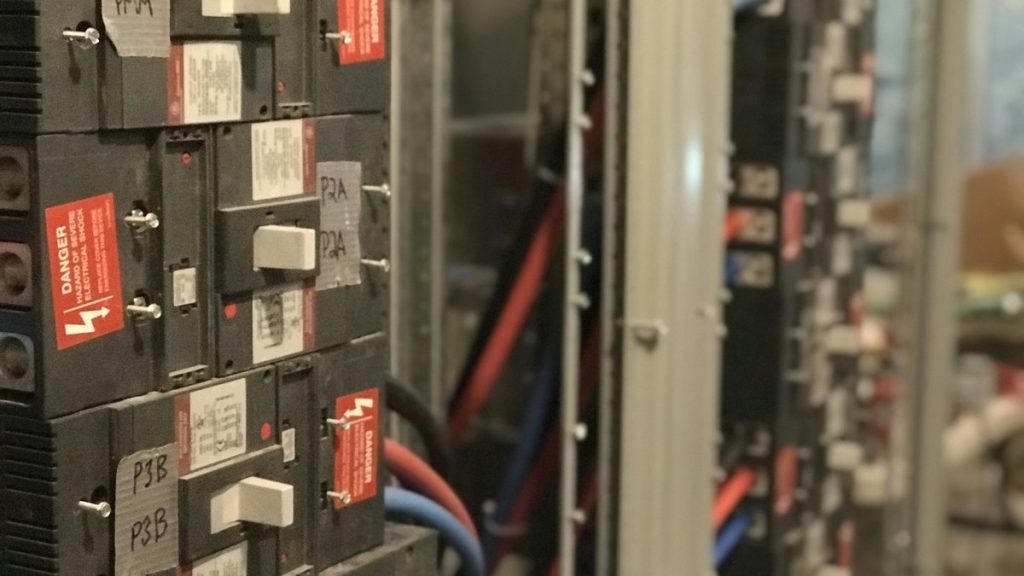
There is a lot you can safely do with your own electrics, and across these articles we have pointed out plenty of it: resetting a breaker, testing a GFCI, checking a cord. Opening the breaker panel and working inside it is not on that list, and it is worth being blunt about why. The panel is the one place in a home where a mistake is not a learning experience. It is a trip to the hospital, or worse. So here is what is actually behind that cover.
What is behind the cover
Take the cover off a breaker panel and you are not just looking at the little switches you flip. Behind and around them sit the main lugs and bus bars, the heavy metal pieces the breakers clip onto, wired straight to the utility supply coming into your home. Here is the part that catches people out: those bus bars stay live even when you switch the main breaker off. The main breaker cuts power to your circuits, but the supply feeding the panel itself does not stop until the utility cuts it at the source. So the most dangerous metal in the panel is energised the whole time the cover is off, and nothing in your house protects it.
Arc flash, the danger people underestimate
Shock is the obvious risk, and it is real: contact with a live bus bar can be instantly fatal. But the danger most people have never heard of is arc flash, and it is worse. If a tool slips, a screw drops, or a wire brushes the wrong place, the electricity can jump as an arc, and an arc in a panel is violent beyond anything your instincts prepare you for. The temperature can climb past 20,000 degrees, hotter than the surface of the sun, hot enough to burn from a distance. It comes with a blast of pressure and molten metal, and it is over in a few thousandths of a second, far too fast to flinch away from. The Wikipedia arc flash page shows what that is. An arc that starts at one breaker can spread to the bus bars and escalate in an instant.
That is why electricians treat an open panel with so much respect, use insulated tools, and follow strict procedures. It is not caution for its own sake. It is the difference between going home and not.
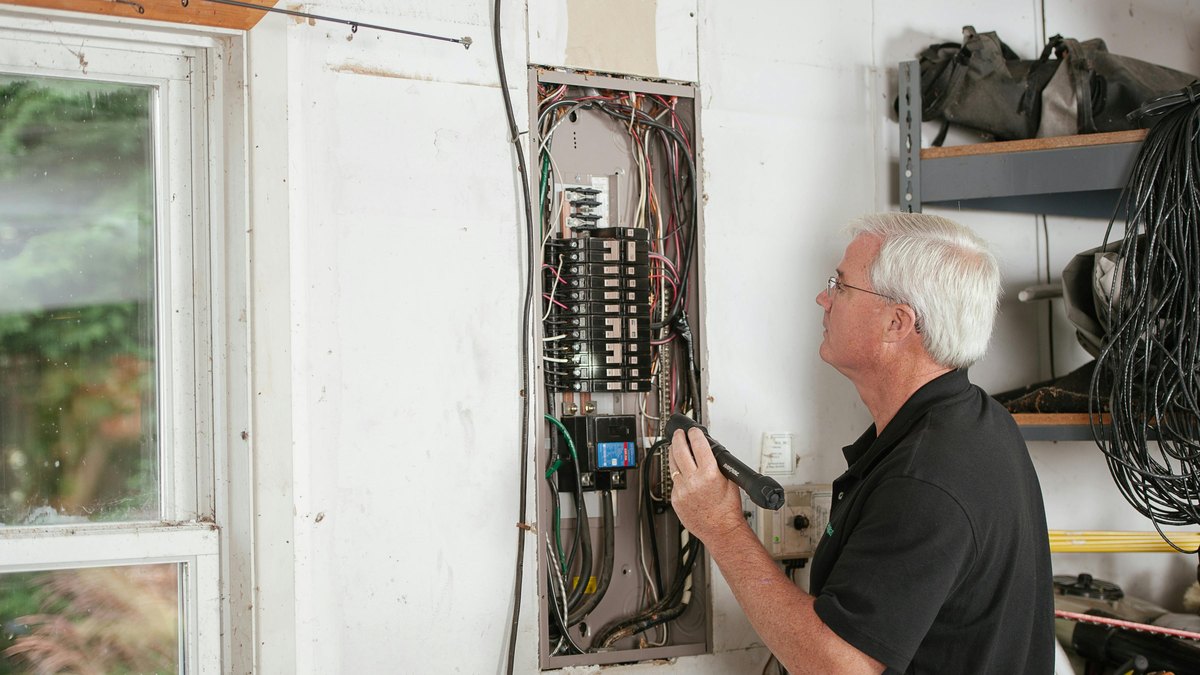
The mistakes that bite later
Even setting aside the immediate danger to you, panel work done wrong leaves hazards behind. A breaker connection that is not tightened properly becomes a loose, overheating joint that can start a fire months later. The wrong size breaker on a circuit strips out the protection the wiring depends on. Two wires jammed under one breaker lug, a missing or sloppy ground, a neutral and ground bonded where they should not be: none of these announce themselves, and all of them are what a trained eye catches and an untrained one walks past. A panel that looks finished can still be quietly unsafe.
What you can safely do, and what you cannot
The line is simple and worth memorising. With the cover on, you can operate the breakers: switch a circuit off, reset a tripped breaker once, throw the main in an emergency. That is the homeowner’s side of the panel, and it is safe because the cover, the dead front, keeps you away from the live parts. We cover the emergency side of that in how to safely shut off power in an emergency.
Taking the cover off, adding or changing a breaker, moving wires, anything that puts your hands near the bus bars, that is the line you do not cross. That work belongs to a qualified electrician with the training, the tools, and the procedures to do it without becoming a statistic, which is exactly what our panel and breaker work is for. There is no version of it that makes a reasonable weekend project, no matter how confident a video makes it look.
The takeaway
A breaker panel is not hard to respect once you know what is inside it. The bus bars behind the breakers are fed straight from the utility and stay live even with the main breaker off, and the arc flash they can produce is fast and violent enough to maim or kill before you can react. On top of that, panel mistakes leave fire hazards that surface later. Operate your breakers with the cover on, and leave everything behind that cover to a professional. It is the one electrical job where the gap between a homeowner and an electrician is measured in lives.
Related reading
- How to safely shut off power in an emergency for what you safely can do at the panel.
- What a buzzing breaker panel means for a panel warning sign to act on, not open.
- Signs your breaker panel needs upgrading for when the panel itself needs professional work.
- Panel and breaker work to have panel work done safely.
Why is working inside an electrical panel so dangerous?
Because behind the breakers are the main lugs and bus bars, heavy metal parts connected straight to the utility supply. They carry large amounts of current, they are not protected by anything in your home, and contact can be instantly fatal. The panel also poses an arc flash risk, which can burn and injure violently in milliseconds.
Isn’t the panel safe if I turn off the main breaker?
No. The main breaker cuts power to your circuits, but the lugs and bus bars feeding the panel stay live until the utility cuts power at the source. That means the most dangerous metal inside the panel is energised the whole time the cover is off, even with the main breaker switched off.
What is arc flash and why does it matter in a panel?
Arc flash is when electricity jumps as an arc, often triggered by a slipped tool or dropped screw. In a panel it can exceed 20,000 degrees, hot enough to burn from a distance, with a pressure blast and molten metal, all in a few thousandths of a second. It is far too fast to react to, which is why panels are so hazardous.
Can a panel mistake cause problems later, not just at the time?
Yes. A breaker connection that is not properly tightened becomes a loose, overheating joint that can start a fire later. The wrong breaker size removes protection from the wiring, and faults like double-tapped lugs or a bad ground are invisible from the front. A panel can look finished and still be unsafe.
What panel tasks can I safely do myself?
With the cover on, you can operate the breakers: switch a circuit off, reset a tripped breaker once, or throw the main breaker in an emergency. The cover, called the dead front, keeps you away from the live parts. That is the safe homeowner side of the panel.
When must I call an electrician for panel work?
Any time the job means taking the cover off, adding or changing a breaker, moving wires, or putting your hands near the bus bars. That work requires the training, insulated tools, and procedures a qualified electrician uses to do it safely. It is never a reasonable do-it-yourself project.
The next step
If your panel needs a new breaker, a repair, or an upgrade, that is exactly the work to hand to a professional. Get a free quote or message us, and we will do it safely, correctly, and without you ever having to open that cover.