

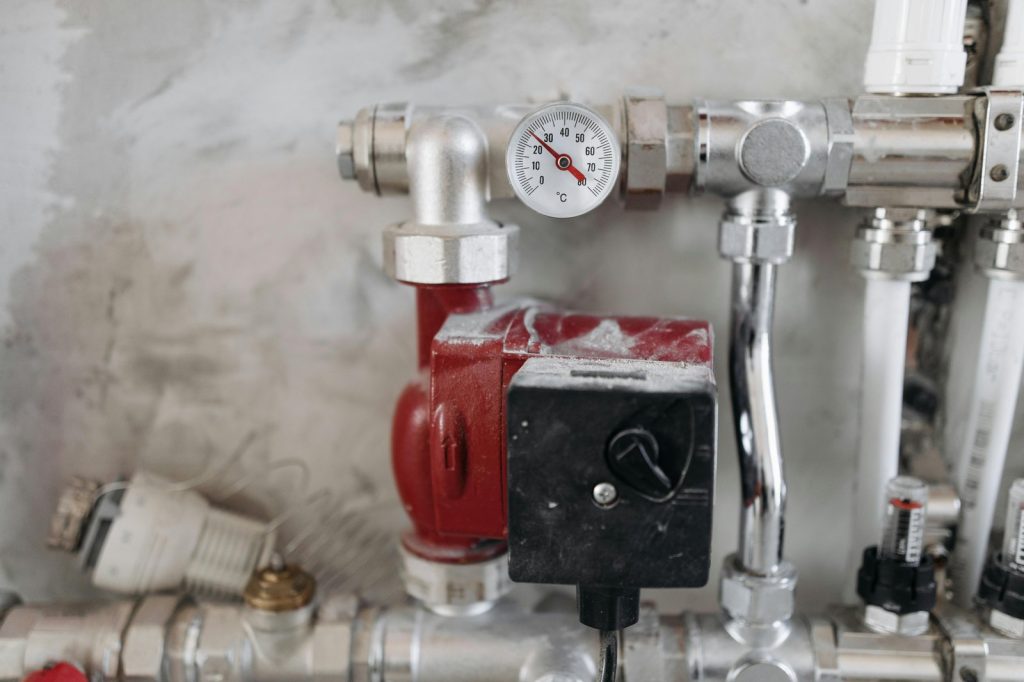
In Jamaica, most homes run on a tank and a pump, so the water pump is one appliance nearly everyone has. The good news is that sizing its circuit is fairly simple once you know two things: the pump’s horsepower and its voltage. There is one motor quirk to understand, and one local catch that trips people up more than the sizing itself.
Sizing by horsepower and voltage
A water pump’s circuit follows its motor. As a rough guide, a half-horsepower pump draws around 9 to 10 amps on 120 volts, or about 4 to 5 on 240, and sits on a 15-amp circuit. A three-quarter-horsepower pump draws around 13 to 14 amps on 120 volts, and wants a 20-amp circuit. A one-horsepower pump pulls about 16 to 17 amps on 120 volts and lands on roughly a 25-amp circuit.
Notice that 240 volts draws about half the amps of 120 for the same pump, which is why larger pumps and longer runs are often wired at 240; it lets you use thinner wire. As always, the pump’s nameplate is the deciding figure, and a pump like this should be on its own dedicated circuit.
The motor quirk: startup surge
A pump is a motor, and motors gulp a big slug of current the instant they start, often several times their running draw, before settling down. That is why the breaker on a pump is sized a little larger than the steady running amps would suggest: it has to ride that startup surge without nuisance-tripping every time the pump kicks in. It is the same behaviour we describe for an air conditioner, and it is normal, not a fault.
The local catch: the long run
Here is the one that catches Jamaican installs more than anything. The pump is often a fair distance from the panel, out by the tank at the side or back of the property, and that distance changes the wire size.
Over a long run, the wire has to be a gauge or two thicker than the bare minimum, to limit voltage drop. If the voltage sags by the time it reaches the pump, the motor draws more current, runs hot, and wears out years early, which is the same slow damage we explain in surge protection for appliances in outage-prone areas. So with a water pump, the distance from the panel matters as much as the horsepower when sizing the wire. You can read more about the principle under voltage drop.
It lives outside, near water
A water pump usually sits outdoors, exposed to weather and right next to plumbing, so the install needs weatherproof connections, proper grounding, and in many cases GFCI protection because it is an accessible outdoor location. The pump is also controlled by a pressure switch that cycles it on and off with the tank pressure, and wiring that switch, and the control box on a submersible pump, is part of doing the job properly.
Leave it to an electrician
Between the motor sizing, the voltage-drop calculation for the run, the outdoor weatherproofing and the pressure-switch wiring, a water pump is more than a plug-and-go job, and it should be done to code and inspected. We handle pump circuits as part of wiring and installations.
Related reading
- What size wire and breaker does a pool pump need? for the closely related, and more safety-critical, pool version.
- Surge protection for appliances in outage-prone areas for why low voltage is so hard on a pump motor.
- Wiring and installations for a dedicated water pump circuit sized for the run.
What size breaker does a water pump need?
It depends on the pump’s horsepower and voltage. As a rough guide, a half-horsepower pump sits on a 15-amp circuit, a three-quarter-horsepower pump on a 20-amp circuit, and a one-horsepower pump on around a 25-amp circuit. The pump’s nameplate gives the exact figures, and it should be on its own dedicated circuit.
Should a water pump be wired at 120 or 240 volts?
Either can work, but 240 volts draws about half the amps of 120 for the same pump, which lets you use thinner wire and helps over long runs. Larger pumps and pumps far from the panel are often wired at 240 for that reason. Check what your specific pump is rated for.
Why is the breaker bigger than the pump’s running current?
Because a pump is a motor, and motors draw a large surge of current the instant they start, several times their running draw, before settling. The breaker is sized a little larger so it rides that startup surge without tripping every time the pump kicks in. This is normal motor behaviour.
Does the distance to the pump affect the wire size?
Yes, a lot. The pump is often far from the panel, out by the tank, and over a long run the wire must be a gauge or two thicker to limit voltage drop. If the voltage sags at the pump, the motor runs hot and wears out early, so distance matters as much as horsepower when sizing the wire.
Does an outdoor water pump need GFCI protection?
Often, yes. A water pump usually sits outdoors next to plumbing, an accessible wet location, so it commonly needs GFCI protection along with weatherproof connections and proper grounding. The exact requirement depends on the installation, which is part of why this is electrician work.
Can I wire a water pump myself?
It is more involved than it looks. Between sizing the motor circuit, allowing for voltage drop on the run, weatherproofing an outdoor connection and wiring the pressure switch, there is a lot to get right, and it should be done to code and inspected. It is best handled by an electrician.
The next step
Fitting a new water pump, or replacing one that keeps tripping or burning out? The circuit and the run are worth getting right. Get a free quote or message us, and we will size the circuit to your pump and the distance to the tank, weatherproof it, and have it done to code.