

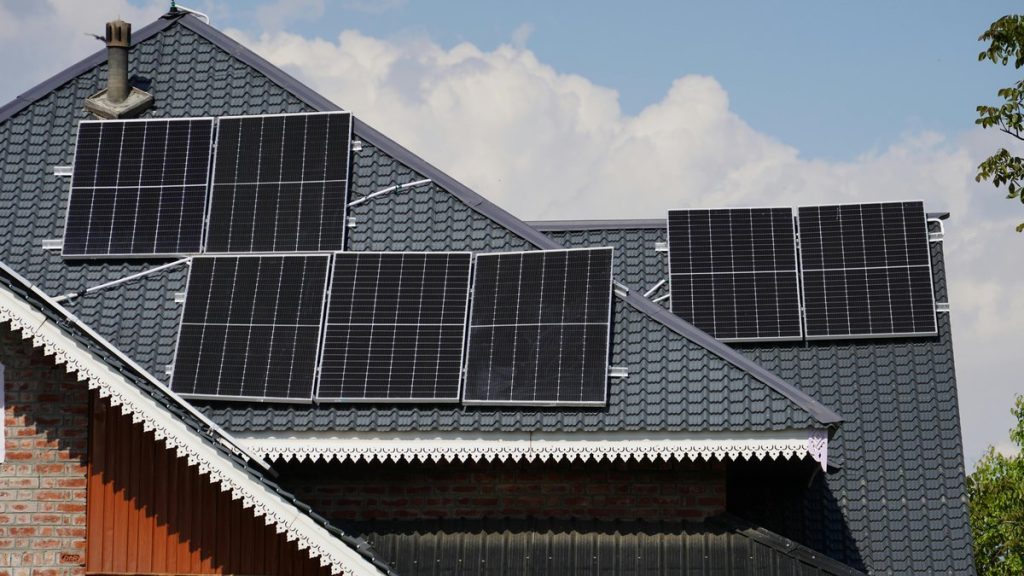
Here is a scene that catches a lot of new solar owners off guard. The power cuts, the sun is blazing, your panels are soaking it up on the roof, and the house still goes dark like everyone else’s. First reaction: something has broken. Almost always, nothing has. Here is what is really going on, and what it takes to keep your lights on.
The short answer
A plain grid-tied solar system, panels and an inverter with no battery, shuts itself off the moment the grid goes down. It is not a fault. It is doing exactly what it was built to do. The panels are fine, the inverter is fine; the system is just not allowed to run on its own while the grid is dead.
Why it shuts off
The reason is a safety feature called anti-islanding. Your inverter constantly watches the grid, and when JPS drops, it disconnects within seconds. If it did not, your panels could keep pushing power back out onto the lines, and a JPS crew working to restore the supply expects those lines to be dead. Feeding them would put those workers in real danger. So every grid-tied inverter is required to shut down the instant the grid fails. You can read about the principle under islanding.
That is why bright sun and a roof full of panels still leave you in the dark during an outage. It is the safe behaviour, not a broken one.
How to actually keep the power on
If staying on through outages is the point, and in Jamaica it usually is, you need a battery. A battery turns a plain grid-tied setup into a hybrid system, and a hybrid inverter does something clever. It safely cuts your home off from the grid, which satisfies the anti-islanding rule, then runs your house from the battery and the panels as its own little island. The line stays dead for the crew, while your home stays lit.
In practice you do not have to back up the whole house. Most people cover the essentials, lights, fans, the fridge, the internet, maybe a water pump, which keeps the battery a sensible size and cost. The switchover is automatic and quick, so often the only sign the grid went down is the neighbours’ houses going quiet. How much you back up is the heart of battery backup sizing, and the full comparison of system types is in grid-tie, hybrid and off-grid solar explained.
The honest takeaway
If you want solar mainly to cut the bill and you can live with going dark when JPS does, a grid-tied system is fine. But if you bought, or are buying, solar so the lights stay on through the outages, a plain grid-tied system will let you down, and the answer is to build in a battery from the start. Ask for a hybrid system, and tell the installer what you want running when the power goes.
Related reading
- Grid-tie, hybrid and off-grid solar explained for which system type gives you backup.
- Battery backup sizing: keeping the essentials on through an outage for deciding what to keep running.
- What an inverter actually does in a solar system for where the backup ability lives.
- Battery and inverter support for adding backup to solar.
Why does my solar go off when the power cuts, even in bright sun?
Because a plain grid-tied system is required to shut down the moment the grid fails. It is a safety feature called anti-islanding, not a fault. The panels and inverter are fine; the system simply is not allowed to keep running and feeding power while the grid is down, so the house goes dark with everyone else’s.
What is anti-islanding?
It is a safety rule built into every grid-tied inverter. The inverter watches the grid and disconnects within seconds if it drops. This stops your panels from pushing power back onto lines that a JPS crew may be working on, expecting them to be dead. It protects line workers, which is why it cannot simply be switched off.
How do I keep solar running during an outage?
You need a battery, which turns a grid-tied setup into a hybrid system. A hybrid inverter safely disconnects your home from the grid, satisfying the anti-islanding rule, then runs the house from the battery and panels as its own island. The grid line stays dead for the crew while your home stays powered.
Do I need to back up my whole house?
Usually not, and it is cheaper if you do not. Most people back up the essentials such as lights, fans, the fridge, the internet and maybe a water pump, which keeps the battery a sensible size. You can back up more, including air conditioning, but it costs more battery, so it is a balance based on what you really need on.
Can I add a battery to a solar system I already have?
Often yes, depending on the existing inverter. Some grid-tied systems can be upgraded with battery storage and a compatible inverter, while others need an inverter change. The only way to know is to have the existing setup assessed, which we are happy to do before recommending the most cost-effective way to add backup.
Is the switchover to battery automatic?
Yes. In a properly set up hybrid system the changeover happens automatically and quickly when the grid drops, so your essentials keep running with little or no interruption. Often the first sign of an outage is the neighbours’ houses going quiet while yours stays lit.
The next step
If you want your solar to keep the lights on when JPS goes down, the answer is a battery and a hybrid setup, sized to what matters most to you. Get a free quote or message us, whether you are planning new solar or want to add backup to a system you already have, and we will work out the right approach.