

People tend to ask whether they need a whole-home surge protector or a power strip, as if it is one or the other. The honest answer is that they do two different jobs, in two different places, and the best protection uses both. One guards the whole house at the front door. The other guards the sensitive thing plugged into it. So here is how each works, why they team up, and the catches worth knowing, especially on a grid like ours.
What a whole-home surge protector does
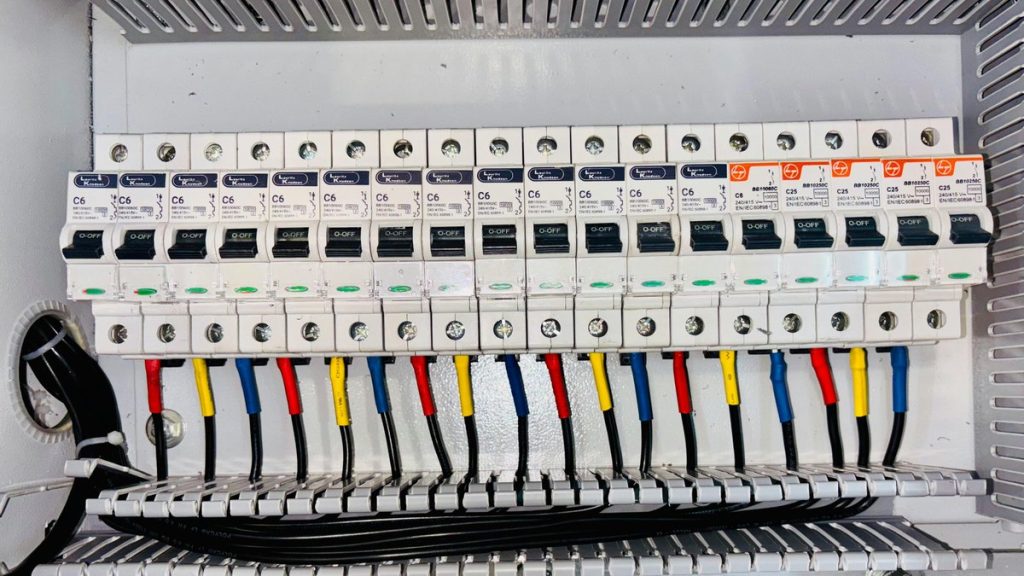
A whole-home surge protector is fitted at your electrical panel, where the power enters the house, and it is an electrician’s install. Its job is to catch the big surges before they spread through your circuits: the spike from a lightning strike nearby, the jolt when power snaps back after an outage, a fault out on the line. It watches for voltage climbing past a safe level and sends the excess to ground.
The strength of a panel-mounted unit is capacity. It is built to swallow enormous surges, the kind that would fry a little power strip, and it protects the whole house at once, including the things you cannot plug into a strip: the fridge, the air conditioner, the water heater, the lights. The trade-off is that it lets a little more voltage through than a point-of-use device, because it is sized for the big hits rather than the fine trimming.
What a power strip surge protector does
A surge-protected power strip works at the outlet, guarding only what is plugged into it. Inside are components called metal oxide varistors, which sit quietly until the voltage spikes, then shunt the excess away from your device. The Wikipedia surge protector page shows how they work.
Its strength is the mirror image of the panel unit’s. A point-of-use protector clamps tighter, holding the voltage that reaches your device down to a lower level, which is exactly what delicate electronics want. Its weakness is capacity: a power strip can mop up the leftovers of a surge, but a big hit on its own can overwhelm it. That is the heart of why the two belong together.

Why the best setup is layered
Surge protection works best in layers, an approach the IEEE and electrical safety bodies back. The whole-home unit at the panel takes the brunt of a big surge and knocks it down to a manageable size. Whatever energy still slips past is then caught by the power strip at the outlet, which trims it the rest of the way before it reaches your TV, computer, or sound system. The panel unit does the heavy lifting. The strip does the fine work. Neither replaces the other, and your most sensitive electronics are better off with both standing between them and the grid.
The catches worth knowing
A few things trip people up. First, not every power strip is a surge protector. Plenty of them just split one outlet into several and offer no protection at all, so look for a stated surge or joule rating and a protection indicator light. If it does not say it protects against surges, it does not.
Second, surge protectors wear out. The components inside take damage with every surge they absorb, and after enough of them, or one very big one, a power strip can quietly stop protecting while still passing power. The indicator light is there to tell you it is still on the job, so glance at it now and then and replace the strip when the light says it is done.
Third, and this is the big one for us, all of it depends on a good earth. A surge protector works by sending the surge to ground, so without a proper earth behind it, it has nowhere to send anything. We get into that in why proper earthing protects your appliances. And no surge protector, at any level, fully stops a direct lightning strike. The goal is to handle the far more common everyday spikes and the indirect hits.
Why this matters more here
Our grid gives electronics a hard time. Outages are frequent, and the surge when power snaps back is one of the most common ways appliances die. Storms bring lightning and spikes. Add a whole-home protector at the panel and good point-of-use strips on your valuable electronics, all over a proper earth, and you have covered the realistic threats far better than either layer could alone. Fitting the whole-home unit is panel and breaker work for an electrician; the strips you can add yourself.
The takeaway
Whole-home and power strip surge protection are two layers, not two choices. The panel-mounted unit catches the big surges and protects the whole house, hard-wired appliances included; the power strip clamps tighter on the sensitive electronics plugged into it. Use both, make sure your power strips genuinely carry a surge rating and a working indicator light, and remember that all of it leans on a sound earth. On a grid with our outages and storms, that layered setup is the difference between a shrug and a ruined appliance.
Related reading
- Why proper earthing protects your appliances for the earth that surge protection depends on.
- Two-prong vs three-prong outlets and grounding for whether your outlets can support a surge protector.
- Signs your breaker panel needs upgrading for whether your panel can take a whole-home unit.
- Panel and breaker work to fit a whole-home surge protector at your panel.
Do I need a whole-home surge protector or a power strip?
Both, ideally. They do different jobs. A whole-home unit at the panel catches big surges and protects the entire house, including hard-wired appliances. A power strip protects only what is plugged into it but clamps tighter for sensitive electronics. They work as layers, and neither replaces the other.
What does a whole-home surge protector do?
Fitted at the electrical panel by an electrician, it catches large surges before they spread through your circuits, such as a nearby lightning strike, the jolt when power returns after an outage, or a fault on the line. It diverts the excess energy to ground and protects everything in the house, including appliances you cannot plug into a strip.
Is a power strip the same as a surge protector?
No. Many power strips simply split one outlet into several with no protection at all. A surge-protected strip contains components that divert voltage spikes away from your devices. Check for a stated surge or joule rating and a protection indicator light; if it does not say it protects against surges, it does not.
Why use both whole-home and power strip protection?
Because they cover different parts of a surge. The whole-home unit absorbs the big hit and knocks it down to a manageable size, then the power strip trims the leftover energy before it reaches sensitive electronics. The panel unit does the heavy lifting; the strip does the fine work. Layering them protects best.
Do surge protectors wear out?
Yes. The components inside take damage with every surge they absorb, and after enough hits, or one very large one, a power strip can stop protecting while still passing power. That is what the indicator light is for. Check it occasionally and replace the strip when the light shows it is no longer protecting.
Does surge protection need a good earth to work?
Yes. A surge protector works by sending excess energy to ground, so without a proper earth behind the outlet or panel it has nowhere to send the surge. A good earth is essential. Also note that no surge protector fully stops a direct lightning strike; the goal is to handle the common everyday spikes and indirect hits.
The next step
If you want your electronics genuinely protected from our surges, the strongest setup is a whole-home unit at the panel backed by good point-of-use strips, all over a sound earth. Get a free quote or message us, and we will fit surge protection at your panel and make sure the earth behind it is up to the job.