

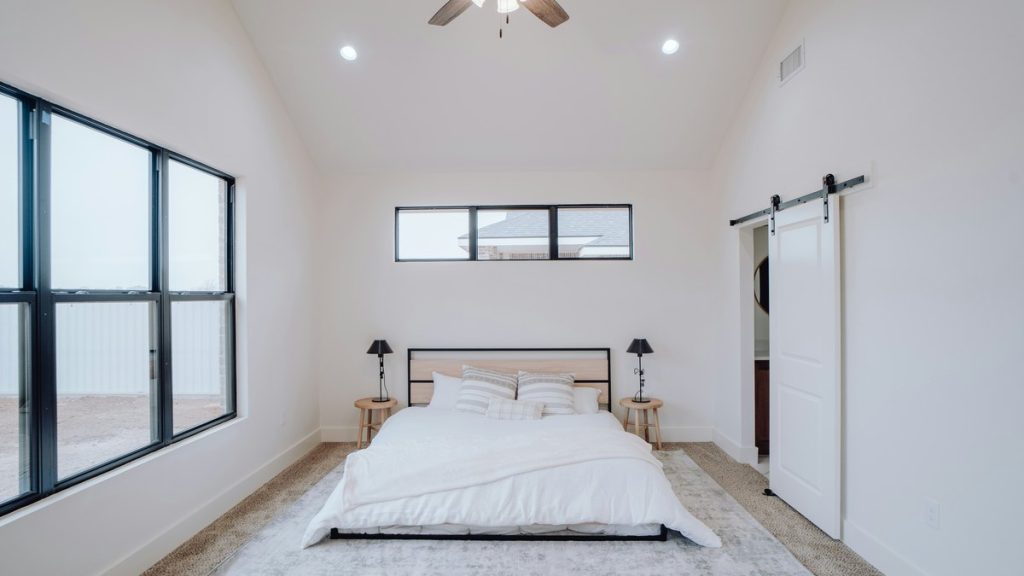
A ceiling fan is about the best-value comfort buy a home here can make. It moves air for a fraction of what an air conditioner costs to run, which counts for a lot when power is this expensive, and in our climate it works nearly all year. Getting it right is really two jobs: choosing a fan that suits the room, and mounting and wiring it so it performs well and cannot come down on anyone. Here is how to do both.
Size the fan to the room
The single biggest choice is the blade span, and it should match the room. A fan that is too small barely stirs the air in a big room, and one too large overwhelms a small one. As a rough guide by floor area: up to about 75 square feet wants a 29 to 36-inch fan; 76 to 144 square feet, a 36 to 44-inch; 145 to 225 square feet, a 44 to 52-inch; and 226 to 400 square feet, a 52 to 60-inch. For a room much over 400 square feet, two well-placed fans move air more evenly than one giant one. You can read the general background on the Wikipedia ceiling fan page.
Look at airflow and efficiency
Blade span is the headline, but airflow, measured in CFM (cubic feet per minute), is what you actually feel. A higher CFM moves more air, so for a warm room you want a fan with a strong figure for its size. Efficiency matters too, especially on our power bills: look for an efficient fan, and consider a DC-motor model, which uses less electricity, runs quietly, and usually comes with a remote and several speeds. A useful extra is a reverse switch, which lets the fan push air down for cooling in the heat.
Mount it at the right height
A fan works best, and is safe to walk under, when the blades sit roughly 8 to 9 feet above the floor, and never less than 7 feet. It should be centered in the room with at least 18 inches of clearance from the blade tips to any wall. The ceiling height decides the mount. For a ceiling under about 8 feet, use a low-profile or flush “hugger” fan that sits close to the ceiling. For a higher ceiling, use a downrod sized to bring the blades down to that 8 to 9-foot sweet spot. Too high and you lose the breeze; too low and it is a hazard.
The part that matters most: a fan-rated box
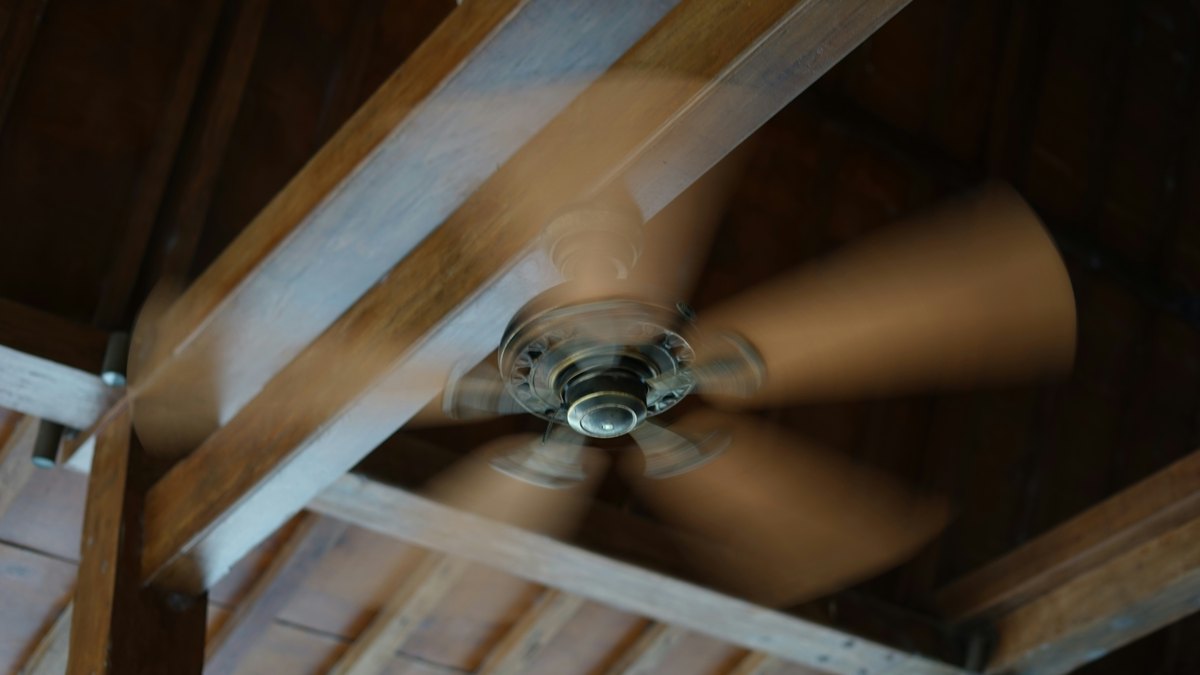
This is the safety point people skip, and it is the one that counts. A ceiling fan is heavy, and it vibrates the whole time it runs. A standard electrical box, the kind that holds a light fixture, was never built to carry that weight and constant movement, and a fan hung from one can slowly work loose and drop. A fan belongs on a fan-rated box, one listed for ceiling fans and properly braced, either fixed to a joist or held by a fan brace bar between joists. Many homes here have concrete ceilings instead, and then the fan has to be anchored into the slab with the right fixings. Either way, that mounting is the whole ballgame: it is the difference between a fan that runs for years and one that comes down on someone. Never hang a fan from an ordinary light box.
Wiring it safely
Beyond the box, wiring a fan means working overhead on live conductors while supporting a heavy, awkward unit, which is why most people are better off leaving it to an electrician. The basics: kill the power at the breaker first, support the fan’s weight rather than hanging it by its wires while you connect, make the ground connection, and wire the fan and any light kit to the correct switching, with many modern fans using a remote or wall control for speed. One thing to know: a normal light dimmer must not be used to control a fan’s speed, as it can damage the motor, so use the fan’s own speed control, which is a different beast from the dimmers we cover in dimmer switches: what works with LED. Finishing with balanced blades keeps it from wobbling.
For verandas and damp spots
Plenty of fans here go on a veranda or covered patio, and that changes the choice. A fan in a covered but open area needs to be damp-rated, and one exposed to blowing rain needs to be wet-rated, because an indoor fan will rust and fail outside. In our salt air and humidity, look for rust-resistant finishes and sealed motors even for sheltered outdoor spots. It is the same durability thinking behind choosing any outdoor electrical gear for our climate.
The takeaway
Choose a ceiling fan by matching the blade span to the room, with enough airflow for the space and an efficient motor to keep running costs down. Mount it 8 to 9 feet above the floor with a low-profile fitting on low ceilings or a downrod on high ones. And above all, hang it from a fan-rated, properly braced or slab-anchored box, never an ordinary light box, because that mounting is what keeps it safely overhead. For verandas, choose a damp or wet-rated fan built for the weather. Get the choice and the mounting right and a fan is cheap, cooling comfort for years.
Related reading
- How to choose LED bulbs for a Jamaican home for picking bulbs for a fan’s light kit.
- Dimmer switches: what works with LED for why a light dimmer is not a fan speed control.
- Smart switches and smart home wiring basics for adding smart control to fans and lights.
- Wiring installations to mount and wire a ceiling fan safely.
What size ceiling fan do I need for my room?
Match the blade span to the floor area. Up to about 75 square feet suits a 29 to 36-inch fan, 76 to 144 square feet a 36 to 44-inch, 145 to 225 square feet a 44 to 52-inch, and 226 to 400 square feet a 52 to 60-inch. For rooms over 400 square feet, two fans move air more evenly than one oversized one.
How high should a ceiling fan be mounted?
The blades should sit roughly 8 to 9 feet above the floor, and never less than 7 feet, with at least 18 inches of clearance from the blade tips to any wall, and centered in the room. Use a low-profile fan for ceilings under 8 feet and a downrod for higher ceilings.
Why do I need a fan-rated electrical box?
A ceiling fan is heavy and vibrates constantly, and a standard light box is not built for that weight and movement, so a fan hung from one can work loose and fall. A fan must be mounted to a fan-rated box that is properly braced to a joist or, in a concrete ceiling, anchored into the slab.
Can I use a dimmer switch to control a ceiling fan’s speed?
No. A normal light dimmer is not designed to control a fan motor and can damage it. Use the fan’s own speed control, which may be a pull chain, a dedicated wall control, or a remote. Light dimmers are only for lights, including any light kit on the fan if it is dimmable.
What kind of ceiling fan can go on a veranda?
An outdoor-rated one. A covered but open area needs a damp-rated fan, and a spot exposed to blowing rain needs a wet-rated fan, because an indoor fan will rust and fail outside. In our salt air and humidity, also look for rust-resistant finishes and sealed motors.
Should I install a ceiling fan myself?
Wiring a fan means working overhead on live conductors while supporting a heavy unit, and getting the mounting box right is critical for safety. Switch off the breaker first, and if you are not confident, have an electrician install it. The mounting is what keeps the fan safely overhead.
The next step
Picked a fan, or want help choosing one and getting it up safely? Get a free quote or message us, and we will fit the right mounting box and wire your ceiling fan so it cools the room and stays where it belongs.