

The lights flickering in one room and the lights dimming everywhere at once are two different problems. One room usually points to something local, a single circuit or a bad fixture. The whole house dimming together is a different animal. It means the cause sits upstream of all your circuits, at the main service, the neutral, or the supply coming in from the utility. Some versions of this are harmless. One of them is genuinely dangerous, and the trick is telling them apart.
The common one: a big appliance kicking on
If the lights dip for a second the moment the air conditioner, the fridge, the water pump, or the washing machine starts, and then come right back, you are almost certainly seeing startup current. A motor draws several times its normal current in the instant it spins up, a brief, heavy pull that lasts a fraction of a second. That momentary demand drops the voltage a little across the house, the lights dim, and as soon as the motor is running the voltage recovers and they brighten again.
A small, quick dip when a large motor starts is usually nothing to worry about. It becomes worth a closer look when the dip is deep, drags on, or happens on appliances that never used to cause it. That can mean the circuit is undersized for what is on it, the service is stretched thin, or there is a loose connection somewhere making the drop worse than it should be. That last possibility is the one to keep in mind.
The dangerous one: a loose neutral
Here is the version you do not want to ignore. If the lights dim and brighten on their own, with no appliance to explain it, or they flicker across the whole house at once, that can point to a loose neutral connection. The neutral is the wire that completes your circuits and keeps the voltage balanced between the two halves of your electrical supply. When the neutral connection goes loose, somewhere at the panel, the meter, or along the main feed, that balance breaks down.
Then the voltage starts swinging. One half of the house can get too much while the other half gets too little. The starved half makes lights dim and motors struggle. The overfed half is the one that kills electronics, because it pushes more voltage into them than they were built to take, and that same over-voltage can overheat wiring and start a fire. You can read how the neutral is meant to work on the Wikipedia ground and neutral page. A loose neutral is among the more serious faults a home can have, and it ties straight into the warning signs we cover in signs of a loose electrical connection.
This is not a do-it-yourself situation. The neutral connections live in the panel and at the service, where the parts stay live and dangerous, and a loose neutral can be putting damaging voltage through your house right now. If you suspect one, switch off sensitive electronics, leave the panel alone, and get a qualified electrician to look at it promptly.
The one that is not your house at all: utility low voltage
Sometimes the dimming is not your wiring, it is the supply coming in. If your whole house is dim and so is the neighbour’s, or it happens at times of heavy demand in the area, the voltage from JPS may be sagging. A brownout like that, a drop in supply voltage rather than a full outage, can come from high demand, a fault on the line, or a loose connection out on the utility side. The Wikipedia brownout page) explains what that is.
The quick test is to look outside. If the neighbours are affected too, it is likely the utility, and that is something to report to JPS rather than an electrician. Sustained low voltage is hard on motors and electronics, so this is exactly where an AVR or voltage stabiliser and a UPS earn their keep, which is the ground we cover in protecting electronics from JPS voltage swings.
What is safe to check yourself
You do not need to open anything to gather useful clues. Notice whether the dimming is one room or the whole house, since whole-house points upstream. See whether it lines up with an appliance starting, which suggests startup load, or happens on its own, which is more concerning. Glance outside or ask a neighbour to find out if the street is affected, which would point to the utility. And note any extras: a burning smell, a warm or buzzing panel, lights that have started flickering where they never did before. Those details tell an electrician a lot.
What you should not do is open the panel, the meter, or any junction to go looking. The fault you are chasing, a loose neutral in particular, sits right where the live parts are, and that is not a place to probe.
When to call an electrician
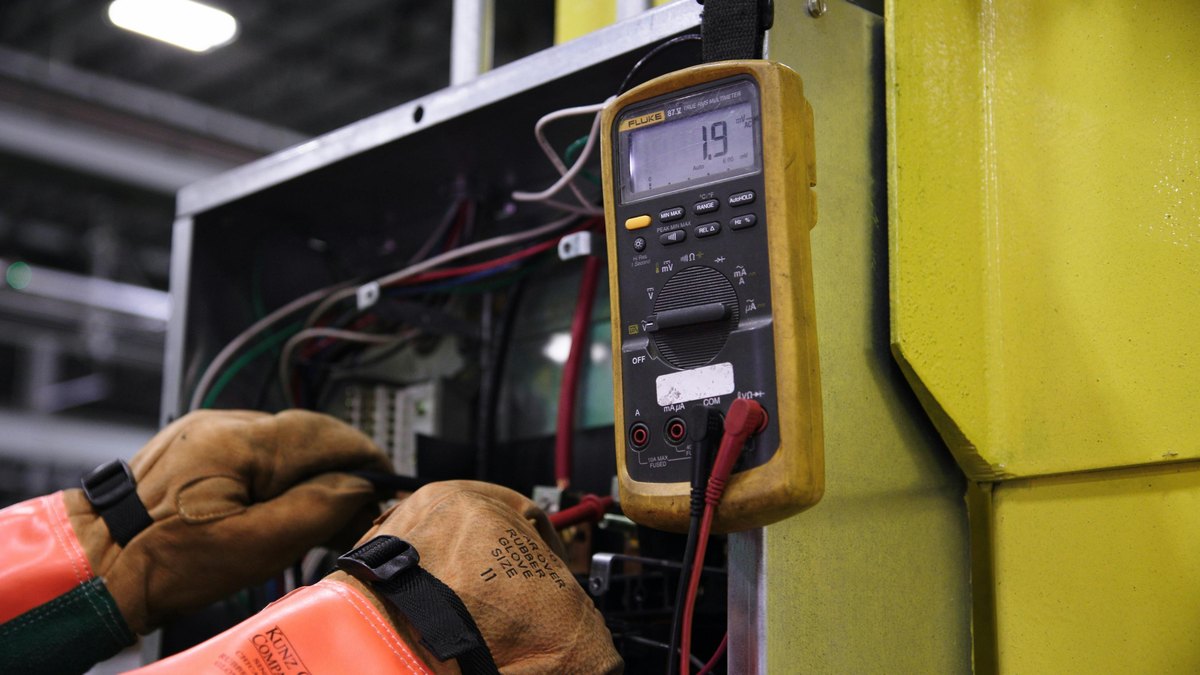
Call promptly if the lights dim and brighten on their own, flicker across the whole house, or you smell hot plastic or notice the panel is warm or buzzing. Those can be signs of a loose neutral or another service fault, and they are worth treating with urgency because of the appliance damage and fire risk. Also call if a particular appliance now causes a deep or lingering dip it never used to, since that can mean an overloaded circuit or a loose connection making the normal startup dip much worse. Tracing where the voltage is dropping, and why, is voltage diagnosis work, and it is the safe way to find a fault that hides at the live end of the system.
The takeaway
Whole-house dimming is a message from upstream. A quick dip when the AC or the pump starts is usually just startup current and not a worry unless it is deep or new. Lights that dim and brighten on their own, or flicker everywhere at once, can mean a loose neutral, which is dangerous and a job for an electrician, not the homeowner. And if the street is dim too, the problem is the utility supply, worth a report to JPS and a reason to protect your electronics. Read the pattern first, leave the panel closed, and bring in help fast when the signs point to a fault rather than a passing dip.
Related reading
- Signs of a loose electrical connection for the warning signs behind a loose neutral.
- Protecting electronics from JPS voltage swings for guarding against utility low voltage.
- Signs of overloaded circuits in your home for when the dimming is a load problem.
- Voltage diagnosis to trace where and why the voltage is dropping.
Why do my lights dim across the whole house when an appliance turns on?
A motor-driven appliance like an air conditioner, fridge, pump, or washing machine draws several times its normal current for a fraction of a second as it starts. That brief, heavy demand drops the voltage a little across the house, so the lights dim and then brighten as the motor settles. A small, quick dip is usually normal.
When is dimming a sign of something dangerous?
When the lights dim and brighten on their own with no appliance to explain it, or flicker across the whole house at once, it can point to a loose neutral connection. That makes the voltage swing, over-volting one half of the house and under-volting the other, which can damage electronics and start a fire. It needs an electrician promptly.
What is a loose neutral and why is it serious?
The neutral wire completes your circuits and keeps voltage balanced between the two halves of your supply. If its connection goes loose at the panel, meter, or main feed, the balance breaks and voltage becomes erratic, too high on one side and too low on the other. Over-voltage damages appliances and can overheat wiring, so a loose neutral is one of the more serious home electrical faults.
How do I tell if the dimming is a utility problem?
Look outside or ask a neighbour. If their lights are dim too, or it happens during times of heavy demand in the area, the supply voltage from JPS may be sagging, which is a brownout. That is something to report to JPS rather than an electrician, and a good reason to run sensitive electronics on a voltage stabiliser or UPS.
Can I check the panel myself to find the cause?
No. Note the pattern instead: whether it is one room or the whole house, whether it tracks an appliance starting, whether the street is affected, and any burning smell or warm, buzzing panel. Do not open the panel or meter. A loose neutral sits right where the live parts are, and that is a place only an electrician should work.
Is it normal for lights to dim a little in an older Jamaican home?
A brief dip when a big motor starts is common and usually harmless, especially where a circuit is carrying a lot. But frequent, deep, or worsening dimming, or dimming and brightening on its own, is not something to live with. It can mean an overloaded circuit, a loose connection, or a service fault worth having checked.
The next step
If your lights dim and brighten on their own, flicker across the house, or dip hard every time an appliance starts, do not wait it out. Get a free quote or message us, and we will trace where the voltage is dropping and put right whatever is causing it.