

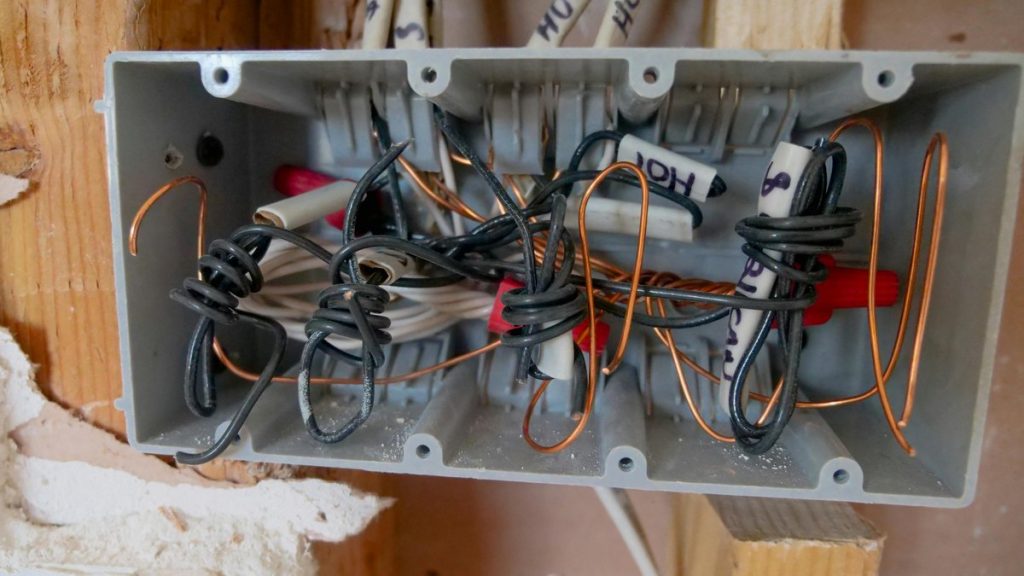
Wiring almost never goes from fine to fire without warning. The trouble builds slowly, as a connection loosens or insulation breaks down, and along the way it leaves signals: a smell, a stain, a flicker, a breaker that keeps tripping. The danger is that each one is easy to explain away on its own. Put them together and they are your home telling you the wiring has become a fire risk. Here are the signs worth knowing, and what to do the moment you spot one.
A burning smell with no source
This is the most urgent one. A burning, hot-plastic, or sharp acrid smell near an outlet, switch, or the panel, with nothing obviously burning, usually means wiring is overheating behind a wall or above a ceiling and cooking its own insulation. You cannot see it, but your nose has found it. Do not wait this one out. Switch off the power to that area at the breaker and get an electrician to it, because a smell like this is often the last warning before something catches. The Wikipedia electrical wiring page covers how home wiring is put together.
Discoloured or scorched outlets and switches
Look at your outlets and switch plates. Brown staining, yellowing, black scorch marks, or a melted look around the slots or screws all mean heat has been building there, and heat in an outlet means a loose or failing connection behind it. An outlet that is warm to the touch tells you the same thing without the mark. Any of these means stop using that point and have it checked, because the heat that browned the plastic is the heat that starts fires.

Flickering, dimming, or buzzing lights
Lights that flicker, dim, or buzz, especially across more than one fixture or when an appliance switches on, point to a loose connection or wiring that can no longer carry what is being asked of it. A one-off flicker in a storm is nothing. A pattern of it is the wiring struggling, and the same loose, high-resistance points that make lights misbehave are the ones that overheat. Worth tracing, not living with.
Breakers that keep tripping
A breaker exists to cut the power before a circuit overheats, so one that trips again and again is not a nuisance. It is a warning doing its job. If you are resetting the same breaker more than once or twice a month, or it will not stay reset at all, there is a real fault on that circuit, an overload, a short, or damaged wiring, and forcing it back on just feeds heat into the problem. Take a repeatedly tripping breaker as a clear signal that something is wrong.
The other tells
A few more are worth a mention. Outlets that spark beyond a quick blue flash. A faint buzzing or crackling from a switch or the panel. A mild shock or tingle off an appliance. Outlets so few that the house runs on a web of extension cords. Old wiring carries its own risk too: homes wired decades ago, or with aluminum branch wiring, or never updated for today’s loads, are working harder than they were built for. None of these guarantees a fire, but each one raises the odds, and several together raise them a lot.
What to do
The rule is simple. Treat any single sign as worth checking, and treat a burning smell, visible scorching, or several signs at once as urgent. For the urgent ones, switch off the power to the affected area at the breaker and call an electrician rather than keep using it. If you ever see smoke or actual flame, get everyone out and call the fire service first. What you should not do is paper over the symptom, reset the breaker one more time, swap the browned cover plate, or ignore the smell. The wiring behind the wall is where the real problem lives, and finding it is wiring installation and inspection work for a professional.
The takeaway
Faulty wiring warns you before it burns: a burning smell with no source, discoloured or warm outlets, flickering or buzzing lights, breakers that keep tripping, sparks, shocks. Any one deserves attention. A burning smell or scorch marks, or several signs together, deserve action today. Cut the power to the area and get an electrician to inspect it, because catching a fire risk in the wiring is the whole point of paying attention to these signs at all. The house is trying to tell you something. It is worth listening.
Related reading
- Signs of a loose electrical connection for the fault behind many of these warnings.
- Signs of overloaded circuits in your home for the overload side of the risk.
- Smoke detectors and your electrical system for the warning that matters if a fire does start.
- Wiring installations to inspect and repair wiring that has become a hazard.
What are the warning signs of faulty wiring?
The main ones are a burning or hot-plastic smell with no source, discoloured or scorched outlets and switch plates, outlets warm to the touch, flickering, dimming or buzzing lights, and breakers that trip repeatedly. Sparks beyond a quick flash, mild shocks off appliances, and heavy reliance on extension cords are also signs worth heeding.
What does an electrical fire hazard smell like?
Often a burning, hot-plastic, or sharp acrid odour near an outlet, switch or the panel, with nothing obviously burning. That usually means wiring is overheating behind a wall or ceiling and cooking its own insulation. It is one of the most urgent warning signs, so switch off the power to that area and call an electrician.
Why are my outlets discoloured or warm?
Brown staining, yellowing, scorch marks, or warmth at an outlet mean heat has been building there, which points to a loose or failing connection behind it. That heat is what can start a fire, so stop using the outlet and have it inspected rather than just replacing the cover plate.
Do flickering lights mean my wiring is dangerous?
Not always, but a pattern of flickering, dimming or buzzing, especially across several fixtures or when appliances switch on, often points to a loose connection or wiring straining to carry the load. The same high-resistance points that make lights misbehave can overheat, so persistent flickering is worth tracing.
Is a frequently tripping breaker a fire risk?
It can signal one. The breaker trips to cut power before a circuit overheats, so one that trips repeatedly, more than once or twice a month, or will not stay reset, indicates a real fault such as an overload, short, or damaged wiring. Forcing it back on feeds heat into the problem instead of fixing it.
What should I do if I notice these signs?
Treat any single sign as worth checking, and a burning smell, visible scorching, or several signs together as urgent. Switch off the power to the affected area at the breaker and call an electrician to inspect it. If you see smoke or flame, get everyone out and call the fire service first.
The next step
If your home is showing any of these signs, the wiring behind the wall is worth a proper look before it becomes something worse. Get a free quote or message us, and we will inspect your wiring, find the fault, and make it safe.