

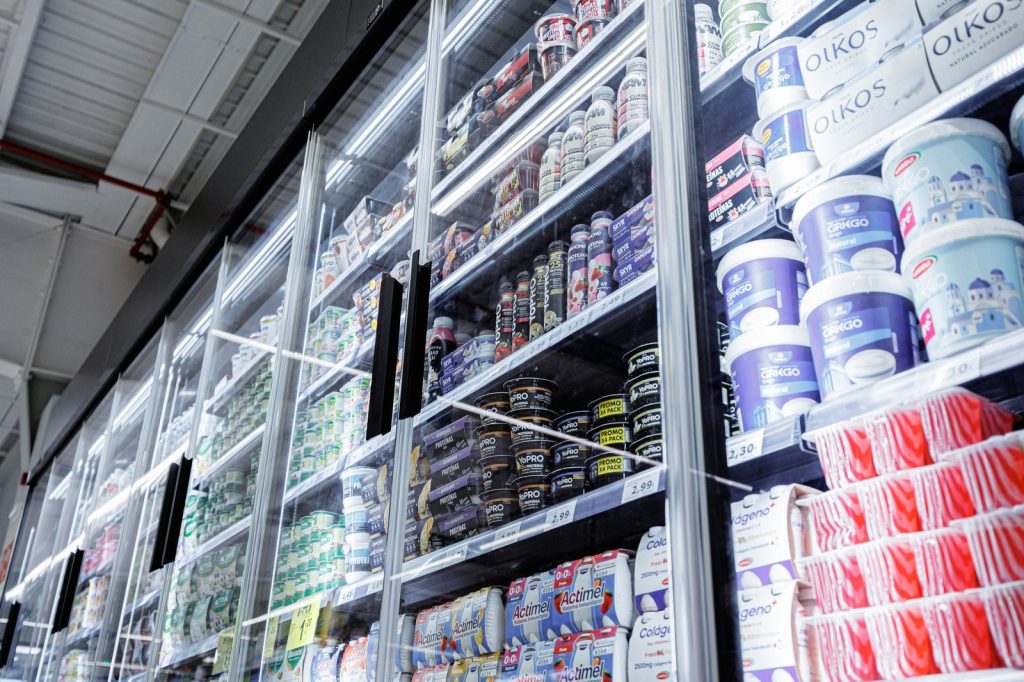
A small shop is one of the best places to put solar, and for a reason that has nothing to do with green credentials. A shop’s biggest electricity load runs during the day, exactly when the panels are making the most power, so the production lines up with the trading. And the thing a shop most needs to protect, its cold storage, is precisely what a power cut threatens. Solar answers both at once. The number of panels comes down to what you are keeping cold and cool.
What a small shop actually uses
For most small shops, refrigeration is the bill. Chest freezers and drink coolers run hard all day, and a busy shop may have several of them, so cold storage often dwarfs everything else. On top of that sit the lights, a fan or two, maybe an air conditioner, and the till or card machine, which barely register by comparison. A modest shop with a couple of coolers, lights and fans might use somewhere around 10 to 20 units a day; one with serious refrigeration and AC can climb well past that.
Why solar fits a shop so well
This is the part worth dwelling on. A home uses most of its power in the evening, after the sun is gone, so it leans on net billing or batteries to get the value back. A shop is the opposite: it is open and busy in daylight, drawing its heaviest load while the panels are at full output. That means more of a shop’s solar is used directly, on the spot, which is the most efficient way to use it. For a daytime business, solar is an unusually good match.
So, how many panels?
As a rough guide, a modest shop running a few coolers, lights and fans through the day lands somewhere around 3 to 6 kilowatts of solar, which is roughly eight to sixteen modern panels. Add an air conditioner or heavy refrigeration and it grows from there. The honest figure comes from the same simple sum we use everywhere: your daily units divided by our sun hours gives the system size. Every shop is different, so the equipment list and the bill set the number, not a rule of thumb.
The case for backing up the cold storage
Here is where a shop’s maths differs from a home’s. When the power cuts at home, a spoiled fridge is a bad day. When it cuts at a shop, a freezer full of stock turning warm is money walking out the door, and our outages are frequent enough that it adds up over a year. That makes a battery on the refrigeration a business decision, not a luxury: it keeps the cold storage running through a cut and protects the stock that is your livelihood. Sizing that backup around the freezers and coolers is the heart of battery backup sizing, and for a shop it often pays for itself in stock saved.
Sizing it properly
The right system for a shop is built from a walk-through, listing the coolers, freezers, lights, fans and any AC, with how long each runs, against the electricity bill. From that we size the panels to cover the daytime load and, if it matters to you, a battery to carry the cold storage through outages. It is the same disciplined approach as a home, just with refrigeration doing most of the talking.
Related reading
- How many solar panels do you need to run a fridge and fans? for the refrigeration load at a smaller scale.
- How many solar panels do you need to run your air conditioning? for what AC adds to a shop’s needs.
- Battery backup sizing: keeping the essentials on through an outage for protecting cold storage in a cut.
- Solar system planning for sizing a system to your shop.
How many solar panels does a small shop need?
As a rough guide, a modest shop running a few coolers, lights and fans through the day lands around 3 to 6 kilowatts of solar, roughly eight to sixteen modern panels. Heavy refrigeration or an air conditioner grows it from there. The real figure comes from your daily units divided by our sun hours, so the equipment and the bill decide it.
What uses the most electricity in a small shop?
Refrigeration, almost always. Chest freezers and drink coolers run hard all day and often outweigh everything else combined. Lighting, fans, any air conditioning and the till or card machine add to it, but the cold storage is usually the bill, which is why it drives the system size.
Why is solar a good fit for a shop?
Because a shop is busy in daylight, drawing its heaviest load exactly when the panels make the most power. Unlike a home that uses most of its electricity after dark, a shop uses much of its solar directly as it is produced, which is the most efficient way to use it. A daytime business and solar line up well.
Should a shop add a battery?
Often yes, for the cold storage. When an outage hits a shop, a freezer of warming stock is lost money, and frequent cuts add up. A battery that keeps the refrigeration running through a cut protects that stock, so for a shop it is a business decision that can pay for itself rather than a luxury.
Can solar run a shop air conditioner too?
Yes, but AC adds significantly to the system size, as it does in a home. A shop that wants cooling on top of its refrigeration needs a larger array to carry both during the day. The AC is usually the deciding factor between a modest shop system and a noticeably bigger one.
How do you work out the exact size for my shop?
By walking through the shop and listing the coolers, freezers, lights, fans and any AC with how long each runs, then checking it against your electricity bill. That gives the daily usage, which sets the panel count, plus any battery sized around the cold storage. Every shop differs, so it is built from your own equipment, not a guess.
The next step
For a small shop, solar lines up neatly with daytime trading, and a battery on the cold storage protects the stock that pays your bills. Get a free quote or message us with your equipment and a recent bill, and we will size the panels for your trading day and, if you want it, backup for the freezers.