


The living room is where the most expensive electronics in the house tend to live: the TV, the sound system, the games console, the decoder, the router, often a whole wall of them. It is also where they are most exposed, usually crowded onto one outlet through a tangle of power strips. So wiring a living room well comes down to two things that work together: putting enough outlets where you actually use them, and protecting the costly, fragile gear that plugs into them.
Enough outlets, so nothing has to stretch
The baseline is the same spacing rule used through the house: no point along a wall should be more than 6 feet from an outlet, which means outlets no more than 12 feet apart, and any usable wall wider than about 2 feet gets one. In a living room that rule does real work, because the alternative is the familiar octopus of adapters and extension leads creeping out from behind the sofa.
When a room has too few outlets, people do not stop plugging things in. They reach for power strips, then plug strips into strips, and that daisy-chained nest behind the entertainment unit is where living-room electrical trouble usually starts. The honest fix is more outlets, not more strips.
The media wall is the real problem
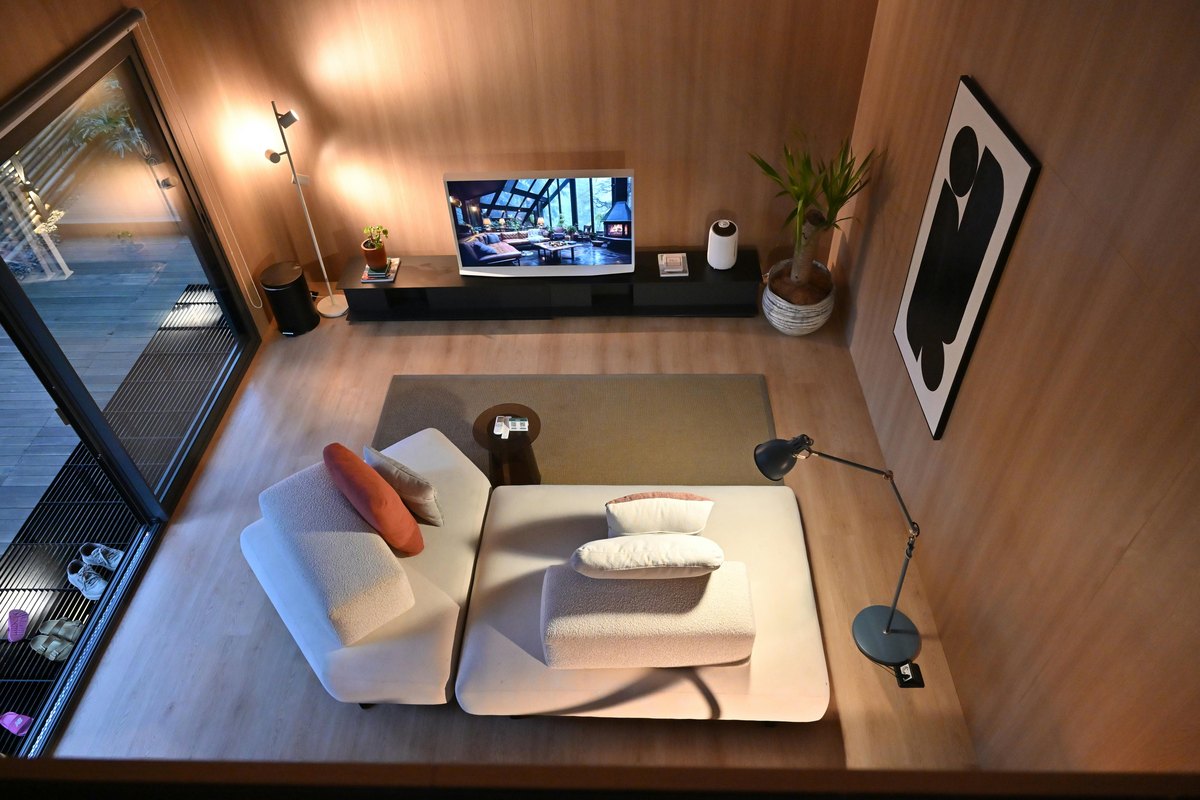
Think about what gathers on one wall now. A TV, a soundbar or amplifier, a console or two, a streaming box, the cable or satellite decoder, the internet router, maybe a subwoofer. That is six or eight things wanting power in one spot, and most homes were built with a single outlet there. Good living-room wiring plans for that: enough outlets behind and beside the media unit to carry the cluster without a single strip doing all the work, and the load spread so one outlet is not feeding the lot.
A power strip is not what people think it is
This is worth being clear about, because it causes real damage. A plain power strip does one thing: it splits one outlet into several. It does not add capacity to the circuit, and unless it specifically says so, it does not protect anything from a power surge. Plugging more into a strip does not give you more power, it just concentrates the same circuit’s load through one set of contacts. Do not daisy-chain them, do not plug a strip into a strip, and do not run a strip permanently as a substitute for an outlet. If you need one all the time, what you actually need is another outlet.
Surge protection is the living room’s real concern in Jamaica
Here is where our conditions change the picture. The living-room electronics are the most surge-sensitive things you own, and with the spikes, dips and sudden returns of power we get from the grid, they are the most likely to be quietly killed by it. A flat-screen TV or a console does not care about an outage, but it cares a great deal about the jolt when the power comes back hard. A proper surge protector, or better still whole-home surge protection at the panel backed up by point-of-use protectors on the costly gear, is the difference between a flicker and a funeral for your TV. We go into this in surge protection for appliances in outage-prone areas, and the living room is exactly the room it was written for.
AFCI and tamper-resistant outlets
Two more standards round it out. Living-room circuits, like the rest of the living areas, should be on AFCI protection, which detects the arcing from a damaged cord or loose connection and cuts in before it can start a fire, a real risk behind a crowded entertainment unit where cords get pinched and buried. And new outlets should be tamper-resistant, with shutters that stop a child pushing something into the slots, which matters in the room where the family actually spends its time.
Who should do it
Adding outlets, running new circuits, fitting AFCI protection and installing whole-home surge protection are licensed-electrician work, both for safety and so the job passes a Government Electrical Inspectorate inspection where one is required. What you can do is recognise the warning signs: a power strip behind the TV feeding everything, strips plugged into strips, an extension lead as a permanent fixture, or expensive electronics with nothing between them and the grid. Those are the cues to plan it properly, which is what we handle under wiring and installations.
Related reading
- Surge protection for appliances in outage-prone areas for protecting the TV and electronics from grid spikes.
- Wiring a bedroom: circuits, outlets and safety for AFCI and the same outlet-spacing approach.
- Wiring a kitchen: circuits, outlets and safety for dedicated circuits in the busiest room.
- Wiring and installations for adding living-room outlets and surge protection to standard.
How many outlets should a living room have?
Enough that no point along a wall is more than 6 feet from an outlet, which means outlets no more than 12 feet apart, with one on any usable wall wider than about 2 feet. A living room also needs extra outlets at the media wall, because the TV, sound system, console, decoder and router all gather there and a single outlet cannot serve them safely.
Is a power strip the same as a surge protector?
No. A plain power strip just splits one outlet into several. It does not add capacity to the circuit, and unless it specifically says so, it does not protect anything from a power surge. A surge protector is a different device that absorbs voltage spikes. Always check whether a strip is actually rated for surge protection before trusting it with electronics.
Why do my living-room electronics need surge protection in Jamaica?
Because our grid produces frequent spikes, dips and sudden returns of power, and a flat-screen TV, console or sound system is highly sensitive to that jolt, especially when power comes back hard after an outage. A proper surge protector, or whole-home surge protection backed by point-of-use protectors, prevents an expensive piece of equipment being quietly destroyed.
Is it safe to plug a power strip into another power strip?
No. Daisy-chaining power strips, or plugging a strip into a strip, concentrates too much load through one set of contacts and is a known fire risk. Running a strip permanently as a stand-in for an outlet is the same problem. If you constantly need a power strip in one spot, the real fix is having an electrician add an outlet there.
Does a living room need AFCI protection?
Yes. Like the other living areas, living-room circuits should be on AFCI protection, which detects the arcing a damaged cord or loose connection makes and cuts in before it can start a fire. That risk is real behind a crowded entertainment unit, where cords get pinched, bent and buried out of sight.
Can I add living-room outlets myself?
Adding outlets, running circuits, fitting AFCI protection and installing whole-home surge protection are licensed-electrician work, for safety and to pass inspection where required. What you can do is spot the warning signs, such as one power strip feeding everything behind the TV, and arrange to have the room wired properly instead.
The next step
If your living room runs on a power strip behind the TV, leans on extension leads, or has expensive electronics with nothing protecting them from the grid, it is worth sorting properly. Get a free quote or message us, and we will add the outlets the room needs, fit AFCI protection, and put proper surge protection between your electronics and our power.