

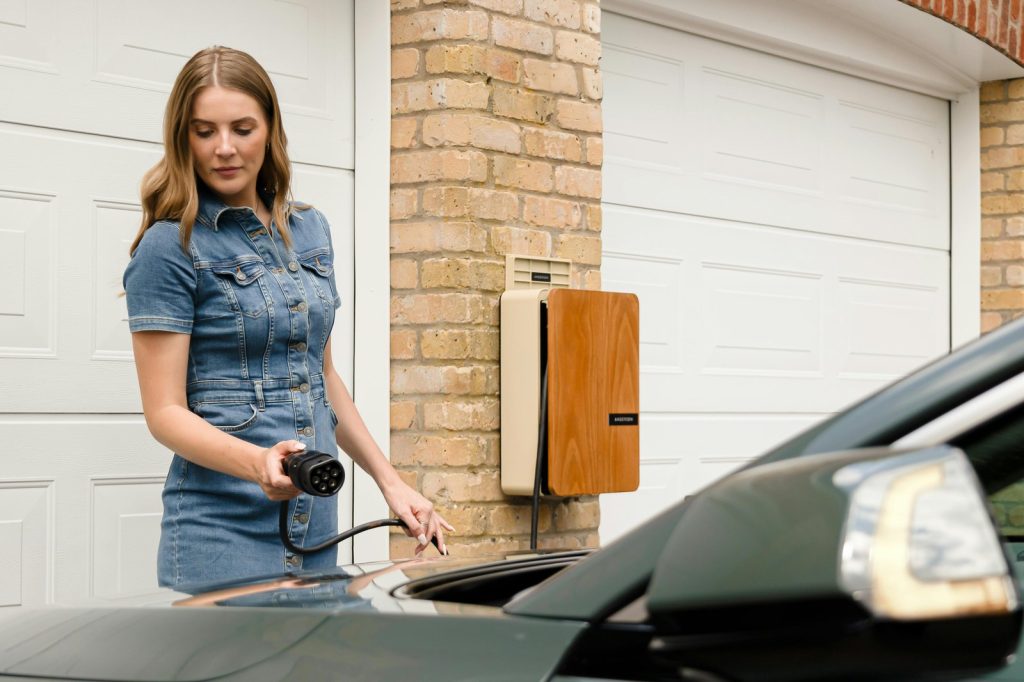
Electric vehicles are starting to show up on Jamaican roads, and charging at home overnight is the easy way to live with one. The catch is that a proper home charger is a serious new electrical load, bigger than almost anything else in the house. Here is what one needs, and the question that decides whether fitting it is a quick job or a bigger project.
Level 1 versus Level 2
There are two ways to charge at home. Level 1 just plugs the car into an ordinary 120-volt outlet. It needs no special wiring, but it is slow, adding only a few miles of range an hour. For a light driver it can be enough.
Level 2 is the real home charger. It runs on a 240-volt dedicated circuit and charges several times faster, which is what most owners end up wanting. Everything below is about Level 2, because Level 1 is just a normal outlet.
Sizing a Level 2 charger
EV charging counts as a continuous load, because the car can pull full power for hours, so the circuit is sized to 125 percent of the charger’s maximum current. In plain terms, take the charger’s rated amps and go up to the next breaker size.
A 32-amp charger lands on a 40-amp breaker. A 40-amp charger needs a 50-amp breaker, run on 6-gauge copper, which is the most common home setup and matches a NEMA 14-50 outlet. A 48-amp charger steps up to a 60-amp breaker. All of these are 240-volt, double-pole circuits, wired as four-wire runs.
One detail worth knowing if you are choosing a charger: a plug-in unit on a NEMA 14-50 outlet tops out at 40 amps of charging. If you want the full 48 amps, the charger has to be hardwired on a 60-amp circuit. GFCI protection is also required, and most modern chargers build it in, though some installations still use a GFCI breaker at the panel.
The real question: can your panel take it?
This is where an EV charger parts ways with a dryer or a range. It is not just another circuit. It is a large continuous load that can rival the rest of your house combined, and that runs straight into the capacity of your panel and your incoming service.
If your home has a 200-amp service, it can usually absorb a charger with room to spare. If you have a 100-amp or 150-amp service, or a panel that is already fairly loaded, adding a 40-amp-plus charger often pushes you over what the service can safely carry, and that means a panel or service upgrade before the charger goes in. It is the same capacity question we raise around solar and big appliances in signs your breaker panel needs upgrading.
There is a clever way around it in some homes. A smart, load-managing charger watches the whole house’s usage and throttles its own charging when everything else is running, so it never pushes the panel past its limit. That can sometimes avoid an expensive upgrade on a smaller service. Whether it works for you depends on your panel and your loads, which is exactly what an assessment is for. And if you are going solar too, charging the car off your own panels is a natural pairing worth planning together. You can read more about home charging under charging station.
This is electrician and permit work
A Level 2 charger is a heavy 240-volt circuit, often with a panel or service question attached, and it has to be installed to code and inspected. Get it wrong and you have a fire risk on a circuit that runs for hours unattended. We handle EV charger circuits and any panel work in panel and breaker work.
Related reading
- Do you need to upgrade your panel before solar? for the same capacity question a charger raises.
- Signs your breaker panel needs upgrading to judge whether your panel can take a big new load.
- Panel and breaker work for fitting an EV charger circuit and any upgrade it needs.
What size breaker and wire does a home EV charger need?
For a Level 2 charger, the circuit is sized to 125 percent of the charger’s maximum current. A 32-amp charger uses a 40-amp breaker, a 40-amp charger uses a 50-amp breaker on 6-gauge copper, and a 48-amp charger uses a 60-amp breaker. All are 240-volt, double-pole, four-wire circuits. The charger’s rating decides the exact figures.
What is the difference between Level 1 and Level 2 charging?
Level 1 plugs into an ordinary 120-volt outlet with no special wiring, but only adds a few miles of range per hour. Level 2 uses a dedicated 240-volt circuit and charges several times faster, which is what most owners want. The wiring requirements apply to Level 2.
Do I need to hardwire an EV charger or can I use a plug?
A plug-in charger on a NEMA 14-50 outlet tops out at 40 amps of charging. If you want the full 48 amps, the charger has to be hardwired on a 60-amp circuit. Both are valid; it comes down to the charging speed you want and the charger you choose.
Will adding an EV charger need a panel upgrade?
It depends on your service. A 200-amp service can usually take a charger with room to spare. A 100-amp or 150-amp service, or an already-loaded panel, often needs an upgrade before adding a 40-amp-plus charger. A smart load-managing charger can sometimes avoid the upgrade by throttling when the house is busy.
Does an EV charger need GFCI protection?
Yes. GFCI protection is required for EV charging circuits. Most modern chargers have it built in, but some installations still use a GFCI breaker at the panel. An electrician will set it up correctly for your charger and local requirements.
Can I install an EV charger myself?
It is not advisable. A Level 2 charger is a heavy 240-volt circuit that runs for hours, often with a panel or service question attached, and it must be installed to code and inspected. A mistake is a serious fire risk, so it is electrician work.
The next step
Thinking about a home charger for a new EV? The smart first move is to check whether your panel can carry it before you buy the charger. Get a free quote or message us with the charger you are considering, and we will size the circuit, tell you whether your service can take it or needs an upgrade, and install it properly.