


Calling someone out to look at your wiring can feel like a small leap of faith. Will they spend ten minutes glancing around and then hand you a scary number? Will they find a mountain of problems you never knew you had? Will it cost you just to have them show up? Fair worries, all of them, so here is what actually happens when we come out for a site assessment, start to finish.
The short version: an assessment is a proper look at your electrical system so we can tell you the truth about it and quote accurately. Whether you called about one nagging fault, a rewire, a panel upgrade or solar, the visit runs the same honest way.
Why we look before we quote
You have probably noticed a theme across everything we write: we will not throw a price at you over the phone. That is not us being difficult. Two homes that sound identical on a call can need very different work once we see the panel, the wiring and how the place is actually used. The assessment is how we replace guesswork with a real number, and how you avoid paying for work you do not need or being surprised by work you do.
The panel comes first
The breaker panel is the heart of the system, so it is where we start. We check that it is accessible and properly mounted, that the breakers are labelled and in good condition, and that nothing inside shows the warning signs that matter here: corrosion, rust, scorching or heat damage. We note whether it is a modern breaker panel or an old fuse board, how much spare capacity it has, and whether it is one of the older suspect types. If you have been thinking about solar or more appliances, this is also where we judge whether the panel can take the extra load. We cover the warning signs in signs your breaker panel needs upgrading.
The wiring and the grounding
Next we look at the wiring itself, as much of it as we can get eyes on. We are checking the type and the age, and looking for insulation that has gone brittle, cracked or frayed, for rodent damage, and for any signs of overheating or corrosion at connections and junction boxes. Faulty wiring is one of the leading causes of electrical fires, so this part is not a formality.
Grounding gets special attention, because in a lot of older Jamaican homes it is either missing or not done properly. A correctly grounded system is what keeps you safe from shock when something faults, so we verify that the earthing is there and actually working, not just present on paper.
Outlets, switches and the room-by-room check
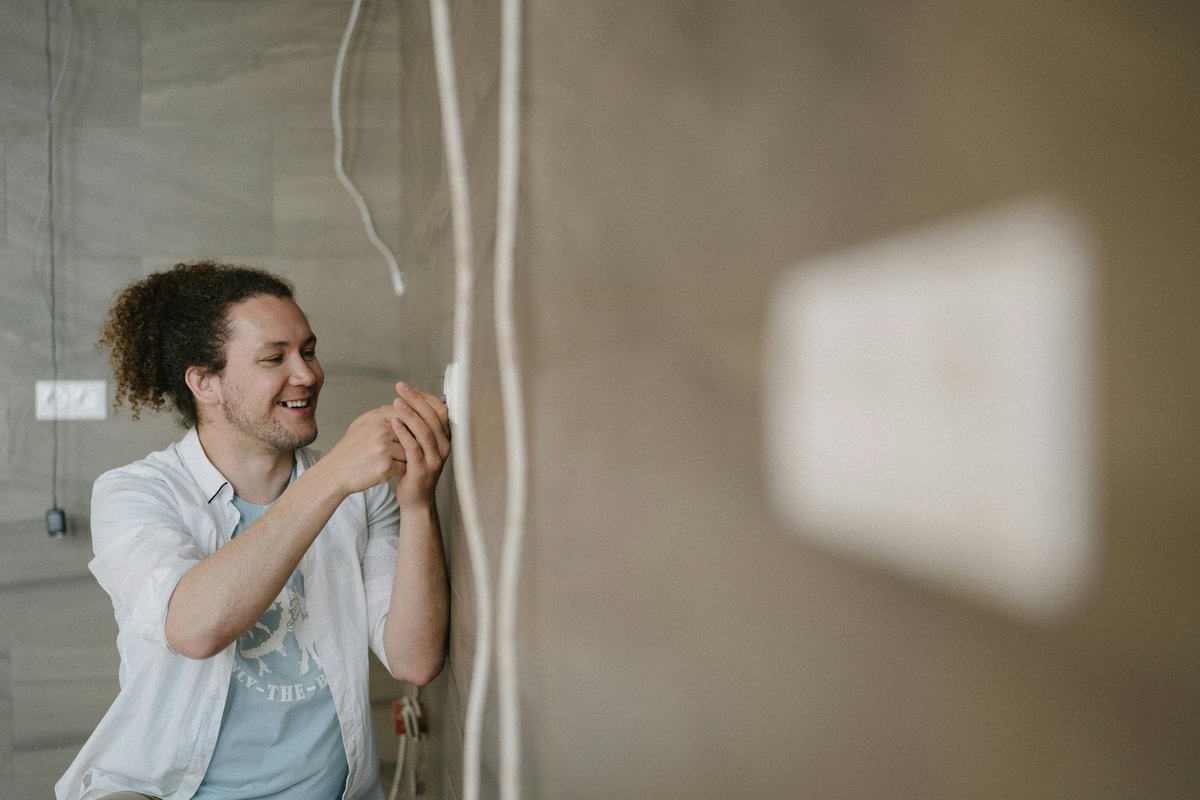
Then we go through the house. We test outlets and switches for correct voltage, correct polarity and proper grounding, and we look for the physical tells of trouble: cracks, discolouration, scorch marks, a loose fit in the wall, or that telltale warmth. In wet areas like kitchens, bathrooms and outdoors, we check for the kind of shock protection that should be there and confirm it actually trips when it is meant to.
We also pay attention to how you live in the space. A wall hidden behind a tangle of extension cords and multi-plug adapters tells us a circuit is overloaded or there are not enough outlets, which is useful to know whether you called us about that or not.
If it is for solar or an upgrade
When the visit is about solar or a bigger upgrade, we add a few things. We look at the roof, its condition, orientation and any shading, to judge what it can carry and produce. We check the panel’s capacity to accept solar, and we work out where equipment would sensibly go. If you have a recent electricity bill handy, that helps us size things properly, which we explain in how to size a solar system.
How long it takes, and how to help
A straightforward assessment usually takes under an hour. A larger property, or a full pre-purchase or pre-solar survey, takes longer. You can make it quicker and more useful by doing three small things: clear access to the panel so we are not moving furniture, jot down the specific problems you have noticed (the breaker that trips, the outlet that sparks, the light that flickers), and have a recent JPS bill ready if solar is on the table.
What you get at the end
You get a straight answer. We will tell you what is safe, what needs attention, and what is genuinely urgent versus what can wait, and we will separate the two honestly rather than dressing up every find as an emergency. Where work is needed, you get an itemised quote so you can see what each part costs and decide what to do and when. If we find nothing wrong, we will tell you that too.
If something dangerous turns up during the visit, a scorched connection, an exposed live wire, we will not sit on it. We will tell you on the spot and, if needed, advise shutting off the affected circuit until it is fixed. And if the work that follows is the kind that needs certification, we will explain that any required inspection through the Government Electrical Inspectorate has to happen before JPS will connect or reconnect, so you can plan around it. For a fuller picture of how to keep a home safe between visits, the CPSC home electrical safety checklist is a solid reference.
Related reading
- Signs your breaker panel needs upgrading for what we look for at the panel.
- What does it cost to rewire a house in Jamaica? for how an assessment turns into an itemised rewire quote.
- Wiring and installations for the work that often follows an assessment.
How long does an electrical site assessment take?
A straightforward home assessment usually takes under an hour. A larger property, or a full pre-purchase or pre-solar survey, takes longer because there is more wiring, more rooms and the roof or panel capacity to assess. We will give you a realistic idea of timing when you book.
What does an electrician check during an assessment?
We check the breaker panel for capacity, condition and warning signs, the wiring for age and damage, the grounding, and every outlet and switch for correct voltage, polarity and grounding plus physical signs of trouble. We also look at how circuits are loaded. For solar or upgrades we add the roof and the panel’s capacity to take more load.
How should I prepare for an electrical assessment?
Three things help: clear access to the breaker panel so we are not moving furniture, a short note of the specific problems you have noticed, and a recent JPS bill if the visit is about solar. None of these are essential, but they make the visit quicker and the advice more accurate.
Will the electrician find a lot of problems I have to fix?
Not necessarily. The point of an assessment is an honest picture, so we separate what is genuinely urgent for safety from what can wait, and if your system is sound we will say so. You get an itemised quote for any work needed, and you decide what to do and when.
Why does grounding matter so much in the assessment?
Proper grounding is what protects you from electric shock when a fault occurs, and in many older Jamaican homes it is missing or not done correctly. We check that the earthing is present and actually working, because a system that looks fine but is not properly grounded is a real safety risk.
What happens if you find something dangerous?
We tell you on the spot rather than waiting for a report. If there is an immediate hazard such as a scorched connection or exposed live wire, we will advise shutting off the affected circuit until it can be repaired, and prioritise that work in the quote.
The next step
An assessment is the honest starting point for almost any electrical job, from a single nagging fault to a full solar plan. Get a free quote or message us, and we will come and give your system a proper look, tell you straight what it needs, and put real numbers on paper.