

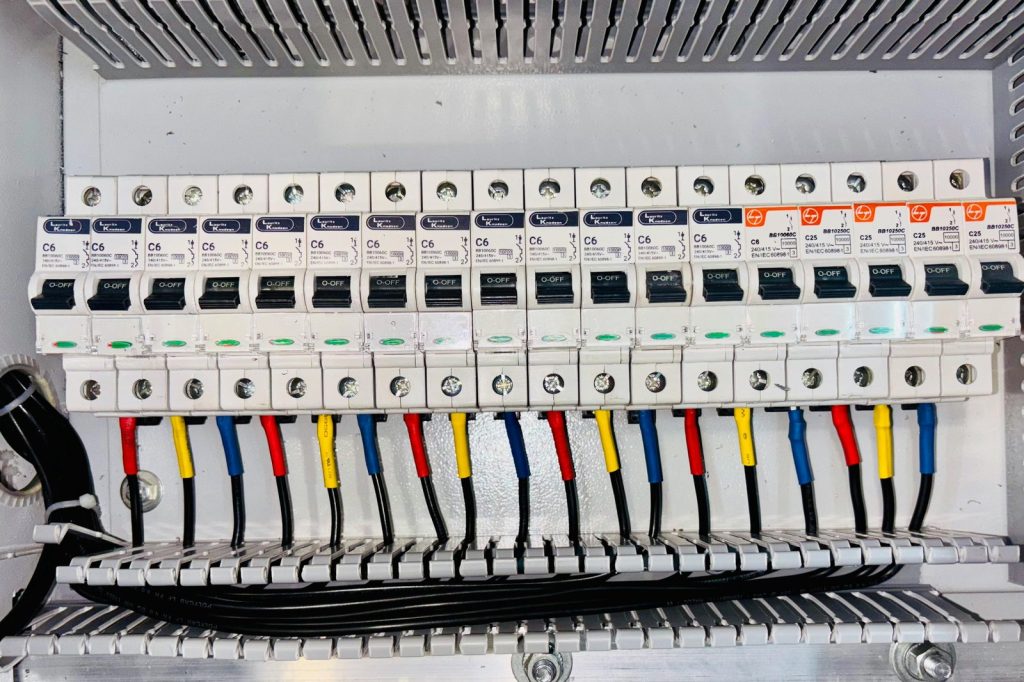
You flip the breaker back on, the power returns, and ten minutes later it trips again. It is one of the most common calls we get, and the frustration is understandable. The good news is that a tripping breaker is not the problem. It is the thing protecting you from the problem.
A breaker trips on purpose. The question worth answering is what it keeps reacting to, because the answer ranges from “you have too much plugged into one circuit” to “there is a fault in the wiring that could start a fire.” Here is how to tell the difference.
What a tripping breaker is actually doing
Every circuit in your home is protected by a breaker rated for a certain amount of current, usually 15 or 20 amps for the general circuits in a house. The breaker’s whole job is to cut the power the moment the current on that circuit climbs past what the wiring can safely carry. Without it, an overloaded or faulty circuit would keep heating up until the wiring insulation failed, and that is how electrical fires start.
So when a breaker trips, it has done exactly what it was designed to do. Resetting it without finding out why is like switching off a smoke alarm because the beeping is annoying. The reset is not the fix. Finding the cause is.
There are really only a handful of reasons a breaker trips, and they are worth knowing so you can describe what is happening when you call for help.
The most common cause: an overloaded circuit
By a wide margin, the usual culprit is an overloaded circuit. This happens when the things drawing power on one circuit add up to more than it is rated for. A bedroom circuit running a fan, a TV, a phone charger and a window air conditioning unit can be fine for months, then trip the first hot afternoon when the AC works harder and tips the total over the edge.
Kitchens are the classic offender. A microwave, an electric kettle, a toaster and a blender on the same counter circuit will trip a breaker the moment two or three run at once. The breaker is telling you that circuit cannot carry all of that at the same time.
The tell for an overload is timing. If the trip happens when a specific appliance kicks on, or when you are running several things together, and you can make it happen again by repeating that, you are almost certainly overloaded. The first thing to try is simple: move some of the load to a different circuit and see if the tripping stops.
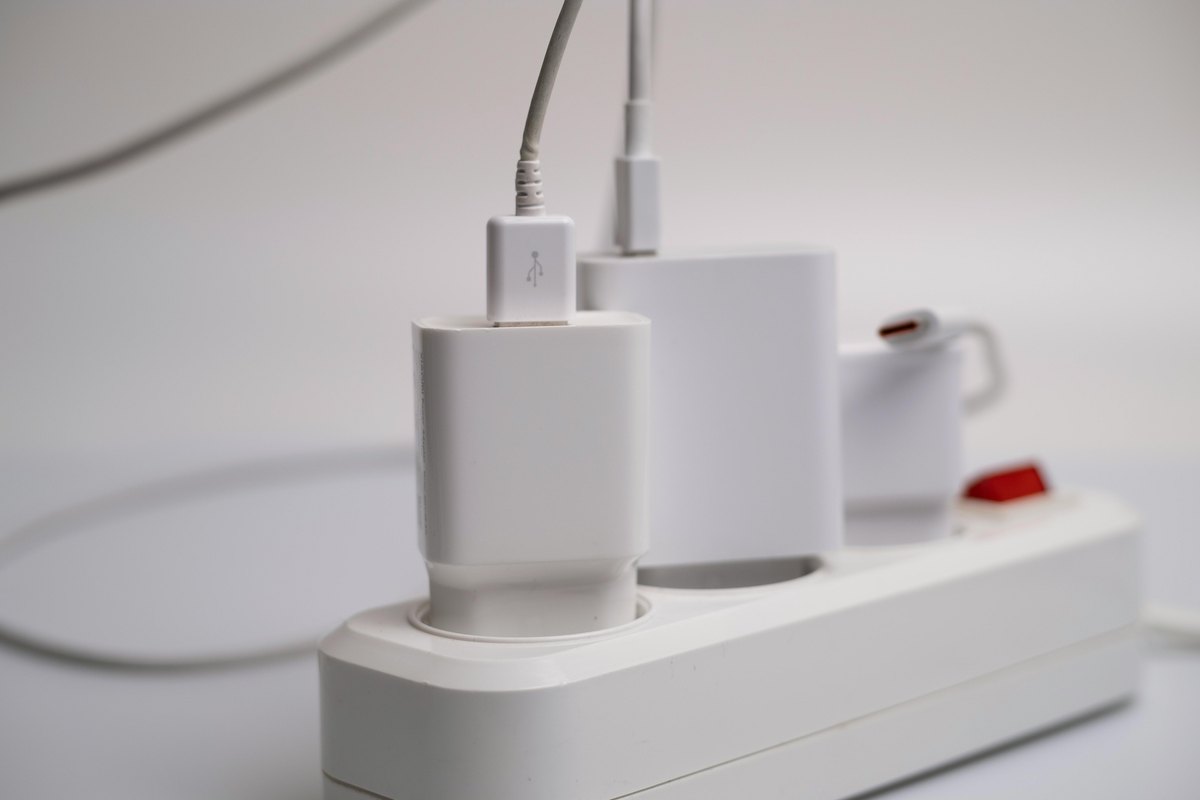
Overloads are common in older Jamaican homes that were wired for a much lighter load than a modern household runs today. When the house was built it may never have been meant to carry air conditioning, an electric water heater and a row of kitchen appliances all at once. If you are constantly juggling what you can run together, that is a sign the system needs more circuits or a panel that can handle the load, not just a reset.
A short circuit: when it trips hard and fast
A short circuit is more serious. It happens when a live wire touches a neutral wire, or another live wire, and current rushes through with almost no resistance. The breaker sees a huge spike and trips instantly.
The signs are different from an overload. A short often trips the breaker the second you switch on a particular light or plug in a particular appliance, every single time, no matter what else is running. You might see a spark, notice a scorch mark or a melted look at an outlet or plug, or catch a faint smell of burning plastic.
A short circuit can be in the appliance (a damaged cord or a failed motor) or in the wiring itself. The quick test is to unplug the suspect appliance and try the circuit again. If the tripping stops, the appliance is the problem and should be repaired or replaced. If it still trips with nothing plugged in, the fault is in the wiring, and that needs an electrician.
A ground fault
A ground fault is a close cousin of a short circuit. It happens when a live wire touches something earthed, like the metal casing of an appliance or a ground wire. It is especially common in wet areas, which is why kitchens, bathrooms, outdoor outlets and anywhere near water are the usual spots.
Ground faults are dangerous because that stray current is looking for a path to earth, and a person can become that path. This is exactly what a GFCI outlet (the kind with the little “test” and “reset” buttons, common at kitchen and bathroom counters) is built to catch. A GFCI trips far faster and at a much lower current than a normal breaker, fast enough to protect you from a serious shock. If a GFCI keeps tripping, do not tape over it or swap it for a normal outlet. It is sensing leakage current for a reason. You can read more about how these devices work on the residual-current device overview.
A worn or failing breaker
Breakers are mechanical devices and they do wear out, especially after years of heat, humidity and repeated tripping. A tired breaker can start tripping at less than its rated current, or feel loose and warm in the panel. This is less common than an overload or a fault, but it does happen, particularly in coastal homes where salt air is hard on everything.
You should never assume a worn breaker is the cause and just swap it, though. A breaker tripping early is often a symptom of a real fault it is correctly catching. Replacing it without checking can remove the very protection that is keeping you safe. This is a job to diagnose properly, not guess at.
Loose connections and aging wiring
In older homes, and in any home that has seen DIY work over the years, loose connections are a frequent hidden cause. A loose wire at an outlet, a switch or the panel itself creates heat and arcing, and modern panels with arc-fault protection will trip on it. Vibration, corrosion from humidity, and connections that were never tightened properly all add up over time.
This is the category that worries us most, because a loose, arcing connection is a genuine fire risk and it is usually invisible behind a wall or inside the panel. If your tripping does not line up neatly with an overload or one obvious appliance, this is often what is going on, and it is firmly in professional territory.
How to safely check it yourself
There are a few safe things you can do before calling anyone:
- Note the pattern. Does it trip when one specific appliance turns on, when several things run together, or seemingly at random? Write it down. It tells the electrician a lot.
- Unplug everything on the affected circuit, reset the breaker once, then add appliances back one at a time. If one item trips it instantly, that appliance is suspect.
- Check whether you are simply asking too much of one circuit, and move some load elsewhere.
- Look (do not touch) for scorch marks, melted plastic, or a burning smell at outlets and at the panel.
And the hard limits, for your safety:
- Do not keep resetting a breaker that trips again and again. It is tripping for a reason, and forcing it defeats the protection.
- Never open the panel and work inside it. The main feed into a panel stays live even with the breakers off, and it can kill you.
- If you smell burning, see smoke or scorching, or feel heat at an outlet or the panel, switch off at the main if it is safe to reach, keep people away, and call for help right away.
When to call an electrician
Call us when the tripping is not a simple, repeatable overload you can solve by moving a few plugs. Specifically: a breaker that trips with nothing obvious drawing power, any sign of burning, scorching or heat, a GFCI that will not stay reset, a breaker that feels warm or loose, or tripping that started on its own without anything changing in the house.
We trace the actual fault, isolating the circuit and testing methodically rather than guessing, and we tell you in plain language what is wrong and what it takes to fix it. Sometimes it is a single bad connection. Sometimes it points to a panel that is overloaded and due for an upgrade, which is also the groundwork for adding things like air conditioning or solar later. Either way, you get a straight answer, and the work is done to code, tested and signed off.
A breaker doing its job is a good thing. A breaker doing its job over and over is a message. It is worth listening to.
Related reading
- Power outage and fault finding when the power is out and you need the fault traced fast.
- Panel and breaker work for upgrades, new breakers and panels readied for bigger loads.
- Voltage diagnosis if you also see flickering lights, dim outlets or warm switches.
Is it safe to keep resetting a tripping breaker?
No. A breaker trips to protect you from an overload or a fault, so forcing it back on repeatedly removes that protection and can let wiring overheat. Reset it once to test, but if it trips again, stop and find the cause.
Why does my breaker only trip when the air conditioning turns on?
That points to an overloaded circuit. The AC is a big load, and when it starts it can push the total current on that circuit past the breaker rating. Moving other appliances to a different circuit often helps, but a circuit that is always at its limit may need an upgrade.
What is the difference between a breaker tripping and a GFCI tripping?
A normal breaker protects the wiring from overload and short circuits. A GFCI (the outlet with test and reset buttons) protects people from shock by sensing tiny amounts of current leaking to earth, and it trips much faster and at a lower current, which is why it is used in kitchens, bathrooms and outdoors.
My breaker trips even with nothing plugged in. What does that mean?
If a circuit trips with no appliances connected, the fault is likely in the wiring itself, such as a short, a ground fault or a loose, arcing connection. That is not a DIY fix. It should be traced and repaired by an electrician.
Can a breaker just go bad?
Yes. Breakers wear out over time, especially with years of heat, humidity and repeated tripping, and can start tripping below their rating. But a breaker tripping early is often correctly catching a real fault, so it should be diagnosed rather than simply swapped out.
When should I call an electrician about a tripping breaker?
Call when there is any burning smell, scorching or heat, when a GFCI will not stay reset, when the breaker trips with nothing obvious drawing power, or when it started tripping on its own. These point to a fault that needs to be traced and fixed safely.
The next step
If your breaker keeps tripping and it is not a simple overload you can solve by moving a few plugs, let us trace it properly before it becomes something worse. Get a free quote or send us a message, and we will follow up within one business day. If you have no power or you smell burning, call us right away.