

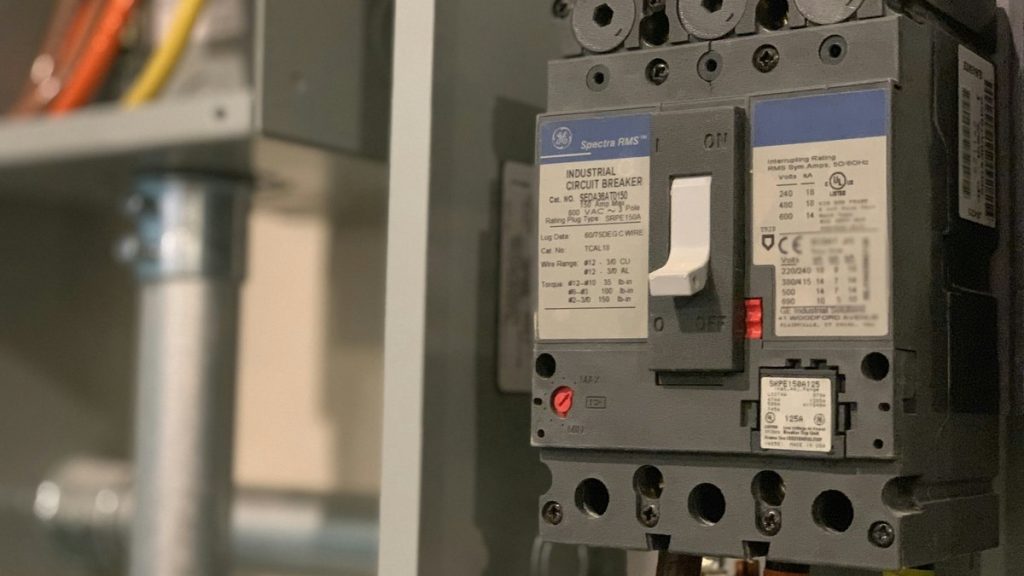
A rewire is the once-in-a-generation chance to get the heart of your electrical system right. The breaker panel is where every circuit starts and ends, and the easy mistake is to just match whatever was there before. Better to size it for how you live now and what you will probably add later, because doing it during the rewire costs a fraction of changing it afterward. Here is what actually matters when you choose.
Service size: the amperage
The headline number is the panel’s main rating, the amperage of the service feeding the house. Older homes here often run on 60 or 100 amps; a modern home is usually 100 to 200. The right size is not a guess and it is not the old number copied across, it comes from a load calculation: an electrician adds up your real and likely loads with the proper allowances and sizes the service to match. As a rough guide, 100 amps suits a typical home without heavy electric loads, while 200 amps makes sense for a larger house or one running an electric water heater, central air conditioning, and perhaps a future inverter, solar, or electric-vehicle charger. A rewire is the cheap moment to step up if you are near the limit, though bumping the service amperage up also means coordinating the service entrance and meter with JPS.
Why you do not size by adding up the breakers
A point that confuses people: the breakers inside a panel add up to far more than the main rating, and that is completely normal. A 100-amp panel might hold thirty 20-amp breakers, which on paper is 600 amps, but you never run them all at full load at once. Service is sized by a load calculation and real-world diversity, not by summing the breakers, which is exactly why this is an electrician’s calculation rather than arithmetic on the box.
Circuit spaces: leave room to grow
After amperage comes how many breakers the panel can physically hold, its slots or spaces. The rule here is simple: get more than you need today. Empty spaces cost next to nothing when the panel goes in, but running out later means cramming in tandem breakers or bolting on a whole subpanel. Leave room for the circuits you can see coming, an air conditioner, an inverter, an EV charger, a future room. And remember the slot maths: a double-pole breaker for a 240-volt appliance eats two slots, and an AFCI or GFCI breaker takes the space of a standard one. A panel that is full the day it goes in is one you will be fighting with for years.
Main breaker, and the right breaker brand
Two more practical choices. For the home’s main panel you want a main-breaker type, which has its own master disconnect built in, rather than a main-lug type, which is meant for subpanels fed from somewhere else. And pick a panel from a reputable brand whose breakers are easy to buy locally, including the GFCI and AFCI types, because you will need to add and replace breakers over the years, and a panel that takes obscure, hard-to-find breakers becomes a headache. Matching breaker types to the panel is part of the wider picture we cover in choosing breakers: amps, types and what they protect.
Build in the protection while you are at it
A rewire is the ideal time to design in protection rather than bolt it on later. Choose a panel with room for a whole-home surge protective device, which guards the whole house against the surges our supply throws at it, and which we get into in the surge protector buying guide for Jamaican homes. Make sure the rewire includes proper grounding and bonding, and that the panel supports the GFCI and AFCI breakers your wet areas and living spaces should have. These are far cheaper to include now than to retrofit.
Quality and the enclosure, for our climate
Finally, the panel has to survive where it lives. Our salt air and humidity corrode cheap enclosures and the connections inside them, so a quality panel with a sound enclosure rated for its location matters more here than in a dry climate. It should be mounted somewhere dry and accessible, not in a damp or cramped spot, and if any part of the run is exposed, the enclosure rating has to suit that. A good panel, properly sited, is the difference between a system that stays safe for decades and one that quietly corrodes. Choosing the wire that fills it is its own decision, which we cover in copper vs aluminum wiring: which and why.
The takeaway
When a rewire gives you a clean slate, size the service from a real load calculation rather than copying the old rating, and lean toward enough capacity for the heavy and future loads you can foresee. Choose a panel with more circuit spaces than you need today, a main breaker, and a reputable brand whose breakers you can actually buy. Build in surge protection, proper grounding, and the right protective breakers, and pick a quality enclosure sited to survive our climate. Get the panel right during the rewire and you have set the foundation for everything that plugs into the house for the next few decades.
Related reading
- Choosing breakers: amps, types and what they protect for the breakers that go in the panel.
- Copper vs aluminum wiring: which and why for the wire that fills it.
- Surge protector buying guide for Jamaican homes for the whole-home protection to build in.
- Panel and breaker work to size, choose, and install the right panel.
What amperage panel do I need for a rewire?
It comes from a load calculation, not from copying the old rating or adding up breakers. As a guide, 100 amps suits a typical home without heavy electric loads, while 200 amps suits a larger home or one with an electric water heater, central air conditioning, and future inverter, solar, or EV plans. An electrician sizes it to your real loads.
Why can the breakers add up to more amps than the main?
Because you never run every circuit at full load at the same time. A 100-amp panel might hold breakers totalling 600 amps on paper, which is normal. Service is sized by a load calculation and real-world diversity, not by summing the breaker ratings.
How many circuit spaces should the panel have?
More than you need today. Empty spaces are cheap when the panel is installed but expensive to add later. Leave room for foreseeable circuits like an air conditioner, inverter, or EV charger, and remember double-pole breakers use two slots and AFCI or GFCI breakers take the space of a standard breaker.
What is the difference between a main-breaker and main-lug panel?
A main-breaker panel has its own master disconnect built in and is what a home’s main panel should be. A main-lug panel has no main breaker and is meant for use as a subpanel fed and protected from somewhere else. For a rewire’s main panel, choose main-breaker.
Does the breaker brand matter?
Yes. A panel only takes breakers designed for it, so choose a reputable brand whose breakers, including GFCI and AFCI types, are easy to buy locally. You will add and replace breakers over the years, and a panel that takes obscure, hard-to-find breakers becomes a long-term headache.
What should I build into the panel during a rewire?
Room for a whole-home surge protective device, proper grounding and bonding, and support for the GFCI and AFCI breakers your wet areas and living spaces need. A quality enclosure rated for its location matters too, since our salt air and humidity corrode cheap panels. These are far cheaper to include now than to retrofit.
The next step
Planning a rewire and not sure what panel and service size you need? Get a free quote or message us, and we will do a proper load calculation and fit a panel sized for your home now and the years ahead.