

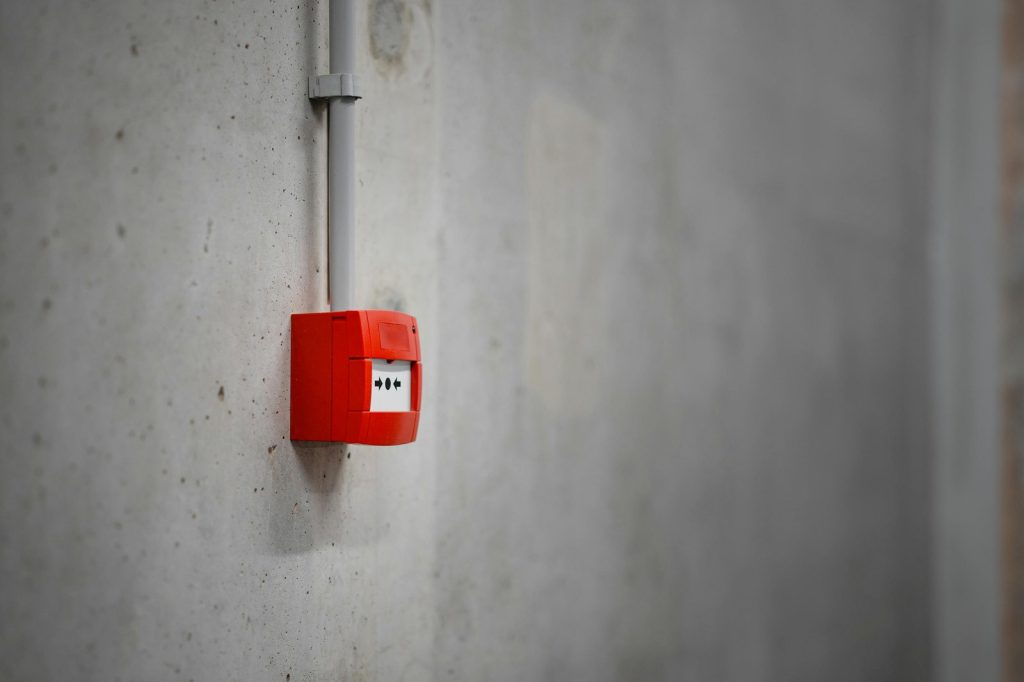
This one has the most surprising answer in the whole series, because a security system does not really get a breaker of its own at all. It is a low-voltage system, so almost everything we have said about heavy circuits and dedicated breakers goes out the window. The things that actually matter are different, and worth knowing before you have one fitted.
How it is actually powered
A security panel does not run on mains voltage. A small plug-in transformer steps the 120 volts at the wall down to the low voltage the system uses, usually somewhere between 12 and 24 volts. A typical alarm transformer is something like 16.5 volts at 40 VA, which is about 40 watts at most.
That is the whole electrical demand. The entire system, panel and sensors, sips power, often only tens of kilowatt-hours over a year. So there is no dedicated circuit, no heavy cable and no special breaker. The transformer plugs into an ordinary wall outlet, and that is the mains side of the story.
What actually matters: an always-on outlet
Here is the first thing that does. The outlet that transformer plugs into must be a standard, always-on one, never an outlet controlled by a wall switch. Put the alarm’s transformer on a switched outlet and the day someone flips that switch, thinking it is a light, the system goes dark. It should also be somewhere it cannot be casually unplugged or knocked out. The mains supply to a security system is humble, but it has to be constant.
The backup battery
The reason the mains side can be so modest is the backup battery. A security panel keeps a battery so it carries on working through a power cut, which matters a great deal here, where outages are common. That battery is what keeps your system armed when JPS drops out. The catch is that it wears out, so it needs replacing every few years, and a dead backup battery is a quiet way for a system to be unprotected during the exact outage you installed it for.
The cabling and the cameras
The real wiring in a security system is low-voltage cabling, not mains. Sensors and keypads run on thin low-voltage cable, and there are limits on how long those runs can be so that enough power and signal reach each device. Cameras are their own case: most modern ones use Power over Ethernet, where a single network cable carries both data and power from a PoE switch or recorder, which in turn plugs into a normal outlet. There is a power budget to plan across all the cameras, but still nothing that touches your breaker panel.
Protect it, and get it done right
Two closing points. A surge can wipe out a panel or a camera recorder just like any other electronics, so whole-home surge protection is worth having, as we cover in surge protection for appliances in outage-prone areas. And while a security system is low voltage, the install, the always-on supply, the cabling runs and the camera power, is specialist work worth getting right. We handle the wiring side in wiring and installations.
Related reading
- Surge protection for appliances in outage-prone areas for protecting the panel and recorder from surges.
- Protecting your electrics through hurricane season for keeping systems alive through storms and outages.
- Wiring and installations for the low-voltage cabling and supply a security system needs.
Does a security system need its own breaker?
No. A home security system is a low-voltage system. A small plug-in transformer steps the 120 volts at the wall down to the 12 to 24 volts the panel uses, and the whole system draws very little power. It plugs into an ordinary outlet, so there is no dedicated circuit, heavy cable or special breaker.
What kind of outlet should a security system plug into?
A standard, always-on outlet, never one controlled by a wall switch. If the transformer is on a switched outlet, someone flipping that switch will shut the system down. The outlet should also be somewhere the transformer cannot be easily unplugged or knocked loose, because the supply needs to be constant.
How does a security system stay on during a power cut?
The panel has a backup battery that keeps it running when the mains power drops, which matters where outages are common. That battery is why the mains side can be so modest. It does wear out, though, so it needs replacing every few years, or the system can be unprotected during an outage.
How are security cameras powered?
Most modern cameras use Power over Ethernet, where one network cable carries both data and power from a PoE switch or recorder. That switch or recorder plugs into a normal outlet. There is a power budget to plan across all the cameras, but it does not require any change at your breaker panel.
How much electricity does a home security system use?
Very little. A basic alarm uses on the order of tens of kilowatt-hours a year, and even a system with several cameras running constantly is only a small continuous load. It is one of the least power-hungry things in the house.
Do I need an electrician to install a security system?
It is low voltage, but the install still benefits from being done properly: a constant always-on supply, correctly run low-voltage cabling within length limits, and a planned power budget for cameras. It is specialist work, and surge protection for the panel and recorder is worth adding while you are at it.
The next step
A security system is only as good as the supply behind it: always on, backed up, and protected from surges. Get a free quote or message us, and we will sort the always-on supply, the low-voltage cabling and surge protection so your system stays awake when it matters.